verdict · Brain & Mental Health
St Johns wort: uses, evidence, dosing and safety
The one herbal with real antidepressant evidence, and the one with the most dangerous interaction profile. It can make prescription medicines stop working, including contraceptives and transplant drugs.
- Across 29 trials in 5,489 patients it beat placebo and matched standard antidepressants.
- The largest US trial found neither it nor sertraline beat placebo in moderate depression.
- Results were consistently more favorable in German-speaking countries, which is a warning.
- It interacts with so many medicines that NCCIH calls the risk sometimes life-threatening.
- It can make contraceptives, transplant drugs and blood thinners stop working properly.
St Johns wort is the awkward case in the herbal aisle. It is the one product with genuinely respectable trial evidence behind it, and it is also the one most likely to cause serious harm, for reasons that have nothing to do with the herb being toxic.
It works by speeding up the machinery that clears drugs from the body. That is fine if you take nothing else. If you take anything else, it can quietly switch it off.
What St Johns wort is
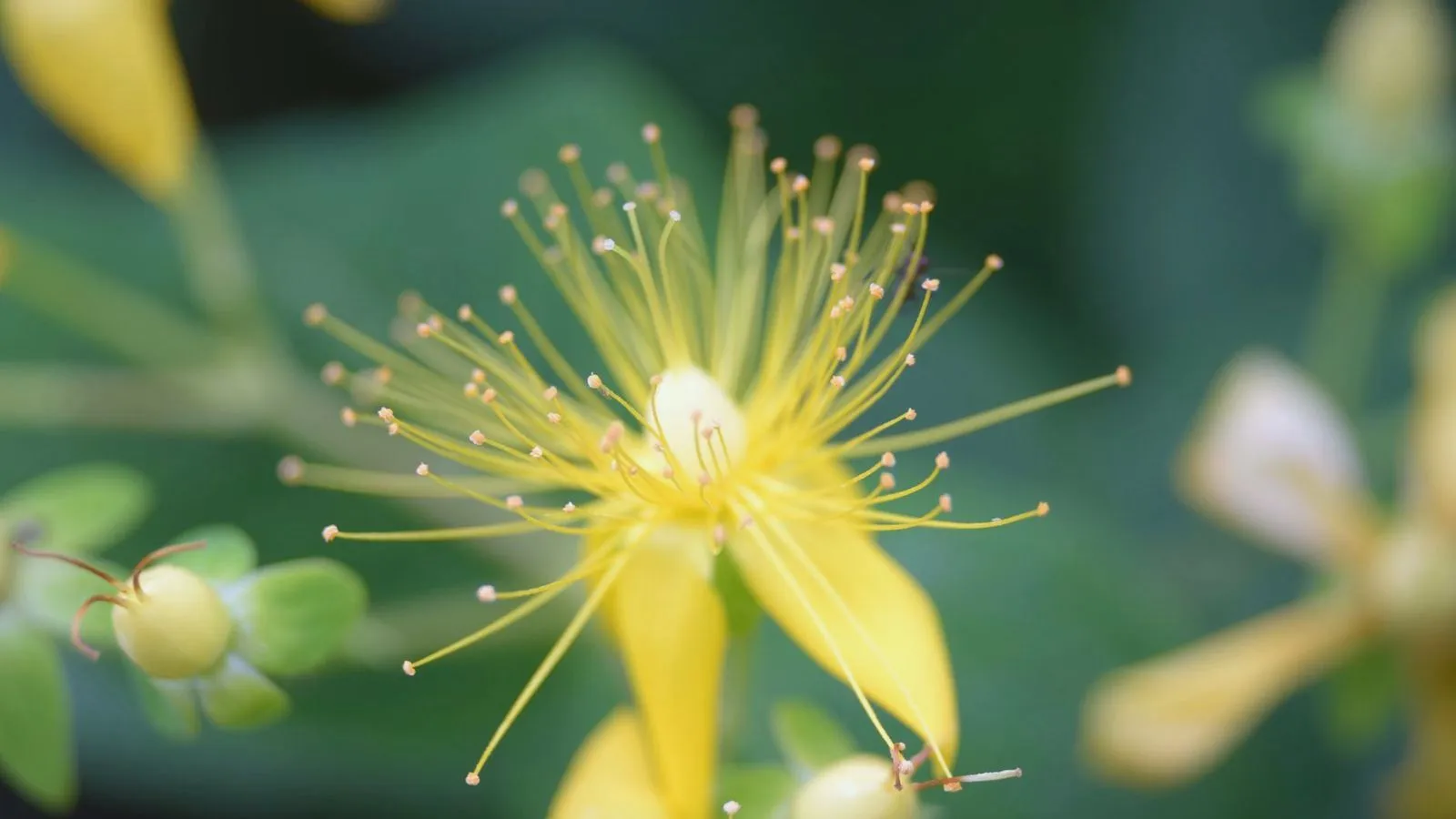
St Johns wort is an extract of the plant Hypericum perforatum, a yellow-flowered perennial used medicinally for centuries and now sold mainly for low mood.
LiverTox describes it as a popular herbal medication and extract derived from the plant Hypericum perforatum which is purported to be beneficial in depression and anxiety.
Two constituents get named on labels: hypericin and hyperforin. Hyperforin is the one that matters for the interaction problem below, and products vary in how much of it they contain.
How St Johns wort works
There are two separate mechanisms, and only one of them is about mood.
The antidepressant effect appears to involve the same neurotransmitter systems that conventional antidepressants act on, including serotonin. That is why it can add to the effect of an SSRI rather than simply duplicating it.
The second mechanism is the dangerous one. St Johns wort strongly induces the liver’s drug-processing enzymes and the transporters that pump drugs out of cells. Speeding up that system means other medicines are cleared from the body faster, so their blood levels fall.
A review of herb-drug interactions puts the general principle bluntly: herb-drug interactions can cause changes in drug levels and activities and lead to therapeutic failure and/or side effects (sometimes toxicities, even fatal).
Therapeutic failure is the phrase to hold onto. The harm here is usually not poisoning. It is a medicine you are still taking that has stopped working.
What the evidence says about St Johns wort and depression
This is the strongest efficacy evidence of any herbal covered on this site.
A Cochrane review identified a total of 29 trials (5489 patients) including 18 comparisons with placebo and 17 comparisons with synthetic standard antidepressants.
Its conclusion is threefold: the hypericum extracts tested in the included trials a) are superior to placebo in patients with major depression; b) are similarly effective as standard antidepressants; c) and have fewer side effects than standard antidepressants.
Better than nothing, as good as the prescription option, and easier to tolerate. Taken alone that reads like a clear recommendation.
The complication in the same review
The reviewers flagged something that should temper it. Trials from German-speaking countries reported findings more favourable to hypericum than trials conducted elsewhere.
When results track the country a study was run in rather than the patients in it, something other than the drug is influencing the answer. Publication practice, product formulation and prescribing culture all differ, and Cochrane raised it precisely because it undercuts the headline.
There was a real tolerability advantage, though. Patients given hypericum extracts dropped out of trials due to adverse effects less frequently than those given older antidepressants.
What the evidence says about St Johns wort in the largest US trial
The counterweight deserves its own section, because it is the trial most often left out of the marketing.
A large randomized trial compared St Johns wort, sertraline and placebo in moderately severe major depression. On the 2 primary outcome measures, neither sertraline nor H perforatum was significantly different from placebo.
Read that carefully. The established antidepressant failed too. The authors say so: the result may be due to low assay sensitivity of the trial, meaning the study may simply have been unable to detect a difference that exists.
But they do not let the herb off on that basis. The complete absence of trends suggestive of efficacy for H perforatum is noteworthy, and their stated conclusion is that this study fails to support the efficacy of H perforatum in moderately severe major depression.
The most defensible reading across both bodies of evidence: reasonable support in mild to moderate depression, no support in the more severe end, and a literature whose results depend uncomfortably on where the trial was run.
What the evidence says about St Johns wort and menopause
A second, smaller use is worth reporting because it is widely marketed and the evidence is better than most menopause herbals manage.
Pooling trials of the extract against placebo for menopausal symptoms, extracts of Hypericum perforatum L. and its combination with herbs were significantly superior to placebo, and the authors state that extracts of Hypericum perforatum L. proved to be more effective than placebo in the treatment of menopause.
Side effects did not separate the groups: adverse events occurred in 53 (17.4%) patients on Hypericum perforatum L. preparations and 45 (15.4%) patients on placebo.
The interaction problem does not go away for this use. Someone taking it for hot flushes is exactly as likely to be taking a contraceptive or another prescription as anyone else.
Myths about St Johns wort, and what the evidence says
“It is natural, so it is safe alongside my medication.” This is the single most dangerous belief about it. NCCIH advises against it specifically because this herb interacts with so many medicines.
“It is just a mild mood lifter.” It performs comparably to prescription antidepressants in pooled trials. Something that works like a drug can fail like one.
“Herbal means it will not affect my contraception.” It can reduce the effectiveness of hormonal contraceptives by clearing them faster. Unplanned pregnancies have been reported on exactly this mechanism.
“I can add it to my antidepressant for a boost.” Combining it with drugs that affect serotonin may lead to increased serotonin-related side effects, which can be serious.
“It damages the liver like other herbals.” On its own it does not. LiverTox gives it likelihood score E, unlikely cause of clinically apparent liver injury.
Dosing and forms of St Johns wort
Trials typically use standardized extracts at 300 mg three times daily, standardized to hypericin content, though hyperforin content is what drives the interaction risk and is less consistently declared.
Products vary substantially in both. Two bottles at the same milligram strength can differ in the compounds that actually matter, which makes it hard to translate trial doses to a shelf product.
Effects on mood, if they come, take weeks rather than days, in the same way conventional antidepressants do.
Safety, side effects and who should avoid St Johns wort
Taken alone, the direct side effects are mild: stomach upset, dry mouth, tiredness, and photosensitivity, meaning the skin burns more easily in sunlight.
The liver record is reassuring. Despite wide spread use, there have been no convincing case reports linking use of St Johns wort and hepatotoxicity, and in controlled trials, St Johns wort has not been linked to serum enzyme elevations or to clinically apparent liver injury.
But LiverTox adds the qualification that defines this whole page: it may increase the hepatotoxicity of other agents by herb-drug interactions that alter drug metabolism. The risk it carries is borrowed from whatever else you take.
Who should not take it without medical advice: anyone on any prescription medicine at all, anyone using hormonal contraception, anyone who has had a transplant, anyone on an antidepressant, and anyone pregnant or breastfeeding. That list is unusually broad, and it is broad for a real reason.
Interactions
This is the most important section on the page.
NCCIH states that St Johns wort can interact in dangerous, sometimes life-threatening ways with a variety of medicines. The mechanism is enzyme induction, and the consequence is other drugs being cleared too fast.
The categories most affected include hormonal contraceptives, anti-rejection medicines after transplant, HIV medicines, blood thinners, some heart-rhythm and cancer drugs, and antidepressants, where the risk runs the other way as an additive serotonin effect.
Two features make this worse than an ordinary interaction warning. The failure is silent, because a contraceptive that has stopped working does not announce it. And the effect persists for a couple of weeks after stopping, so timing matters when starting or stopping anything else.
If you take one thing from this article: tell whoever prescribes your medicines before you start, and again before you stop.
Bottom line on St Johns wort
If you take no other medication, have mild to moderate low mood, and your doctor knows you are taking it, this is a defensible choice with better trial evidence than most things sold beside it.
If your depression is moderate to severe, the largest trial gave no support, and the effective treatments are worth having properly.
And if you take any prescription medicine, including the contraceptive pill, the honest answer is that this is not a supplement decision. It is a prescribing decision, and the person who wrote your prescription needs to be in it.
People also ask
Does St Johns wort actually work for depression?
For mild to moderate depression, the pooled evidence says yes. A Cochrane review of 29 trials in 5,489 patients concluded that the hypericum extracts tested are superior to placebo in patients with major depression, similarly effective as standard antidepressants, and have fewer side effects than standard antidepressants. That is a stronger result than any other herbal on this site can show.
Then why do doctors not recommend it?
Two reasons. The largest US trial found neither sertraline nor H perforatum was significantly different from placebo in moderately severe depression, and the Cochrane reviewers themselves noted that trials from German-speaking countries reported findings more favourable to hypericum, which is a signal that geography is predicting results. And separately, the interaction profile is genuinely dangerous.
What can it interfere with?
A great many things, because it speeds up the liver enzymes that clear drugs from the body. NCCIH states plainly that St Johns wort can interact in dangerous, sometimes life-threatening ways with a variety of medicines. The practical consequence is that other medicines get cleared faster and stop working: hormonal contraceptives, transplant anti-rejection drugs, HIV medicines, blood thinners, some heart and cancer drugs.
Can it cause serotonin syndrome?
It can contribute to it. NCCIH warns that combining St Johns wort with certain antidepressants or other drugs that affect serotonin may lead to increased serotonin-related side effects, which can be serious. Anyone already taking an SSRI or other antidepressant should not add it without their prescriber knowing.
Is it bad for the liver?
On its own, apparently not. LiverTox assigns it likelihood score E, unlikely cause of clinically apparent liver injury, and records that despite wide spread use, there have been no convincing case reports linking use of St Johns wort and hepatotoxicity. The twist is that it may increase the hepatotoxicity of other agents by herb-drug interactions, so the liver risk it carries is borrowed from whatever else you are taking.
If I want to try it, what should I do?
Tell your doctor or pharmacist first, and treat that as non-negotiable rather than cautious. This is general information rather than medical advice. Depression also needs a diagnosis before it needs a treatment, and self-treating moderate or severe depression with a supplement delays care that works.
References
- Linde, K., Berner, M. M., Kriston, L. St John's wort for major depression. Cochrane Database of Systematic Reviews, 2008.
- Hypericum Depression Trial Study Group. Effect of Hypericum perforatum (St John's wort) in major depressive disorder: a randomized controlled trial. JAMA, 2002.
- Czigle, S., Nagy, M., Mladenka, P., Toth, J. Pharmacokinetic and pharmacodynamic herb-drug interactions - part I. Herbal medicines of the central nervous system. PeerJ, 2023.
- National Center for Complementary and Integrative Health. St. John's Wort and Depression: In Depth.
- LiverTox: Clinical and Research Information on Drug-Induced Liver Injury. St. John's Wort. National Institute of Diabetes and Digestive and Kidney Diseases.
- Liu, Y. R., et al. Hypericum perforatum L. preparations for menopause: a meta-analysis of efficacy and safety. Climacteric, 2014.