News · Sleep
Getting a phone at 13 cost sleep, not mood
A JAMA Pediatrics study followed 1,959 teenagers from age 13 to 14 and found that getting a smartphone tracked with less sleep, while depression and obesity tracked with how much it was used.
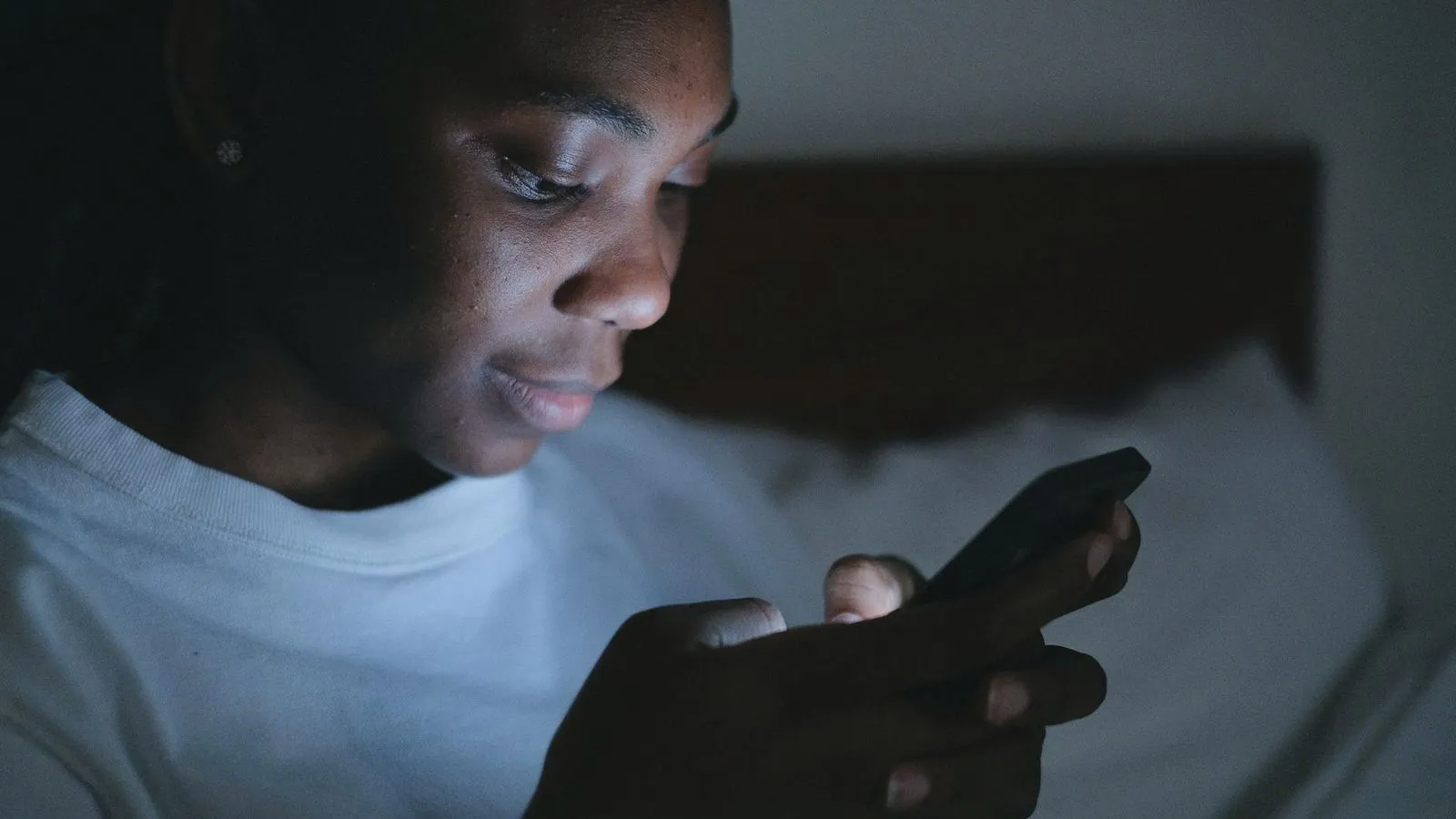
- 1,959 teenagers with no smartphone at 13, followed to 14 and reported in JAMA Pediatrics.
- Getting a phone tracked with insufficient sleep (OR, 1.29; 95% CI, 1.03-1.62), not depression or obesity.
- Among phone owners, how much it was used tracked with all three outcomes.
- Keeping the phone out of the bedroom tracked with better sleep (OR, 0.64; 95% CI, 0.47-0.87).
- Observational over one year, so heavier users may differ in ways the adjustment missed.
The advice to hold the first phone back until 13 is now common enough to feel settled. A study in JAMA Pediatrics, published by the American Medical Association, went looking for the evidence underneath it, and found the picture is narrower than the advice suggests.
Smartphone acquisition was not significantly associated with depression or obesity, but was associated with insufficient sleep at follow-up.
The advice that had thin evidence
The premise is widely accepted. Smartphone acquisition and use under age 13 years is common and has been linked to adverse health implications, and delaying acquisition until after age 13 years is often recommended.
What was missing was the test. Evidence supporting this guideline remains limited, which is an unusual thing to be true of advice given so confidently to so many parents.
The design that made a comparison possible
The trick is who was eligible. Participants were drawn from the Adolescent Brain Cognitive Development Study and had to have no smartphone at the 13-year-old assessment.
That leaves a group who all start in the same place. Over the following year, 1230 participants acquired a smartphone and 729 did not, and the researchers compared what happened to each.
Crucially the models adjusted for pre-exposure depression, obesity and sleep, along with socioeconomic and parental confounders and use of other devices. A teenager who was already struggling before the phone arrived does not get counted as evidence against the phone.
Getting a phone, versus using one
The two questions came apart, and that separation is the finding.
Acquisition alone moved one outcome. It was associated with insufficient sleep at follow-up, with odds about a third higher, but showed no clear link to depression or obesity.
Amount of use moved all three. Among those who had acquired a smartphone, total smartphone time was associated with depression, obesity, and insufficient sleep.
So the question a parent might ask, whether to hand over a phone at all, is not the question this data answers most clearly. How much it then gets used is.
The one lever with a number attached
Buried in the results is the most actionable line in the paper. Placing smartphones outside the bedroom at bedtime was associated with lower odds of insufficient sleep, cutting them by roughly a third.
It costs nothing. It does not require confiscating anything. And it targets the single outcome most reliably tied to owning a phone in the first place.
What one year of follow-up cannot show
Nobody was assigned a phone, so the arrow could run the other way: a teenager sleeping badly or feeling low may reach for a phone more, producing the same pattern in reverse.
The window is also short. Depression that takes two or three years to surface would not appear here, and the authors do not claim otherwise.
Their conclusion stays close to the data: behavioral interventions like limiting smartphone time and keeping smartphones out of bedrooms at night may protect adolescents from potential adverse health outcomes.
That is a smaller claim than “delay the phone until 13”, and it comes with something a parent can actually do tonight.
People also ask
Should I delay giving my child a phone until after 13?
This study does not settle that, and it is a decision for a family rather than a statistic. What it found is narrower than the usual framing: acquiring a phone around 13 tracked with less sleep, but not with depression or obesity. The amount of use tracked with all three. That points at how much a phone is used rather than the age at which it arrives, though a one-year window cannot rule out effects that take longer to appear.
Why does the bedroom finding matter most?
Because it is the one thing here that is both specific and easy to act on. Placing smartphones outside the bedroom at bedtime was associated with lower odds of insufficient sleep. It costs nothing, it does not require taking the phone away, and it targets the outcome most clearly linked to having one. It is still an association measured at one point, not a tested intervention.
Does more phone use cause depression?
This cannot show that. Teenagers who are already low may use their phones more, which produces exactly the same correlation with the arrow running backwards. The researchers adjusted for depression measured before the phone arrived, which helps, but adjustment is not randomization. Nobody was assigned a phone.
How is insufficient sleep defined?
Less than 8 hours a night. Sleep guidance for this age group sits higher than that, so the threshold is conservative: it counts only teenagers falling clearly short, not those merely at the low end of normal.
How representative is the sample?
It draws on a large US cohort study, and the participants were 84.8% White, 16.0% Hispanic and 14.9% Black, with 41.0% girls. That is a broad sample but not a probability sample of US teenagers, and the eligible group was specifically those without a phone at 13, who may already differ from their peers.