News · Sleep
Evening cycling protected memory after a short night, and deep sleep carried the effect
Sleeping badly and then needing to remember something is an ordinary predicament with no good remedy. Randomizing 88 adults to a single evening ride found one, and identified how it worked.
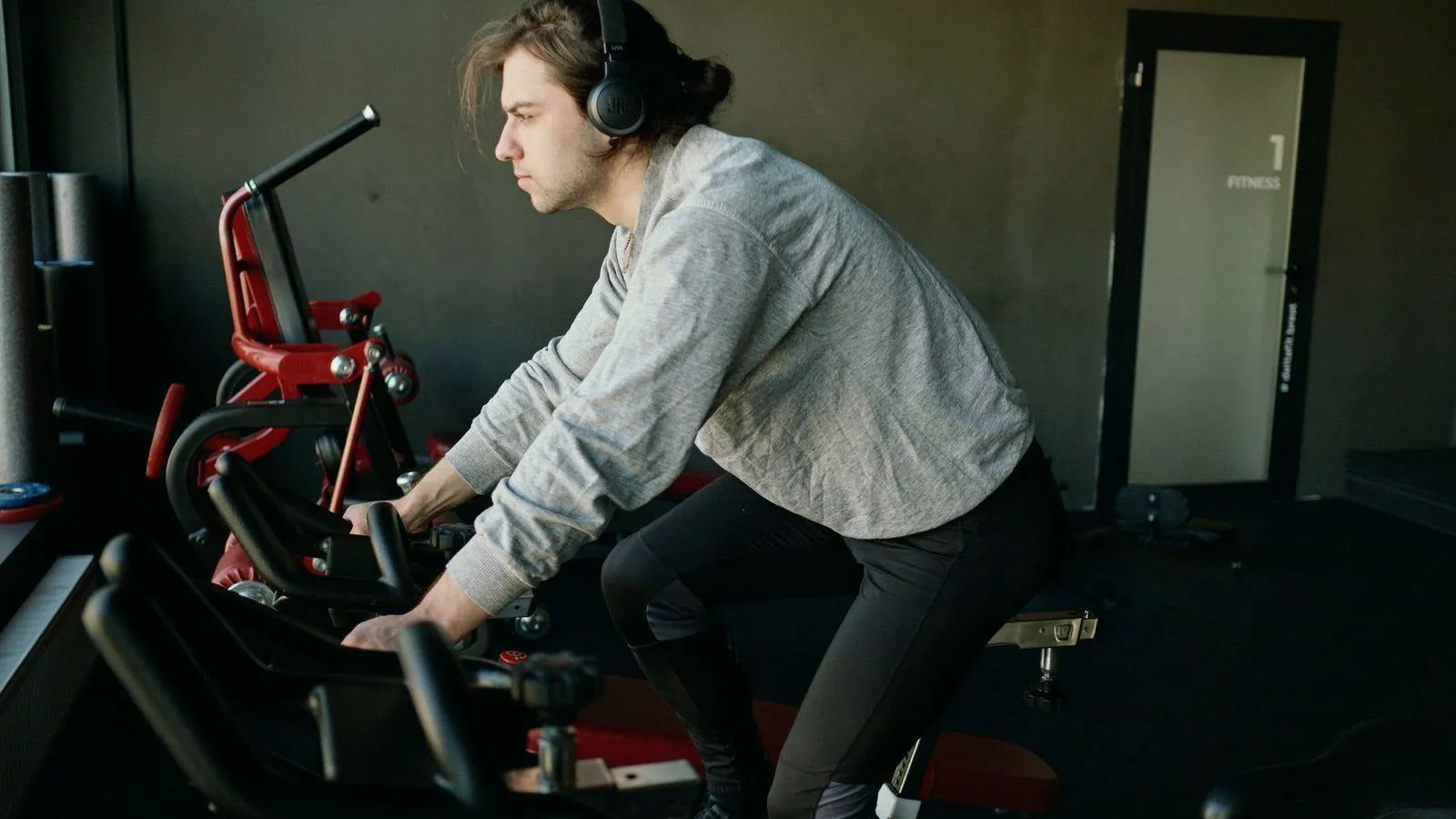
- People who exercised before a short night recalled as well as those who slept a full night.
- Without the ride, the short night measurably damaged recall.
- The amount of deep sleep accounted for the difference.
- One 30-minute ride at moderate intensity, three hours before learning.
- 88 healthy young adults in a laboratory, so this is not yet advice for anyone.
Everyone has had the night that was four hours long and the morning that needed a working memory. The standard advice for it is to have slept better, which arrives too late to be useful.
Insufficient sleep impairs cognition, and memory for facts suffers first. What has been missing is anything a person can actually do once the short night is already unavoidable.
The experiment
Writing in the journal SLEEP, researchers built the situation deliberately. Eighty-eight healthy young adults were assigned to one of four combinations: a normal night or a short one, each with or without a single evening bike ride.
The ride was 30 minutes at moderate intensity, at seven in the evening. At ten they learned eighty face-and-name pairs. Then they slept in the laboratory with their brain activity recorded, and the next day were asked which faces and names they had seen.
Previously exercise was known to increase deep sleep and, separately, to help memory. Whether it could hold memory up through a deliberately shortened night had not been tested.
The result
The short night damaged recall, as expected. The short night preceded by a ride did not.
Those who exercised and then slept four and a half hours recalled about as well as the groups who slept a full night, with or without exercise. The gap was against the restricted-sleep group who had rested quietly instead.
So a single ordinary bike ride appeared to absorb the cost of losing four hours of sleep, on this task, in these people.
The part that makes it more than a curiosity
The trial did not stop at showing the two things moved together. It measured what happened during the night.
The proportion of slow-wave sleep, the deepest stage and the one most tied to fixing new facts in place, was higher after exercise. And that increase statistically accounted for the better recall.
That is a mechanism rather than a correlation. Exercise did not somehow substitute for sleep; it changed the composition of the sleep that remained, concentrating more of the short night into the stage that does the consolidating.
What it cannot support
Eighty-eight people, all healthy, all around twenty-four years old, for one night, on one memory task, in a laboratory.
Young adults have more slow-wave sleep available to redistribute than older adults do, which is exactly the group most likely to want this. Whether the same trick works at sixty is untested and not safely assumed.
The mediation estimate is also imprecise. The direction is clear and the magnitude is not, which is ordinary for a mediation analysis at this sample size.
Where it leaves things
Sleep is important for overall health, and nothing here argues otherwise. The exercise group did not beat the well-slept groups; they merely caught up to them.
What the trial supplies is a plausible countermeasure with a known route: when the short night is coming and cannot be avoided, moving in the evening appears to protect the part of sleep that memory depends on. That is worth testing properly in the people who lose sleep involuntarily, which is shift workers, new parents, and anyone past middle age.
People also ask
What did the trial find?
Among 88 healthy young adults (52% female; mean age 24.0 years), there was a significant exercise by sleep interaction for delayed recall (p = 0.033, partial eta-squared = 0.056). Delayed recall in the exercise-plus-restricted-sleep group was significantly higher than restricted sleep alone (p = 0.028) and comparable to both full-sleep groups. The proportion of slow-wave sleep mediated the association between exercise and delayed recall.
What is slow-wave sleep?
The deepest stage of non-dreaming sleep, most of it early in the night, when brain waves are large and slow. It is the stage most associated with consolidating newly learned facts, and the stage lost first when a night is cut short.
What does declarative memory mean?
Memory for facts and events that you can state out loud, as opposed to skills like riding a bicycle. Here it was tested by learning 80 face-and-name pairs and being asked to recognize them the next day.
What does it mean that slow-wave sleep mediated the effect?
That the benefit of exercise ran through deep sleep rather than around it. Statistically, the exercise raised the proportion of slow-wave sleep, and that increase accounted for the better recall, which is a stronger claim than exercise and memory simply moving together.
How much exercise was it?
A single 30-minute cycling session at moderate intensity, around 55% to 60% of maximum aerobic capacity, at seven in the evening. That is a brisk effort you could hold a broken conversation through, not a hard workout.
Does this mean exercise replaces sleep?
No. The exercise group with restricted sleep merely matched, rather than exceeded, the groups who slept normally, and the trial measured one night and one memory task. Nothing here suggests a short night becomes harmless.
Should anyone change their routine?
It is one laboratory night in healthy people in their twenties. Evening exercise suits some people and disrupts sleep for others, and this is general information rather than medical advice.