News · Nutrition & Diet
Seafood and omega-3 intake showed no link to hearing in 13,908 Japanese adults aged 50 to 79
Fish oil is widely suggested for protecting hearing with age. In a population that eats a great deal of seafood, tested with proper audiometry, the association was not there.
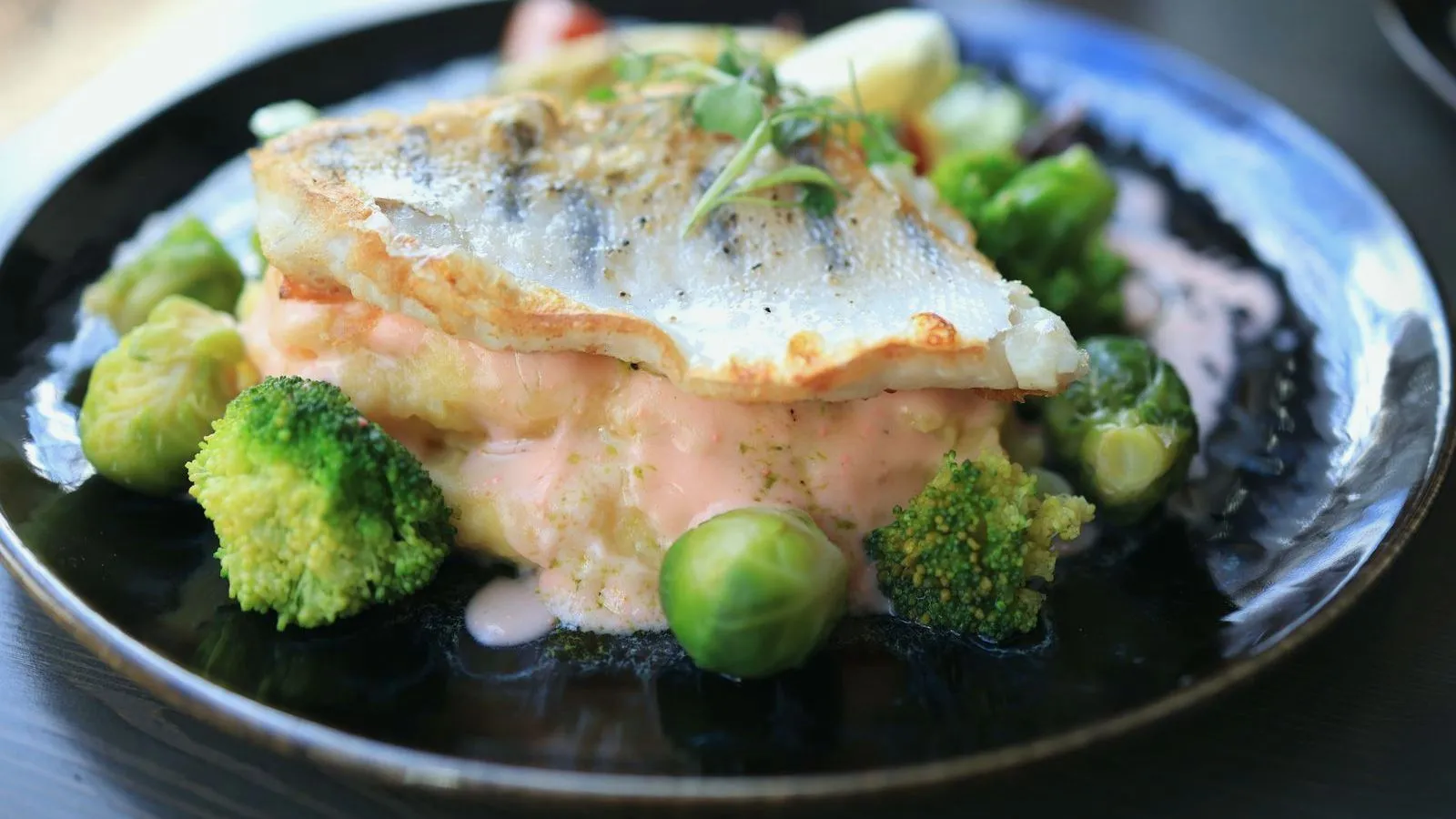
- An observational study of 13,908 Japanese adults aged 50 to 79, so it cannot show cause.
- Hearing was measured with proper audiometry rather than asked about.
- Seafood and omega-3 intake were not linked to hearing at any tested frequency.
- In men, eating more saturated fat went with slightly better hearing, which nobody predicted.
- Everyone here already ate a lot of fish, so the low-intake end of the range is missing.
Hearing fades for most people eventually, and unlike a lot of aging it arrives without a clear thing to blame. That gap gets filled by dietary advice, and omega-3 fats have been the leading candidate for years: they are anti-inflammatory, the inner ear is sensitive to inflammation and blood supply, and populations that eat more fish have sometimes looked better off.
Japan is the right place to test that idea, because seafood is not a supplement there but a staple. Researchers writing in The Journal of Nutrition Health and Aging measured the hearing of 13,908 adults aged 50 to 79 with clinical audiometry and matched it against what they ate. The fish signal did not appear.
What age-related hearing loss does to a life
It is not simply a volume problem. The high frequencies go first, which are the ones carrying consonants, so speech becomes audible but unclear, and noisy rooms become exhausting rather than merely loud.
The consequences run further than the ears. The authors open by noting that age-related hearing loss is a common condition associated with dementia, social isolation, and reduced quality of life, which is why a dietary lever, if one existed, would be worth having.
How hearing was measured in 13,908 adults
The measurement is the strength of this study. Hearing thresholds were measured by pure-tone audiometry at 500, 1,000, 2,000, and 4,000 Hz: tones played through headphones at decreasing volume until the listener stops hearing them.
That matters because most diet-and-hearing research asks people whether their hearing has changed, and self-reported hearing is notoriously unreliable. People underestimate their own loss for years.
Diet came from a validated food frequency questionnaire, with seafood, omega-3 and saturated fat intakes each sorted into four bands from lowest to highest. Everyone was drawn from the Tohoku Medical Megabank Project Cohort Study, a large regional population study in northern Japan.
What the seafood and omega-3 numbers showed
Nothing, which is the finding. Seafood and N-3 PUFA intakes were not significantly associated with hearing thresholds, at any of the frequencies tested.
This is a well-measured null in a population chosen precisely because it eats a lot of fish. If the protective effect existed at the size the hypothesis implies, this is the kind of sample that should have caught it.
Why the saturated fat result sits oddly beside the seafood finding
One association did turn up, and it points the opposite way to expectation. In men, higher saturated fat intake was significantly associated with lower hearing thresholds at 1,000 Hz, meaning slightly better hearing, and the same pattern appeared in the overall average across frequencies. In women, no significant associations were observed.
Two things keep this from being a reason to eat more butter. The size is about two decibels, which is not a difference anyone would notice in a conversation. And a single nutrient in an observational study is usually standing in for something else: what else those men ate, how much they earned, what work they did, how much noise that work involved.
The authors’ own conclusion stays at that level, suggesting the relationship between dietary fatty acids and hearing loss may be complex and may differ by sex.
What a Japanese sample measured once cannot show
The design takes one reading of hearing and one account of diet at the same moment, so it cannot watch hearing change or say which came first.
The population is also the study’s strength and its limit. In a country where seafood is a staple, almost nobody sits at the low end of intake, so the comparison is between men eating a lot of fish and men eating a great deal of it. A country with genuinely low intake might show something this design cannot see.
And diet questionnaires measure habits imperfectly at best, particularly for fats, which hide inside cooked dishes rather than appearing as identifiable foods.
What this changes about diet and hearing advice
It moves fish from “probably protective” to “unproven”, which is a smaller change than it sounds but an honest one. Nobody should stop eating fish over this; the heart and brain arguments for seafood are untouched and were never about hearing.
What it does undercut is the supplement version of the claim, where a capsule of fish oil is sold as protection for the ears. The best evidence from a fish-eating population does not support it.
Meanwhile the measures that do work remain dull and effective: protect your ears from loud noise, and get hearing loss assessed when it starts rather than years later. MedlinePlus notes that about 2 to 3 out of every 1,000 children in the United States are born with a detectable level of hearing loss, and that hearing problems that are ignored can get worse. The same is true at the other end of life.
People also ask
What did the study find?
Seafood and n-3 polyunsaturated fatty acid intakes were not significantly associated with hearing thresholds. In men, higher saturated fatty acid intake was significantly associated with lower hearing thresholds at 1,000 Hz (Q4 against Q1: -2.23 dB HL, 95% CI -3.437 to -1.023) and for pure-tone average (-1.704 dB HL; 95% CI -2.872 to -0.536). In women, no significant associations were observed.
Does a lower hearing threshold mean better or worse hearing?
Better. A threshold is the quietest sound you can detect, so a lower number means you hear quieter sounds. The differences here were about two decibels, which is smaller than the gap between a quiet room and a whisper.
How was hearing measured?
By pure-tone audiometry at 500, 1,000, 2,000 and 4,000 Hz, the standard clinical test in which tones are played at decreasing volume through headphones. That is far more reliable than asking people whether they think their hearing has changed.
Why would saturated fat look protective?
Nobody has a good explanation, and the authors do not offer one as fact. In a population where fish is abundant, saturated fat intake may be standing in for something else about a diet or a life, which is the usual fate of a single nutrient in an observational study.
Does this mean fish oil is useless for hearing?
It means no association appeared in a large, well-measured Japanese sample. A supplement trial would be needed to test the question directly, and none of this changes the other reasons people eat fish.
What actually protects hearing?
Avoiding loud noise, and treating hearing loss when it appears rather than waiting. This is general information rather than medical advice.