News · Longevity & Aging
Over-the-counter hearing aids worked better for older adults with a doctor's or audiologist's help
A Shandong University randomized trial gave over-the-counter hearing aids to 322 adults aged 50 and over. Those helped by a family doctor or a remote audiologist reported more benefit over a year than those who set them up alone.
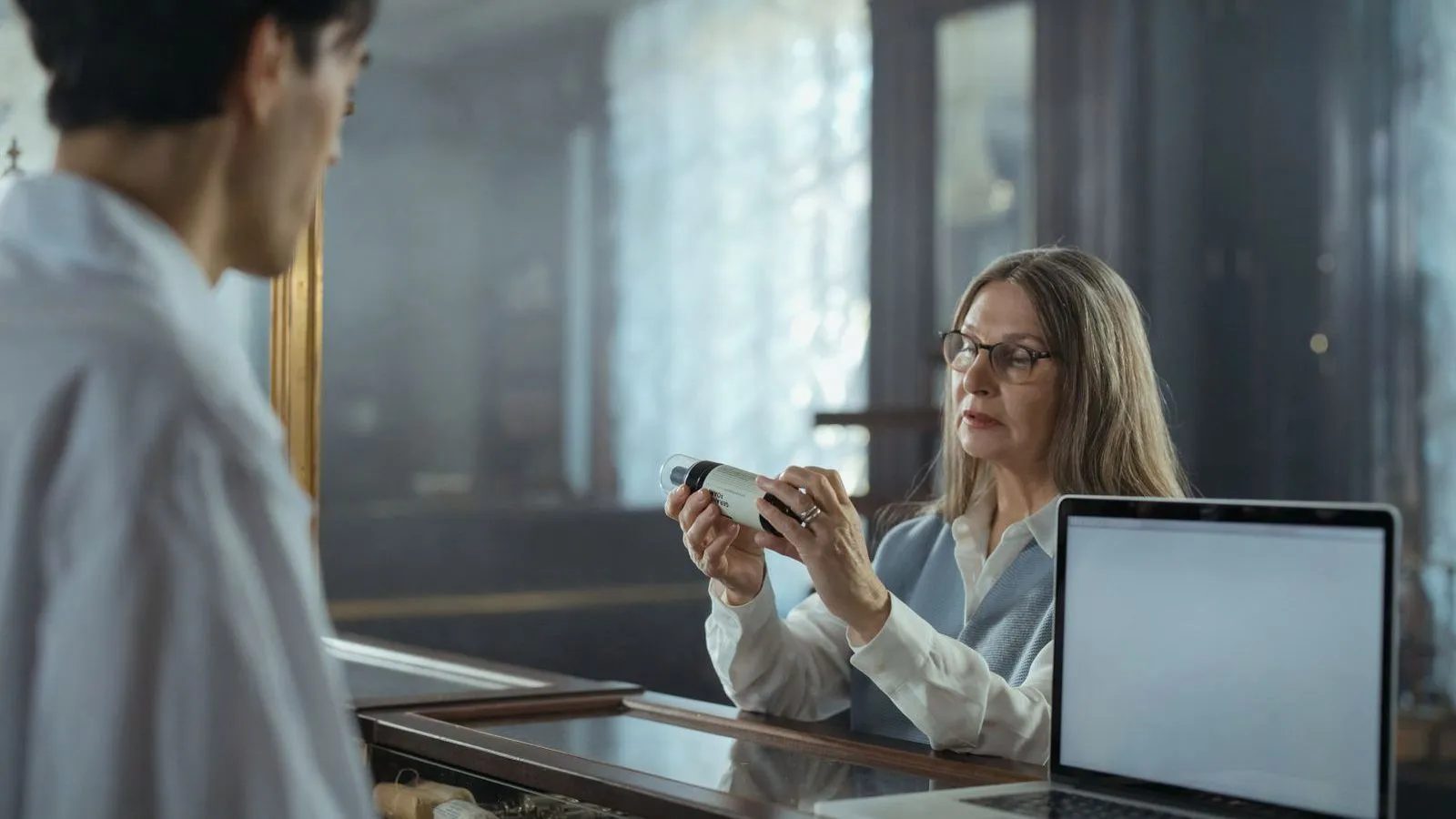
- Older adults new to hearing aids got more out of over-the-counter devices when someone helped them set up and use them.
- Help from a family doctor or a remote audiologist both beat fitting the aids alone, and the gap lasted a year.
- Supported users also reported better hearing-related quality of life and satisfaction, and wore their aids more.
- The support was cheap: a few hundred dollars or less for each year of healthy life gained.
- One trial in Chinese community clinics, with a self-rated main measure and participants who knew whether they had help.
Most people who could use a hearing aid do not have one. In the US, according to researchers at the University of Pretoria, fewer than 20% of adults with hearing loss use hearing aids, held back by barriers like high cost. In four provinces of China, a survey found that only 6.5% of older adults with hearing loss had hearing aids. Over-the-counter hearing aids, sold off the shelf with no audiologist involved, were meant to close some of that gap.
A randomized trial published on October 19 in Nature Communications asks what happens when older first-time users get such devices with and without help. Researchers led by Fan Jiang and Lei Xu at the Second Hospital and Qilu Hospital of Shandong University gave over-the-counter aids to 322 adults aged 50 and over through community health centers. Help from a family doctor or from an audiologist working remotely produced greater benefit than self-fitting, as the participants rated it, and the difference was still there a year later.
Why over-the-counter hearing aids were meant to work without an audiologist
The US Food and Drug Administration opened the over-the-counter category in October 2022, for adults with perceived mild to moderate hearing loss. Buyers need no prescription, no medical exam and no fitting by an audiologist, and the devices are sold in a store or online. The self-fitting kind goes a step further, letting wearers set the device up for themselves with hearing tests, software, and smartphone apps in place of an audiologist’s measurements.
The need behind the idea is enormous. The World Health Organization estimates that 430 million people need help for disabling hearing loss, and that among those older than 60 years, over 25% are affected. Nearly 80% of the people with disabling hearing loss live in low- and middle-income countries, where audiologists are few. A device that people can buy and set up alone looks like an obvious answer, as long as people can in fact set it up alone. In the Shandong authors’ words, over-the-counter hearing aids may improve access, “but the level of support older adults need remains uncertain.”
How the Shandong trial gave older adults three kinds of hearing aid support
The trial ran at ten community health centers in three Chinese cities, local clinics that provide primary care. Everyone enrolled was 50 or older and had untreated hearing loss in both ears. The researchers split the 322 participants by chance into three groups of roughly equal size. In the first, 108 people received over-the-counter aids and set them up themselves. In the second, 107 were helped by a primary care physician, and in the third, 107 were supported by an audiologist working remotely. The people who measured the results, and the statisticians who analyzed them, did not know who was in which group, a standard protection against wishful scoring.
The main yardstick was the Abbreviated Profile of Hearing Aid Benefit, a questionnaire on which people rate how much their hearing aids help them, taken three months after fitting. The team also followed hearing-related quality of life, satisfaction, speech recognition, how much people wore their devices and the costs involved, for a full year.
How much more the helped hearing aid users gained
Both forms of help beat going it alone. Three months in, people supported by a remote audiologist scored about 12 points higher on the benefit questionnaire than the self-fitting group, and those helped by a family doctor about 10 points higher. Both differences were large enough that chance is an unlikely explanation. The two helped groups did not differ clearly from each other, so the trial does not show that one kind of support is better than the other.
Every other measure pointed the same way. Hearing-related quality of life, satisfaction, speech recognition and device use all favored the people who had help, and the authors report that the differences persist at 12 months. A hearing aid helps only while it is worn, so a benefit that faded as people put their devices away would have meant little; this one did not fade within the year.
Nothing suggested the help itself carried risks. One participant in the self-fitting group died of stroke, and the authors report that no intervention-related serious adverse events occurred.
The support was also inexpensive for what it achieved. Health economists often express value as the extra cost of each quality-adjusted life-year gained, a year of life weighted by how healthy it is. At 12 months, the incremental costs per quality-adjusted life-year came to about $167 for family doctor support and $361 for remote audiologist support. Those are small sums, although they were calculated in the Chinese health system and would need recalculating anywhere else.
“Structured support improves the effectiveness of over-the-counter hearing aids in older adults,” the authors conclude.
Why earlier trials found self-fitting hearing aids worked as well
That conclusion sits awkwardly with the evidence that came before it. Two reviews published this year pooled trials that compared self-fitting with professional fitting. One, led by Karina De Sousa at the University of Pretoria, included 15 unique studies with 774 participants and found that self-fitting over-the-counter aids gave outcomes comparable to professionally fitted devices. The other, from a team in Kuwait, combined seven randomized trials with 1,092 participants and found that self-fitting aids showed no clear differences from professional fitting.
The reviews themselves explain why the question stayed open. Most of the studies De Sousa’s team pooled were short-term field trials (10 days to 8 weeks), and many compared self-fitting and professional fittings of the same device. In the Kuwaiti review, follow-up ranged from short field-use periods of 2 weeks to 8 months at most, and its trials enrolled adults with predominantly mild-to-moderate hearing loss. Both teams rated the certainty of their conclusions as low or very low, and De Sousa’s group called for larger, independent trials within standard clinical pathways.
The Shandong trial asked a related but different question. It compared self-fitting with self-fitting plus structured support, not with fitting by a professional instead, so it does not overturn the reviews. It does fill some of the gaps they named: it ran for a year, far longer than most of the trials in those reviews, it took place in ordinary community clinics, and everyone in it was 50 or older and new to hearing aids.
Smaller studies also hint at why help might matter. In a Central Michigan University trial in which 71 adults were randomly assigned either to fit the same over-the-counter aids themselves or to have a professional do it, benefit scores did not differ significantly. The professionally fitted aids did, though, deliver more amplification at 2,000 hertz, a mid-range pitch, especially among individuals who were older or had more hearing loss, and the authors concluded that professionals could provide more appropriate amplification. A second clue concerns engagement rather than expertise. In a South African trial in which each participant tried two self-fitting methods in turn, people who adjusted their own settings were more satisfied and wore their aids longer, which its authors took as a sign of the value of active user involvement in the fitting process. Neither study tested support of the Shandong kind, but both are consistent with the idea that how well a device is set up, and how engaged its wearer stays, affects what it delivers.
Where the hearing aid support trial leaves room for doubt
The main measure was self-rated, and participants could not be kept unaware of whether they were getting help. People who receive extra attention may rate their aids more generously, which could widen the gap on a questionnaire. Speech recognition, a listening test rather than an opinion, also favored the people who had help, which makes it less likely that the whole difference is goodwill.
The results are tied to their setting, too. Over-the-counter aids are meant for mild to moderate loss, and how well self-fitting works probably depends both on how much hearing a person has lost and on how comfortable they are with the tests, software and smartphone apps the devices use. Older first-time users in Chinese community clinics may differ on both counts from people buying a device in a US pharmacy.
A difference on a benefit questionnaire is also not the same thing as a difference someone notices across a dinner table. The trial shows that the helped groups did better on average; how large that gap feels in daily life is a separate question the headline numbers do not answer.
What supported fitting would cost, and who could provide it
The trial’s practical lesson is about who gives the help. Neither helped group was sent to a hearing clinic: one relied on family doctors in primary care, the other on an audiologist at a distance. Where audiologists are scarce, that combination could matter more than the device.
It also fits how the World Health Organization describes hearing care, which counts the provision of, and training in the use of, hearing technologies as part of rehabilitation. The US rules allow a buyer to leave with an over-the-counter device and no further contact, though the FDA notes that hearing professionals can also sell them and can perform a hearing test and hearing aid evaluation first.
Earlier work in China suggests the stakes go beyond convenience. In a 2022 randomized trial among 385 middle-aged and older adults in rural China, which its authors described as the first of its kind in the country, providing hearing aids improved hearing-related quality of life and helped alleviate the increase in depressive symptoms.
Whether any one person’s hearing loss is suited to an over-the-counter device is assessed by a hearing professional or doctor. On this trial’s evidence, older first-time users in Chinese community clinics did better when someone helped them get started, at modest cost, and the advantage held for at least a year.
People also ask
How much more benefit did supported hearing aid users report?
The main measure was the Abbreviated Profile of Hearing Aid Benefit, a questionnaire on which people rate how much their hearing aids help them, taken at three months. Compared with self-fitting, the remote audiologist group scored 12.20 points higher (95% confidence interval 7.18 to 17.22) and the family doctor group 9.71 points higher (95% CI 4.74 to 14.67), after adjustment. Hearing-related quality of life, satisfaction, speech recognition and device use also favored supported care, and the differences persisted at 12 months.
What is an over-the-counter hearing aid?
In the US, it is a hearing aid that adults 18 and over with perceived mild to moderate hearing loss can buy in a store or online without a prescription, a medical exam or a fitting by an audiologist. The US Food and Drug Administration created the category in a rule that took effect on October 17, 2022. Self-fitting versions let the user set the device up with a hearing test, software or a smartphone app.
Did earlier studies find that people need help fitting over-the-counter hearing aids?
Mostly not. A 2026 meta-analysis of 15 studies with 774 participants found self-fitting over-the-counter aids gave outcomes comparable to professionally fitted ones, and a second, of seven randomized trials with 1,092 participants, found no clear difference. Both rated the certainty of the evidence as low or very low, and most of the trials were short and small, with participants who mainly had mild to moderate hearing loss.
Were there any safety problems in the hearing aid support trial?
The authors report no serious adverse events related to the interventions. One participant in the self-fitting group died of a stroke.
Does this change how over-the-counter hearing aids are sold?
Not by itself. In the US, over-the-counter hearing aids remain available without any professional involvement, and the FDA notes that a hearing professional can also test hearing and sell them. Whether a given person's hearing loss is suited to an over-the-counter device is assessed by a hearing professional or doctor. This is general information rather than medical advice.
References
- Jiang, F., Chen, S., Dayimu, A., Gopinath, B., Dong, Q., Jayakody, D. M. P., et al., Xu, L. A randomized trial of supported versus self-fitting over-the-counter hearing aids in older adults. Nature Communications, 2026.
- De Sousa, K. C., Almufarrij, I., Kruger, M., Manchaiah, V., Munro, K. J., Swanepoel, D. W. Effectiveness of Over-the-Counter Hearing Aids Versus Professionally Fitted Devices: A Systematic Review and Meta-analysis. Otolaryngology-Head and Neck Surgery, 2026.
- Albazee, E., Alismail, H., Albannai, N., et al. Self-Fitting Versus Professional-Fitting Hearing Aids: A Systematic Review and Meta-Analysis of Randomized Controlled Trials. Audiology Research, 2026.
- Knoetze, M., Manchaiah, V., De Sousa, K., Moore, D. R., Swanepoel, D. W. Comparing Self-Fitting Strategies for Over-the-Counter Hearing Aids: A Crossover Clinical Trial. JAMA Otolaryngology-Head and Neck Surgery, 2024.
- Zheng, Y., Sepanski, J., Li, L. Self-Fit vs. Professional-Fit Over-the-Counter Hearing Aids: A Randomized Clinical Trial. Journal of the American Academy of Audiology, 2025.
- Ye, X., Zhu, D., Chen, S., et al. Effects of providing free hearing aids on multiple health outcomes among middle-aged and older adults with hearing loss in rural China: a randomized controlled trial. BMC Medicine, 2022.
- World Health Organization. Deafness and hearing loss (fact sheet), 2026.
- US Food and Drug Administration. OTC Hearing Aids: What You Should Know, 2023.