News · Brain & Mental Health
Rugby training concussions rose across three seasons, and full-contact drills doubled the risk
Match concussions get the attention, but training ones are avoidable by design. Eight seasons of English Premiership data found preseason carried 1.80 times the risk and full-contact training 2.20 times, with incidence rising since 2016/17.
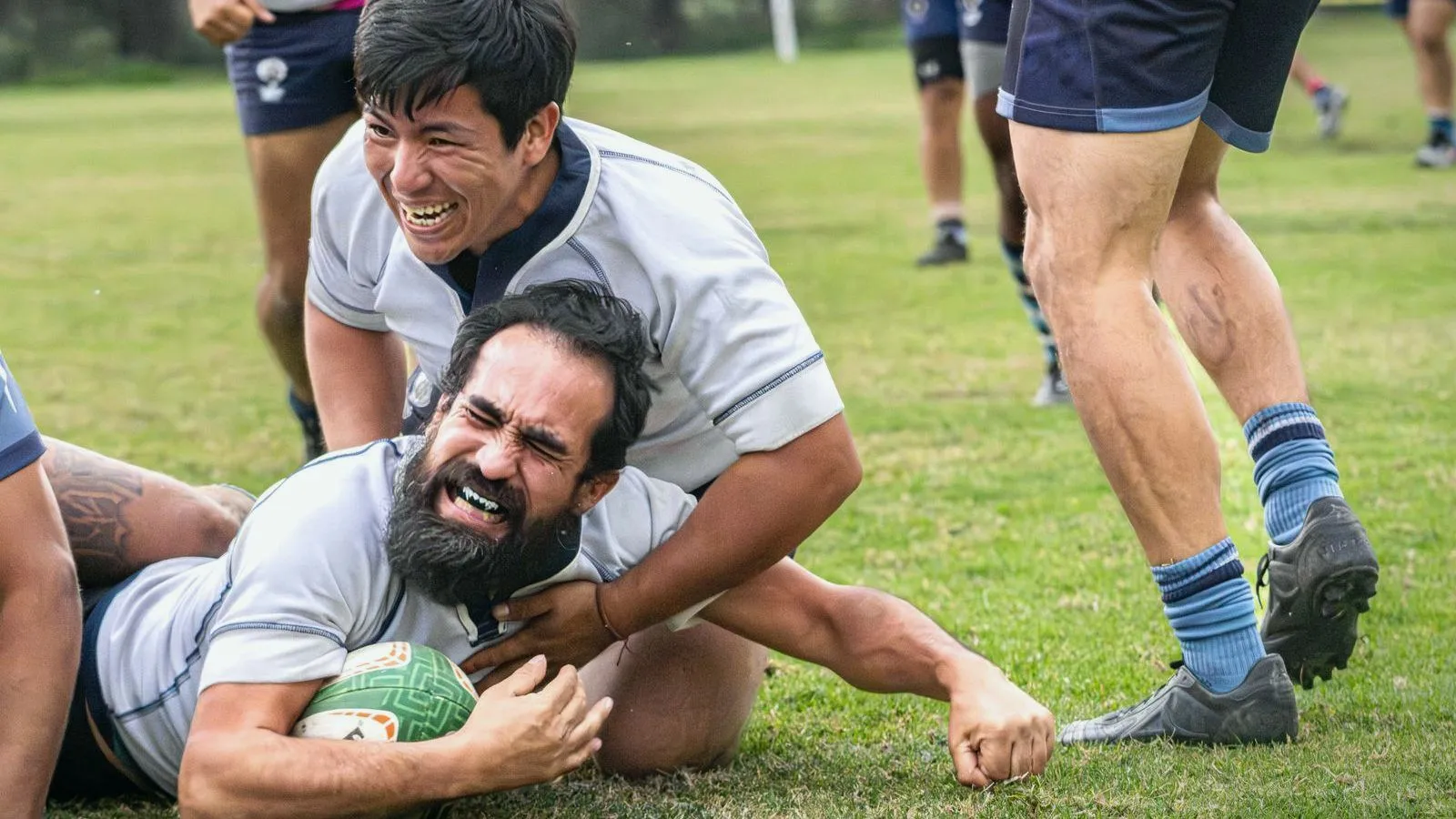
- Concussions in rugby training have risen across the last three seasons.
- Full-contact drills carried twice the risk, and preseason nearly twice.
- Training concussions are the avoidable kind, because someone chooses the drill.
- The average one cost 18 days out of the game.
- Eight seasons of English Premiership data, tracked as it happened.
A concussion in a match is the price of the sport. A concussion on a Tuesday afternoon, in a drill somebody chose to run, is something else.
That distinction is what makes eight seasons of English Premiership training data worth reading. Writing in the British Journal of Sports Medicine, researchers report that the incidence of concussions in training was 0.23 per 1000 hours, and that two specific circumstances carried much more of it than the rest.
Preseason and full-contact training were associated with a higher risk of concussion compared with the final 3 months of the season, at 1.80 and 2.20 times respectively.
Why training exposure is the tractable half
Nobody can legislate the collisions in a match without changing the game. Training is different in kind, because every contact in it exists because a coaching staff put it in a plan.
The two risk multipliers here point at decisions rather than accidents. Preseason is when squads do their heaviest contact conditioning, weeks before a competitive fixture. Full-contact training is a dial with settings, and several rugby unions have already capped it, which makes this the sort of finding that can become a rule.
The inciting events reinforce that. The tackle (46%) and accidental collisions (26%) account for roughly seven in ten. The tackle is a coachable technique performed in a controllable drill; accidental collisions are a function of how many bodies are moving at speed in a confined space, which is also a design choice.
What 18 days actually costs
The mean severity (days absent) of concussions was 18 days.
That is a substantial absence for an injury that leaves nothing to see on a scan. Concussions are a type of mild TBI, and while the effects can sometimes be serious, most people completely recover in time. In professional rugby the absence is governed by graduated return-to-play protocols, so the figure reflects a managed recovery rather than the natural history of the injury.
Combining rate and severity gives the burden: 4.16 days absent per 1000 hours. That is the number a performance director actually feels, because it converts a rare event into squad availability across a season.
The rising trend, and the honest reading of it
The incidence of training-related concussions was significantly higher in the 2021/2022, 2022/2023 and 2023/2024 seasons compared with the 2016/2017 season.
Three consecutive recent seasons above the baseline year is a pattern rather than a blip. What it means is genuinely uncertain, and the most likely explanation is the least dramatic one.
Concussion recognition changed enormously across this period. Head injury assessment protocols tightened, pitch-side spotting improved, reporting became mandatory in more circumstances, and the culture shifted from playing on to coming off. Every one of those raises the number of concussions recorded without changing the number sustained. A study counting diagnoses across eight seasons of evolving diagnostic practice cannot separate more injuries from better detection.
That is not a reason to dismiss the trend. It is a reason not to report it as rugby getting more dangerous, which the data do not establish.
What a prospective cohort of one league can and cannot support
This is surveillance, not an experiment. Nobody randomized squads to different amounts of contact.
So the comparison of preseason against the final three months is observational: those periods differ in contact volume, and in fatigue, squad size, player availability and competitive stakes. The estimates carry wide ranges, particularly full-contact training at 1.17 to 4.12, which reflects how few concussions occur in any single training category.
It also covers one league, one country, one sex and the professional tier. Men’s English Premiership Rugby Union is the most heavily monitored rugby population in the world, which is why the data exist, and the least representative of everyone else who plays.
What it means for anyone not in a Premiership squad
The specific numbers do not transfer to a school or a club side. The principle does.
Head-impact exposure in training is chosen, and it can be reduced without changing what happens on a Saturday. Unions capping full-contact minutes are acting on exactly the logic this study supports, and the finding gives that policy an evidence base rather than an intuition.
For a parent or an amateur player, the operative fact is the one that predates this paper: any suspected concussion means immediate removal from play and assessment, and symptoms that worsen, repeated vomiting, or weakness or numbness in the arms and legs are reasons to seek care urgently. Regular exercise is one of the best things you can do for your health, and contact sport delivers a great deal of it. This is an argument about how the training week is built, not about whether to play.
People also ask
What did the study find?
The incidence of concussions in training was 0.23 per 1000 hours (95% CI 0.22 to 0.29). The mean severity (days absent) of concussions was 18 days (95% CI 15 to 21). Preseason (incidence rate ratio 1.80, 95% CI 1.24 to 2.60) and full-contact training (IRR 2.20, 95% CI 1.17 to 4.12) were associated with a higher risk of concussion compared with the final 3 months of the season.
What caused them?
The tackle (46%) and accidental collisions (26%) were the most common inciting events. Together those account for roughly seven in ten training concussions.
Why single out training rather than matches?
Because training is controllable. A coach decides how much full-contact work happens and when, in a way nobody decides the collisions in a match. Exposure that is scheduled can be rescheduled.
What does incidence per 1,000 hours mean?
A rate that adjusts for how much time players actually spend training, so squads with different schedules can be compared. At 0.23 per 1,000 hours, concussions in training are far rarer than in matches, but the hours are many more.
Is 18 days a long absence?
It is substantial for an injury with no visible damage. Concussions are a type of mild TBI, and while most people completely recover in time, graduated return-to-play protocols in professional rugby keep players out until symptoms clear and testing normalizes.
Why would rates be rising?
The study reports the increase without settling its cause. Better recognition and stricter reporting would raise recorded incidence without any change in real risk, and that is the most likely single explanation. Genuine changes in training practice cannot be ruled out.
What does this mean for amateur players and parents?
The exposure principle transfers even though the numbers do not. Full-contact training is a choice, and reducing it lowers head-impact exposure without touching the match. Any suspected concussion needs immediate removal from play and assessment. This is general information rather than medical advice.