News · Fitness & Exercise
Weight training eased depression. So did the fake version.
A trial in young anxious women compared real resistance training against a deliberately feeble sham. Both produced large improvements, and the gap between them never became clear.
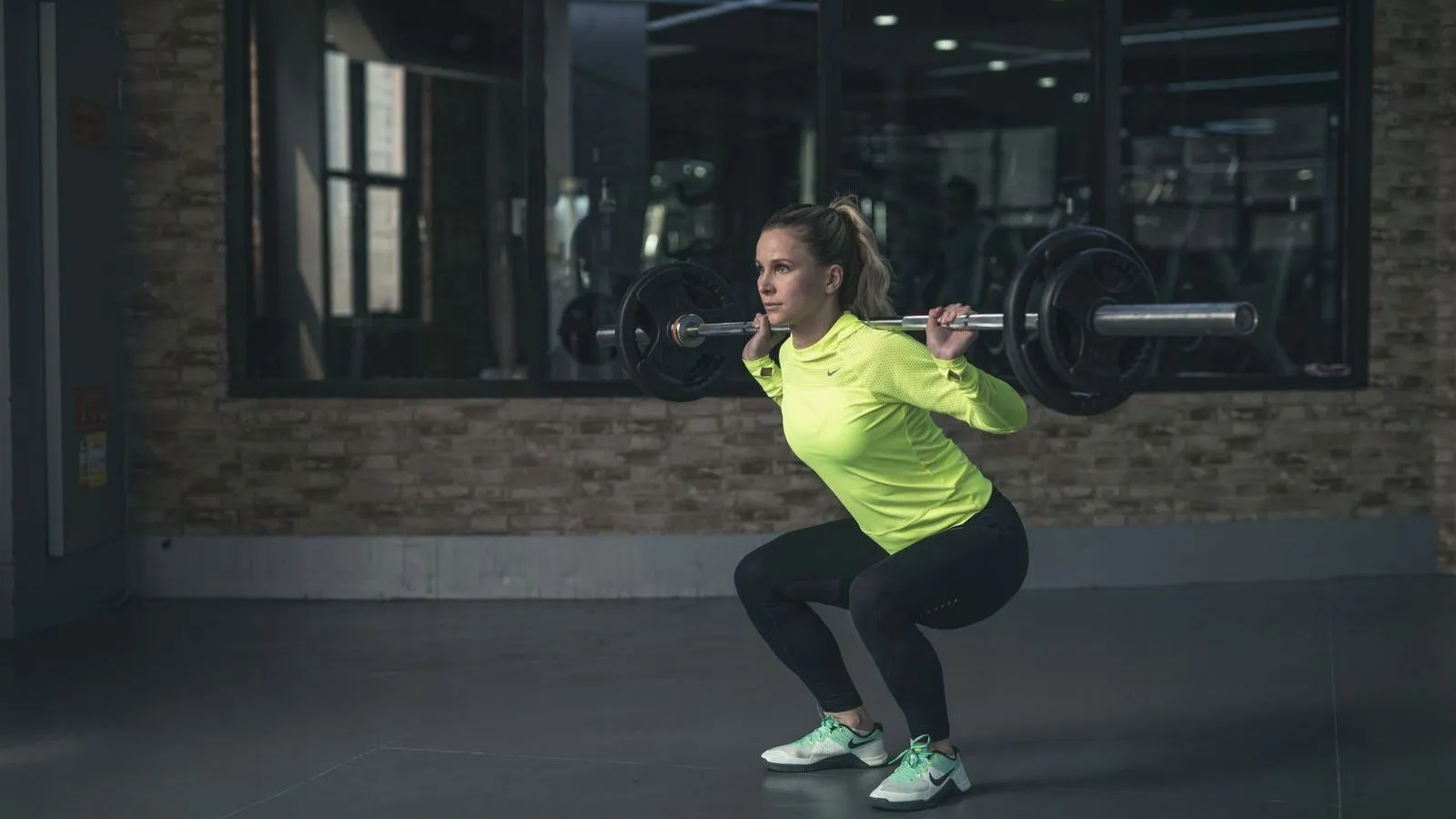
- 55 anxious women aged 18 to 40, randomized to eight weeks of real or sham resistance training.
- The sham used the same movements and schedule at 20% of maximum, close to no load at all.
- Depression fell substantially in both groups and stayed down a month after the program ended.
- Real training moved more (SMD, 1.53) than sham (SMD, 1.04), but the gap was never confirmed.
- 55 people is small for separating two active-looking treatments, and none had a clinical diagnosis.
Exercise trials have a structural problem: you cannot give someone a sugar pill version of a squat. A trial in the Journal of Affective Disorders tried the closest thing available, and the result is a useful embarrassment for anyone confident about why exercise helps mood.
The trial quantified the effects of resistance exercise training (RET) compared to low-intensity sham RET attention-control (SHAM) on depressive symptoms among young women (18-40y) with analogue Generalized Anxiety Disorder.
Two programs, one nearly weightless
Fifty-five participants, mean age 21.8, were randomized to eight weeks of World Health Organization and American College of Sports Medicine guidelines-based, progressive, moderate-to-high-intensity (70-80% one-repetition maximum) RET, with two sets of 8-12 repetitions of eight exercises.
The comparison group did the identical routine at 20% of maximum load - light enough that the researchers expected no meaningful training adaptation. Both arms were preceded by a two-week familiarization, so nobody was thrown in cold.
Symptoms were tracked with a standard 16-item depression questionnaire at five points: baseline, after familiarization, at four and eight weeks, and one month after the program finished.
Entry required scores above research thresholds on two anxiety measures. That is deliberately not the same as a clinical diagnosis, and it matters for how far the findings travel.
Both groups got better
Substantially, and in both arms.
Both induced large-magnitude reductions in depressive symptoms: a standardized mean difference of 1.53 for the real training and 1.04 for the sham. By the usual conventions of this literature, anything above about 0.8 counts as large. Both cleared it.
The improvements persisted. Both were maintained at one-month follow-up, with the real training group at 1.64 and the sham at 1.15. If anything the gains grew slightly after the program ended, which argues against a purely transient mood lift.
The comparison that failed
The whole point of a sham is to isolate the active ingredient. Here it did not deliver a verdict.
The authors are direct about it: although the difference between PRET and SHAM was unconfirmed, larger within-condition effects indicate greater benefits of PRET; however, benefits can also occur following lower-intensity RET.
Unconfirmed means the trial could not establish that real training outperformed the sham. The real group moved further, and with 55 people split across two arms, that gap is not large enough to separate from noise.
Why this is informative rather than disappointing
A null between-group result in a well-constructed trial says something that a positive uncontrolled result cannot.
Most of what people believe about exercise and mood comes from studies comparing exercise against a waiting list or against nothing. Those designs cannot distinguish the physiological effect of training from everything else that comes with it: a place to be twice a week, a supervisor paying attention, an expectation of improvement, and the natural tendency of bad weeks to be followed by better ones.
This design bundled all of that into the sham. The sham captured most of the benefit. Whatever is doing the work here, the evidence that it is the load on the bar is weak.
What it cannot settle
Fifty-five people is small for detecting a difference between two conditions that both plausibly work. A trial several times the size might separate them cleanly, and the direction of the point estimates suggests it could.
The population is narrow: young women, recruited on anxiety questionnaires rather than a diagnosis, with depression measured as a secondary outcome. People with diagnosed major depression are a different group with more room to improve and different responses to treatment.
And 20% of maximum is light, but it is not nothing. Eight exercises twice a week for eight weeks is real activity, whatever the load. The sham may have been an active treatment in its own right, which would explain the result without implying that intensity is irrelevant.
The practical version
Everyone in this trial improved, and stayed improved. The uncertainty is about mechanism, not about whether the participants got better.
For someone weighing whether to start, that is arguably the more encouraging finding. The version that helped was not necessarily the demanding one.
People also ask
What is a sham exercise condition?
A control group that does something that looks and feels like the real intervention but is designed to lack the active ingredient. Here it was the same eight exercises on the same schedule at 20% of maximum load, which is light enough that it should not drive meaningful strength adaptation. Exercise is almost impossible to blind properly, so a credible sham is the closest available substitute for a placebo pill.
Why would a fake program work almost as well?
Several reasons, none of which involve the weights. Turning up somewhere twice a week, being supervised, having attention from staff, expecting to improve, and simply moving your body all plausibly help mood. Symptom scores also drift downwards on their own over eight weeks, especially in people who enrolled when they were struggling. The sham captures all of that, which is exactly what it is for.
Does this mean exercise does not help depression?
No, and that would be the wrong reading. Both groups improved substantially and held the improvement a month later. What the trial questions is the assumption that the benefit comes specifically from lifting heavy. If a very light version delivers most of the effect, the active ingredient may be the routine and the structure rather than the training load.
What does an effect size of 1.53 mean?
It describes how far the group moved relative to how much scores varied, and 1.5 is large by the conventions of this literature. The sham's 1.04 is also large. The number that would settle the question is the difference between the two groups, and that is the one this trial could not pin down.
Should someone with depression start lifting?
This is general information rather than medical advice. Exercise is recommended as part of care for depression by major guidelines, and this trial is consistent with that: everyone improved. It also suggests the specific format may matter less than starting at all, which is encouraging for anyone put off by the idea of heavy weights. Anyone with depression or anxiety should discuss treatment with a clinician rather than relying on exercise alone.
References
- O'Sullivan D, Rice JM, Lyons M, Gordon BR, Herring MP. Resistance exercise training compared to a low-intensity sham for depressive symptoms in young women with analogue generalized anxiety disorder: A randomized controlled trial. Journal of Affective Disorders (2026).
- National Institute of Mental Health. Depression.
- Centers for Disease Control and Prevention. Physical Activity Boosts Brain Health.