News · Longevity & Aging
Organ age clocks: a blood test for 40 cell types
Stanford researchers measured 7,000 blood proteins in 60,542 people to estimate the biological age of more than 40 cell types. Aged cells flagged Alzheimer's, ALS and lung cancer risk years ahead. It is a research tool, and an estimate.
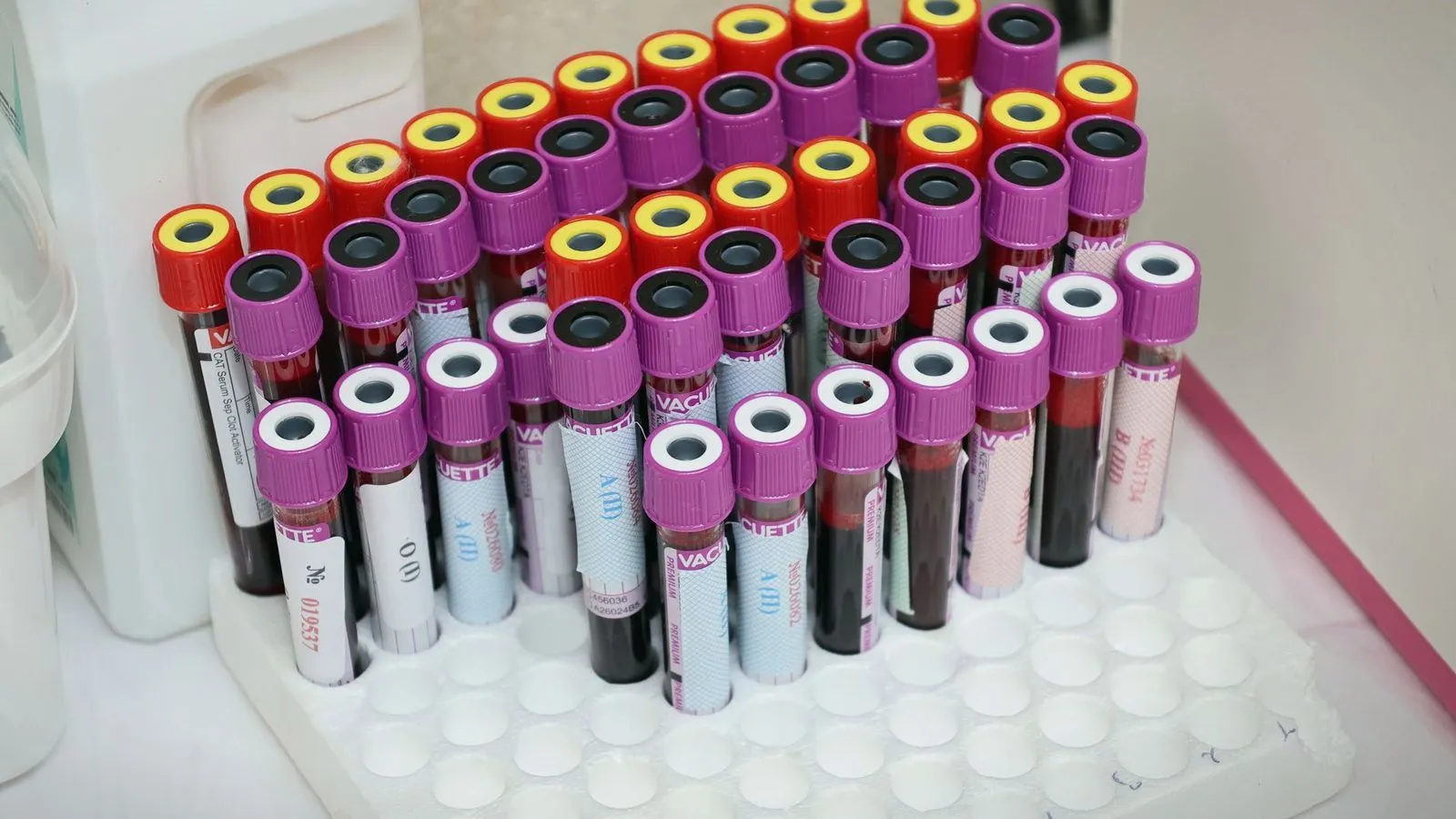
- More than 7,000 blood proteins measured in 60,542 people to age over 40 cell types.
- About 20% to 25% showed accelerated aging in one cell type; 1% to 3% across ten or more.
- In people carrying two APOE4 copies, extremely aged astrocytes tripled Alzheimer's risk.
- The most aged muscle cells carried 12.7-fold higher ALS risk; aged airway cells raised lung cancer risk in smokers.
- A research tool, and it estimates cell age from blood proteins rather than measuring it.
Your cells do not all age at the same speed. Aging is asynchronous across cells and organs, faster in some parts of the body and slower in others. In the same person, the muscles can look young while the brain runs old.
Until now, tests of biological age have mostly scored the whole body, or at best one organ at a time. Now a team led by Tony Wyss-Coray at Stanford University has built a blood test that estimates the biological age of more than 40 kinds of cell at once, reported in the journal Nature Medicine. In tens of thousands of people, the cells that looked oldest went on to forecast new disease and death over 15 years of follow-up.
Two cautions belong up front. No one can buy this test; it exists only for research. And a cell’s age here is an estimate a model computes from blood proteins, not a direct look at the cell.
How the test reads a cell’s age
The method rests on proteomics, the reading of thousands of proteins that circulate in a blood sample. Cells constantly shed proteins into the blood, and that mix changes as they age. The idea the Stanford team explored is that plasma proteomics can be used to analyze cell type-specific aging.
To turn proteins into ages, the researchers trained machine-learning models to estimate the biological age of over 40 cell types, from neurons and immune cells to muscle and gland cells. The dataset was large: more than 7,000 plasma proteins measured in the blood of 60,542 people.
A model does not open up a cell and check it. It reads a protein pattern and returns a number. Because the study followed people rather than running an experiment, it can tie these cell ages to disease without proving that aged cells cause it.
Independent scientists called the approach a step forward. Kanta Horie, a researcher at Washington University who was not an author, said the work marks “a conceptual advance in the biology of aging by moving beyond conventional measures of chronological age, brain age, or organ age.”
Different cells, different clocks
The clocks rarely moved in lockstep. Between a fifth and a quarter of people showed faster aging in a single cell type, and a smaller group aged quickly across 10 or more cell types at once.
Sometimes the pattern was oddly specific. Astrocytes are the star-shaped cells that support and feed neurons; macrophages are immune cells that clear away damage. People who carry the APOE4 gene variant, the strongest common genetic risk factor for Alzheimer’s, had older astrocytes but younger macrophages compared with people who carry the more common APOE3 version.
When an aged cell flags a disease
A few links stood out. In people who carried two APOE4 alleles, that is, two copies of the variant, extremely aged astrocytes tripled the risk of Alzheimer’s disease, while youthful astrocytes reduced risk. Kenneth Chen, one of the study’s authors, said the result that struck him most was that “individuals who maintain youthful astrocytes seem to be protected against the Alzheimer’s-promoting effect of APOE4.”
Other links were larger. People whose skeletal muscle cells looked the most aged had a far higher chance of developing amyotrophic lateral sclerosis, the fatal disease that destroys the nerves controlling movement, than people with young muscle cells. Among people who smoked, the most aged cells lining the airways carried a higher lung cancer risk compared to smoking alone.
The team also folded the separate clocks into one number, a polycellular aging risk score that stratified mortality risk across groups. Youthful immune and neuronal cell types, by contrast, tended to be protective. The more aged cells a person carried overall, the shorter their likely survival.
How to read the organ age numbers
The largest numbers need the most care. The tripling of Alzheimer’s risk appeared only in people with two APOE4 alleles, a small share of the population. A big multiplier on a rare disease is still a small chance in absolute terms: amyotrophic lateral sclerosis strikes very few people, so several times a tiny risk stays tiny.
There is a plainer limit too. This is a research tool that no reader can order. And the links it found are associations. Aged cells travel with higher disease risk, but the study cannot show they cause it.
There is nothing to order yet
For a reader, this changes nothing today. You cannot get the test, and even the people who built it call it a map of the body’s biology, well short of a health check. The authors describe the work as a framework for quantifying human physiology at cellular resolution, a first map of how the body ages cell by cell.
The habits that support healthy aging have not changed. Sleep, movement, and not smoking still do more for your cells than any number a model could hand you today.
The clocks can read a cell’s age today. Turning that into advice for a single person is still out of reach.
People also ask
Can I get this cellular aging test?
No. It is a research tool built to study how cells age, not a product you can buy or a test a doctor can order. The scientists used it to analyze stored blood samples from tens of thousands of people, and there is no consumer version.
If one of my cell types looks old, does that mean I will get the disease?
No. The results are associations, not certainties, and the biggest numbers come off small baselines. The tripled Alzheimer's risk was seen in people with two copies of APOE4, a small group, and the 12.7-fold higher ALS risk is a large multiple of a very rare disease, so the absolute chance stays low.
Is the test really measuring the age of my cells?
Not directly. It reads more than 7,000 proteins in a blood sample and uses machine-learning models to estimate how old each cell type looks. A young or old cell here is a statistical estimate from blood proteins, not a measurement taken from the cell itself.
What should I do with this now?
For now, nothing new. The test is not available, and the results do not change day-to-day advice. The habits linked to healthier aging, such as regular movement, good sleep, and not smoking, remain the practical steps. Ask your doctor before acting on any biological age result.