News · Longevity & Aging
Younger generations are aging faster, and cancer tracks it
Across 154,169 UK Biobank adults, a blood-based measure of biological age was higher in each successive birth cohort, and people who were biologically older for their years had more early-onset cancer.
- 154,169 UK Biobank adults, with partial replication in 10,262 US participants.
- People born 1965 to 1974 were biologically older for their age than those born 1950 to 1954.
- Each step up in biological age carried 8% higher early-onset solid cancer risk.
- Lung, gastrointestinal and uterine cancers drove it, independent of genetic risk.
- Observational. Biological age is a calculated score, not a measured property.
Cancer before the age of 50 has been rising for decades, in many countries at once, and no single explanation has held up. A study in Nature Medicine offers a candidate that is neither a chemical nor a behavior: the people getting it are, biologically, older than their parents were at the same age.
The measure
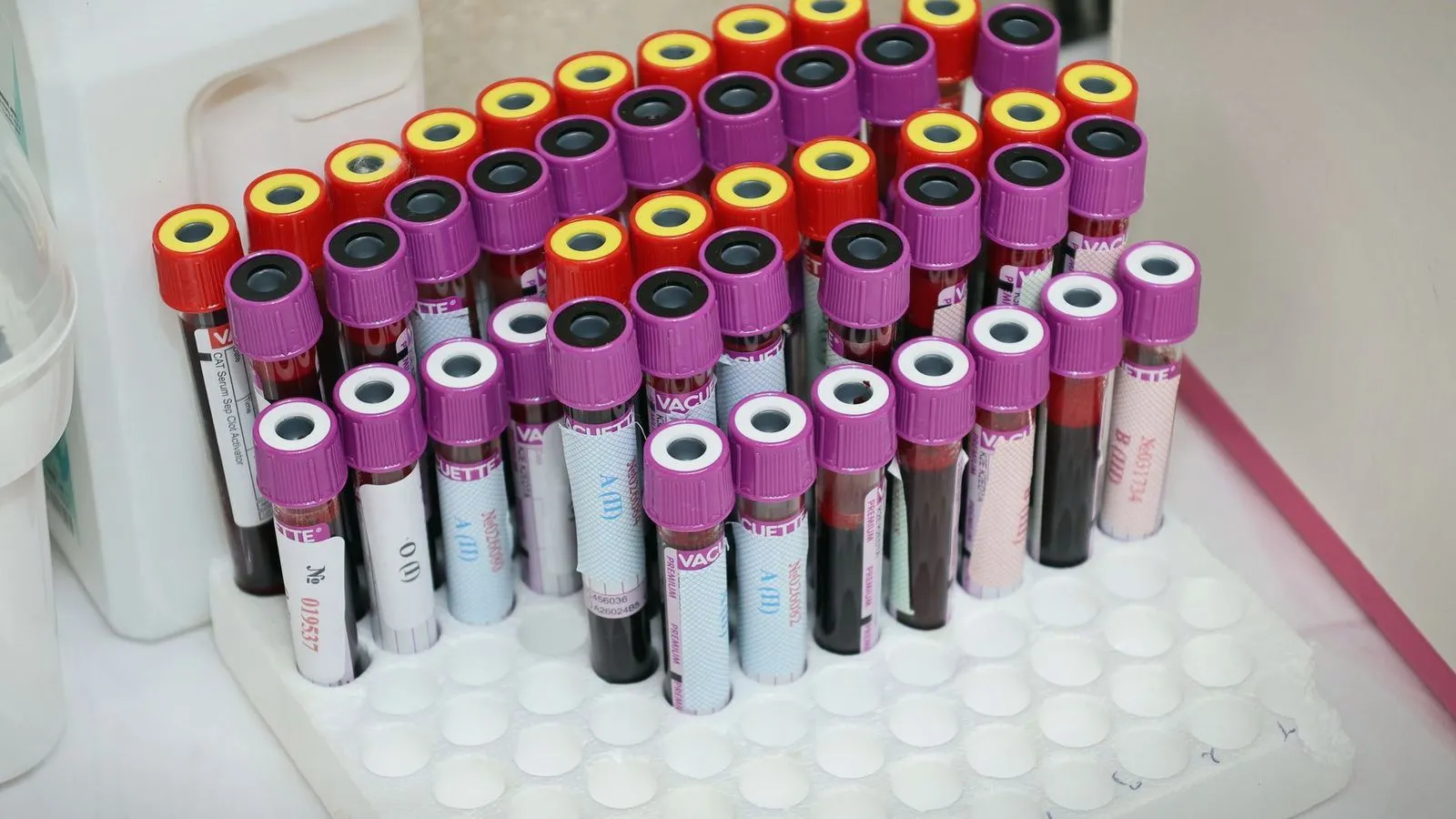
Biological age here means PhenoAge, a score built from routine blood results, things like inflammation markers, liver and kidney measures and white cell counts, converted into a number of years. Subtract the age on someone’s birth certificate and what remains is the age gap.
It is a calculated summary rather than a property of a person. That distinction matters for everything that follows.
The generational finding
Among 154,169 young adults from the United Kingdom Biobank, systemic aging measured by PhenoAge increased across birth cohorts.
People born between 1965 and 1974 scored meaningfully higher than people born between 1950 and 1954, once compared at the same chronological age. Later generations were arriving at any given birthday in worse measured shape.
That alone would be an interesting observation about population health. The study goes one step further.
The cancer link
Higher biological age was associated with early-onset solid cancer risk, at roughly 8% more risk for each standard step up the scale.
It was not spread evenly. The association was driven by lung, gastrointestinal and uterine cancers, independent of genetic risks of aging and cancer. That last clause does real work: the effect was not simply inherited risk showing up in both measures.
The result also held using other ways of calculating biological age, and was validated partially among 10,262 participants in the United States All of Us Research Program. Partially is the authors’ word, and it should be kept.
Aging by organ
The newest part of the analysis breaks aging down by tissue using blood proteins. Proteomics-based organ-specific aging analyses linked immune aging with early-onset lung cancer, and fat tissue aging to early-onset colorectal cancer.
Those associations are considerably stronger than the whole-body one. They also rest on fewer cases and a much newer method, so they are the part of this paper most likely to change.
What this does not settle
Whether biological aging causes any of it. This is an observational study, and the same things that raise a PhenoAge score, obesity, smoking, chronic inflammation, poor metabolic health, are independently linked to these cancers. The score may be a marker of the exposures rather than a mechanism.
The generational comparison carries its own trap. People born in the 1960s were recruited into UK Biobank at different ages and in a different era from those born in the 1950s, and volunteers for research are healthier than the general population in ways that can shift over time.
And UK Biobank is not Britain, let alone the world. The partial US replication helps and does not settle it.
Why it is worth attention
The authors are careful in their own framing, calling the age gap something that may serve as a driver associated with risk of early-onset solid cancers and pointing at mechanisms still to be uncovered.
Read plainly, the study connects two trends that were previously discussed separately: that early cancer is rising in the young, and that the young are metabolically older than their parents were. Whether one causes the other is exactly the question it hands to the next study.
People also ask
What is biological age, exactly?
It is a score, not a measurement. PhenoAge, the main one used here, combines routine blood markers such as inflammation, liver and kidney measures and white cell counts into a single number in years, then compares it to the age on your birth certificate. The difference is the age gap. It is a useful research summary of how a body is faring, and it is not a property of you that exists independent of the formula used to calculate it.
Why does early-onset cancer matter separately?
Because cancer before about 50 has been rising in many countries for reasons nobody has fully explained, and the usual suspects, screening and smoking, do not account for it. That makes generational exposures interesting. If people are arriving at 45 in worse metabolic shape than their parents did, that is a candidate mechanism worth testing.
How big is an 8% increase?
Modest for an individual and large for a population. The figure is a hazard ratio of 1.08 per standard deviation of biological aging (95% CI, 1.03 to 1.13), meaning a moderate shift in the score comes with an 8% relative increase in risk. Early-onset cancer is uncommon, so 8% of a small number stays a small number for any one person. Across millions, it is not small.
Which organs mattered?
The organ-specific analysis is the most striking part. Immune aging was linked to early-onset lung cancer (HR 1.89; 95% CI, 1.20 to 2.97) and fat tissue aging to early-onset colorectal cancer (HR 1.60; 95% CI, 1.11 to 2.32). Those are much larger than the whole-body figure, but they rest on smaller numbers and a newer method, so treat them as leads rather than conclusions.
Can I lower my biological age?
The markers behind PhenoAge do respond to things such as weight, activity, smoking and treatment of chronic conditions. What this study cannot tell you is whether moving the score moves cancer risk, because it never tested that. Nobody was assigned to change anything. Treat the score as a summary of current health rather than a dial to be turned.