Explainer · Brain & Mental Health
Brain scans showed fewer dopamine nerve markers in 24 people with long COVID than in matched controls
Apathy, slowed movement and brain fog are among the hardest long COVID symptoms to explain. A small imaging study points to the brain's dopamine system, and ties the loss to symptom severity.
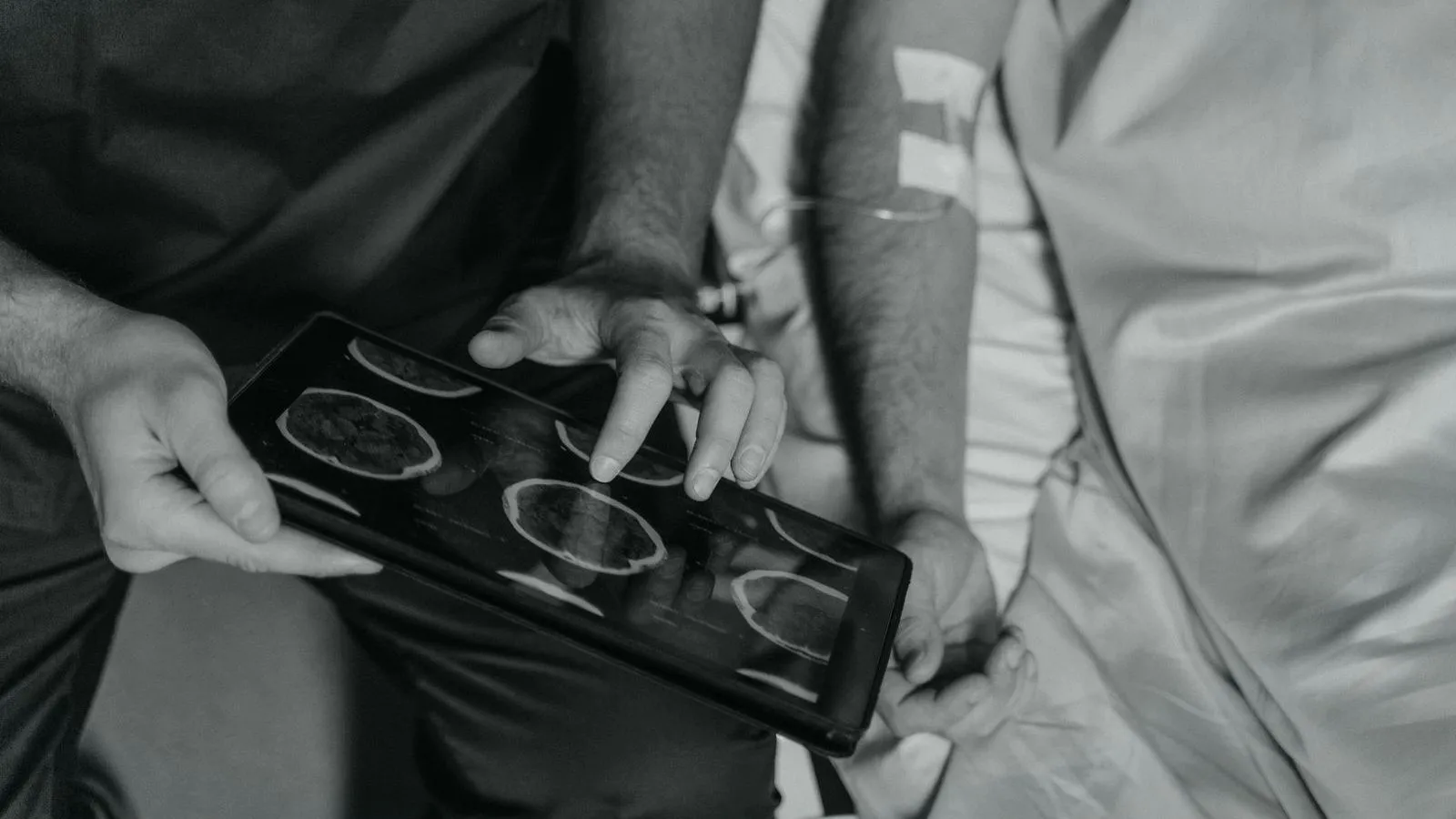
- A small brain imaging study comparing 24 adults with long COVID against 24 age-matched healthy people in Toronto.
- Scans measured a protein found in dopamine-releasing nerve endings in the striatum, a deep brain region.
- Levels of that marker were clearly lower in the long COVID group.
- Within the group, lower levels tracked with more apathy, slower movement and worse memory.
- With 24 people per group and one scan each, this is an early finding, not a diagnosis or a treatment.
The symptoms that keep people with long COVID out of work are often the vaguest sounding: no drive, slowed movement, a mind that will not hold a thought. They are also the hardest to see on a test, which is why many patients have been told their scans look normal.
A study in eBioMedicine took a different kind of scan. In 24 adults with long COVID, markers of dopamine-releasing nerve endings were lower than in matched healthy volunteers, and the lower they were, the worse the symptoms.
Why dopamine is a plausible suspect in long COVID
The World Health Organization describes post COVID-19 condition, also known as long COVID, as long-term symptoms that some people experience after they have had COVID-19. The most common symptoms associated with post COVID-19 condition include fatigue, breathlessness and cognitive dysfunction, it notes, and current evidence suggests approximately 10-20% of people experience mid and long-term effects after the initial illness. What causes them has stayed unresolved.
Dopamine is the brain’s signal for movement, motivation and reward, and the authors give a reason to look there: dopaminergic neurons are vulnerable to injury from gliosis and have high density of ACE2 receptors. Gliosis is the brain’s inflammatory scarring response, and ACE2 is the doorway the virus uses to enter cells.
How the long COVID brain scan study worked
This was a case-control study, meaning people with a condition are compared against people without it. The researchers recruited in Toronto between August 2022 and April 2025 and scanned 24 adults with long COVID and 24 age-matched healthy controls, with a larger control group of 43 used for extra analyses.
Each participant had a positron emission tomography scan using a tracer that binds to vesicular monoamine transporter 2, a protein packed into the nerve endings that release dopamine. Less binding is read as fewer or less healthy dopamine terminals. Participants also completed measures of apathy, loss of pleasure and slowed movement.
What the dopamine scans showed
The group difference was clear. Tracer binding was significantly lower in 24 individuals with long COVID vs 24 age-matched healthy controls, across the striatum, the deep brain region that handles movement and motivation.
Symptoms tracked with the scans. Apathy, motor slowing and memory decline correlated with lower binding in the ventral striatum, the dorsal putamen and the caudate respectively, correlations of moderate strength. In other words, the people with the least signal tended to be the most affected.
Why a biological marker for long COVID matters
Long COVID has been short of objective findings, which has affected how patients are treated and believed. A scan difference that lines up with specific symptoms is a step toward a mechanism, and mechanisms are what treatments are built on.
The authors put it as a direction rather than a result: they suggest improved function of dopaminergic synapses as a new therapeutic direction for long COVID. That means testing drugs already used in conditions such as Parkinson’s disease, in trials, rather than reaching for them now.
What a 24-person scan study cannot show
The sample is small, from one city, and people who volunteer for brain scans while ill are not a random slice of long COVID. Each person was scanned once, so this compares groups at a moment rather than following anyone over time, and it cannot say whether the difference existed before infection.
The tracer measures a protein in nerve terminals, not dopamine activity itself, and other conditions and medicines can affect it. A correlation between symptoms and scans within 24 people is easily disturbed by a few individuals. None of this makes a scan useful for diagnosing long COVID.
What this changes for people living with long COVID
Nothing yet, in terms of treatment. What it does offer is a concrete target for research and evidence that the symptoms have a biological correlate, which matters for patients who have been dismissed.
In the meantime, the practical measures are unchanged: pacing, rehabilitation where it is offered, and checking for other treatable causes of fatigue and low mood. Dopamine drugs are not a self-prescription; they need the trials the authors are calling for.
People also ask
What did the study find?
Binding of the tracer (+)[11C]DTBZ, a measure of vesicular monoamine transporter 2 in dopamine nerve terminals, was significantly lower in 24 individuals with long COVID than in 24 age-matched healthy controls (P = 4 x 10⁻⁵). Apathy, motor slowing and memory decline correlated with lower binding in the ventral striatum, dorsal putamen and caudate respectively, with correlation coefficients of 0.48 to 0.58.
What is the striatum?
A pair of structures deep in the brain that help control movement, motivation and learning from reward. They receive dense input from dopamine-producing neurons.
What does the scan actually measure?
A positron emission tomography scan tracks a radioactive tracer that sticks to a protein packed inside dopamine nerve endings. Less binding suggests fewer or less healthy dopamine terminals, though it is an indirect measure.
Does this mean long COVID damages the brain?
It is one piece of evidence consistent with that, in a small sample. It cannot show when the difference arose, or whether it is permanent.
Could a dopamine drug help?
The authors suggest improving dopamine synapse function as a direction to test. No treatment follows from this study, and dopamine drugs carry real side effects.
What should someone with long COVID do?
Care today still rests on managing symptoms, pacing activity and rehabilitation where it is available. Ask a doctor about treatable contributors such as sleep, mood, thyroid problems and anemia. This is general information rather than medical advice.