News · Longevity & Aging
Hemoglobin just over the anemia cutoff linked to more deaths in half a million UK adults
University of Glasgow researchers followed 477,876 UK Biobank adults for a median 13.6 years. Death risk was lowest 1 to 3 g/dL above the WHO anemia cutoffs, but the study cannot say whether low hemoglobin does harm or signals illness.
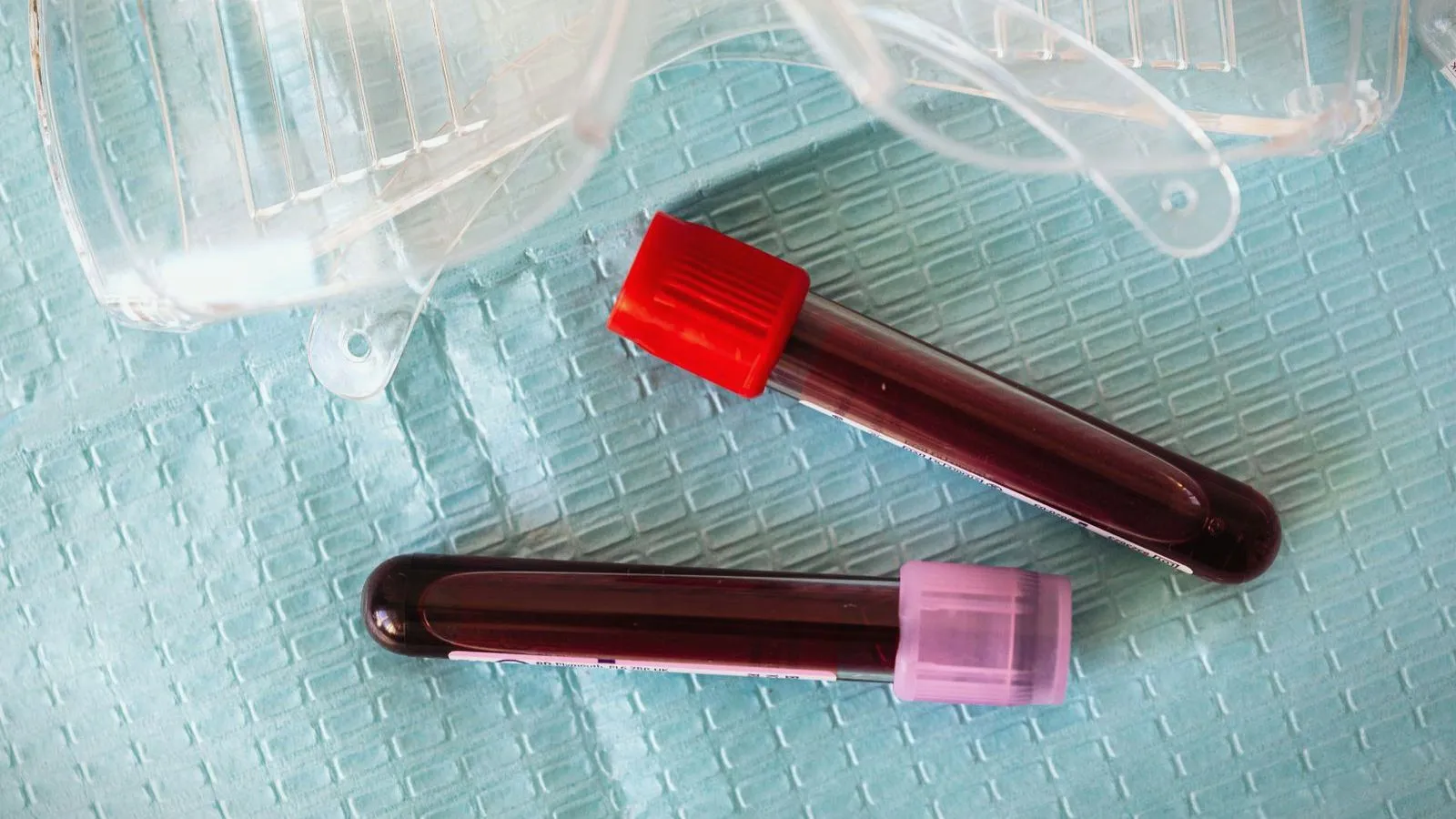
- Just above the cutoff, still counted as normal, 10-year risk of death was 5.3%, against 4.5% in the lowest-risk band.
- That is about 8 extra deaths per 1,000. More than 2 g/dL below the cutoff, risk was 12.5%, or 8 more per 100.
- The cutoffs, 13 for men and 12 for women, rest on what is unusual in healthy blood; a 2024 WHO review kept them.
- Hemoglobin above the lowest-risk band also tracked with more deaths; results were less consistent in women under 60.
- One reading in a mostly White cohort: illness can lower hemoglobin, so this cannot show cause or set new cutoffs.
A man whose hemoglobin comes back at 12.9 has anemia under the World Health Organization’s definition. At 13.1 he does not. The line sits at 13 grams of hemoglobin per deciliter of blood for men and 12 for women, and those WHO sex-specific thresholds are still widely used. The chance of dying does not flip at that line.
In nearly half a million UK adults followed for more than a decade, deaths from any cause were least common when hemoglobin sat 1 to 3 points above the WHO threshold. The research, led by the University of Glasgow, is published in the Annals of Internal Medicine.
Those only just above the line, and so officially normal, already died at a slightly higher rate: their estimated 10-year risk of death was 5.3%, against 4.5% in the band where death rates were lowest. That works out to roughly 8 extra deaths per 1,000 over a decade. The authors frame the results as a lead for future research and say they should not define new thresholds, though they may inform how doctors interpret borderline values.
Where the WHO’s 1959 anemia definition came from
Hemoglobin is the iron-rich protein in red blood cells that carries oxygen from the lungs to the rest of the body, and it is usually measured as part of a complete blood count. The test is often used to check for anemia, a condition in which the body does not make enough healthy red cells.
The Glasgow team sorted its participants using what it calls the 1959 WHO definition of anemia. The WHO first proposed hemoglobin cutoffs that year, but the current cutoffs for men and women were first proposed in 1968. They came out of technical meetings of clinical and public health experts working with data from five studies of populations in Europe and North America with predominantly European ancestry. Data on elderly people were not available at the time.
The numbers describe how hemoglobin varies in healthy adults. When the WHO revisited them in 2024, it said basing cutoffs on outcomes such as symptoms or impaired function was preferred but not possible for all groups, so it used a statistical approach. The cutoffs are based on the 5th percentile of hemoglobin in healthy people, which means 95% of healthy individuals would have a higher value. The other 5% would be falsely diagnosed as anemic.
Nothing in that method asks who dies. The WHO’s own list of research gaps includes the hemoglobin levels below which an increased risk of mortality starts to show. For the general adult population, the link between the 1959 definition and death was uncertain, and that is the gap the researchers set out to fill.
How death risk climbed as hemoglobin approached the anemia cutoff
Across the whole range, deaths traced a U-shaped association with hemoglobin, higher at both ends. The bottom of the U, 1 to 3 points above each threshold, works out to roughly 14 to 16 for men and 13 to 15 for women.
“Our data show that the lowest risk of death is associated with a ‘definitely normal’ haemoglobin,” said Malek Ahmad, a clinician-scientist at the University of Glasgow and the study’s first author.
The steepest rise came well below the line. Among participants more than 2 points under the threshold, the estimated 10-year risk of death was 12.5%, nearly triple the lowest band’s 4.5%, or about 8 extra deaths for every 100. The same ordering held over the entire follow-up as well as at ten years.
The associations were less consistent in women under 60. One possible reason is that they are at higher risk for anemia during their menstrual periods, so in that age group a low reading may more often have an ordinary explanation than a hidden illness behind it. Split by cause, cardiovascular deaths and cancer deaths followed a similar pattern at low and borderline levels, with a weaker upturn at the high end.
Half a million UK Biobank adults, but only one hemoglobin reading each
UK Biobank, a population-based study in the United Kingdom, recruited 502,188 adults from 2006 to 2010. Hemoglobin was measured in 477,876 of them, and they were followed for a median of 13.6 years. Paul Welsh, a professor of molecular epidemiology at Glasgow and one of the authors, points to the very large study population, long follow-up and consistency across several statistical approaches, then adds that this remains an observational study. It can show which groups died more often; it cannot show that their hemoglobin was the reason.
The authors flag two limitations: a single baseline hemoglobin concentration measurement and a predominantly White population. The first means each person’s hemoglobin was captured once, at the start, with no record of how it moved over the years that followed. The second repeats a gap in the cutoffs themselves, which came from populations with predominantly European ancestry.
Korean data show the same kind of curve. In about 290,000 adults over 40 without cardiovascular disease, hemoglobin had a U- or J-shaped association with cardiovascular and all-cause deaths, according to a study published in 2018. The trend was similar in women but less clear-cut, the Seoul National University Hospital team reported.
Illness, oxygen or thicker blood: why hemoglobin might be linked to earlier death
Neither the British nor the Korean data can say why. One explanation treats low hemoglobin as a signal of a problem that is already there. Anemia may be a sign of a more serious condition, such as bleeding in the stomach, inflammation from an infection, kidney disease, cancer or autoimmune disease. The Seoul team suggested anemia may be a marker for an underlying inflammatory process. If that is most of the story, a single reading at the start would catch some people whose condition had not yet been diagnosed, and the same illness would explain both their low hemoglobin and their earlier death. Researchers call this reverse causation, because the underlying problem comes first and the low reading follows.
Hemoglobin could also matter in itself. When it is low, the cells in the body don’t get all the oxygen they need. The Seoul team noted that chronic anemia below 10 is known to result in increased cardiac output, meaning the heart pumps harder to compensate, which may lead to a thickened heart muscle. That is far deeper than the borderline band, where any direct effect would presumably be smaller.
High hemoglobin has its own suspects. It can be a sign of lung disease, heart disease, sleep apnea or polycythemia vera, a disorder in which the bone marrow overproduces red cells, and smoking and dehydration can affect results too. Extra red cells thicken the blood, slowing its flow, the Seoul researchers added.
Which explanation dominates decides whether raising hemoglobin would lower the risk at all, and neither cohort can tell them apart.
What a borderline hemoglobin result means while the WHO cutoffs stand
The WHO has already considered raising the line for men. In its 2024 review, it noted that data in adult men may suggest a higher cutoff of 13.5. It kept 13 anyway, citing uncertain evidence and the potential unintended consequences of a change, such as iron supplementation programs in men.
This study cannot say if investigating or treating people just above the threshold would improve their outcomes, and the researchers say that needs to be tested directly. Pierpaolo Pellicori, the study’s corresponding author and a consultant cardiologist in Glasgow, put it plainly: “Whether this should influence clinical practice is an important question for future research.”
For anyone reading their own lab report, reference ranges may vary based on the laboratory used and a person’s age, race and sex, so a borderline reading may or may not be flagged. The test itself can’t tell you what’s causing a low number, and a provider also weighs symptoms, medical history and the results of other blood tests. The study did not test iron or any other way of raising hemoglobin, so it offers no evidence that doing so would help.
The man at 13.1 is still not anemic, but he sits in a band where slightly more people died, for reasons one blood test cannot reveal.
People also ask
What hemoglobin level counts as anemia?
Under the WHO definition used in this study, anemia means a hemoglobin below 13.0 g/dL in men or below 12.0 g/dL in women (130 and 120 g/L). WHO first proposed hemoglobin cutoffs in 1959, the current adult values were first proposed in 1968, and WHO's 2024 guideline kept them for nonpregnant adults aged 15 to 65. Individual laboratories use their own reference ranges, which can vary with the lab and with age, race and sex.
What did the Glasgow study find about hemoglobin and mortality?
Among UK Biobank participants followed for a median of 13.6 years, all-cause mortality had a U-shaped association with hemoglobin and was lowest 1 to 3 g/dL above the WHO threshold. In the primary adjusted model, the 10-year standardized cumulative incidence of death (the estimated share who died within ten years) was 4.5% in that reference group. It was 12.5% for people more than 2 g/dL below the threshold (absolute risk difference +8.1 percentage points, 95% CI 6.7 to 9.4), and over the whole follow-up their hazard ratio was 2.87 (95% CI 2.54 to 3.25), nearly three times the rate. For people 0 to 1 g/dL above the threshold it was 5.3% (absolute risk difference +0.8 percentage points, 95% CI 0.7 to 1.0), with a hazard ratio of 1.18 (95% CI 1.15 to 1.21), about 18% higher.
Is a hemoglobin just above the anemia cutoff dangerous?
The extra risk seen in this study was small, about 8 more deaths per 1,000 people over ten years, and the study cannot show that the hemoglobin level itself is to blame. Low hemoglobin can reflect other conditions, including bleeding, inflammation, kidney disease or cancer. The authors say the results may inform how doctors interpret borderline values and should not be used to set new thresholds.
Should I take iron if my hemoglobin is borderline?
This study did not test iron or any other treatment, and it offers no evidence that raising hemoglobin changes the risk it describes. A low or borderline value can have many causes, and the test itself cannot say which one applies. When WHO reviewed its cutoffs in 2024, it kept the cutoff for men partly because of potential unintended consequences of changing it, such as iron supplementation programs in men. Questions about a result belong with the clinician who ordered the test.
Why might low hemoglobin be linked to a higher risk of death?
The study did not test mechanisms. Low hemoglobin can be a sign of illness already present, such as bleeding, inflammation, kidney disease, liver disease or cancer, which would raise the risk of death on its own. It also means less oxygen reaches the body's cells, and severe long-term anemia can make the heart work harder. With a single measurement at the start, the study cannot tell these explanations apart.
Who was in the study, and does it apply to everyone?
UK Biobank recruited 502,188 adults in the United Kingdom from 2006 to 2010 (median age 58, 54.4% women), and hemoglobin was measured in 477,876 of them. The population was predominantly White, hemoglobin was measured only once, and associations were less consistent in women younger than 60, so the results may not carry over to every group.
References
- Ahmad M, et al. Association Between Blood Hemoglobin Concentration and Mortality by Age and Sex: A Prospective Cohort Study. Annals of Internal Medicine, 2026.
- World Health Organization. Guideline on haemoglobin cutoffs to define anaemia in individuals and populations. Geneva: WHO, 2024 (NCBI Bookshelf).
- Lee G, et al. Association of Hemoglobin Concentration and Its Change With Cardiovascular and All-Cause Mortality. Journal of the American Heart Association, 2018.
- MedlinePlus. Hemoglobin Test. US National Library of Medicine.
- National Heart, Lung, and Blood Institute. What Is Anemia? National Institutes of Health.