News · Longevity & Aging
Lung damage found by accident on a scan tracked 54% higher death risk
Health screening scans routinely turn up emphysema in people with no symptoms, and it is usually noted and forgotten. Following 41,000 Korean adults, it predicted death, except in one group where nobody died at all.
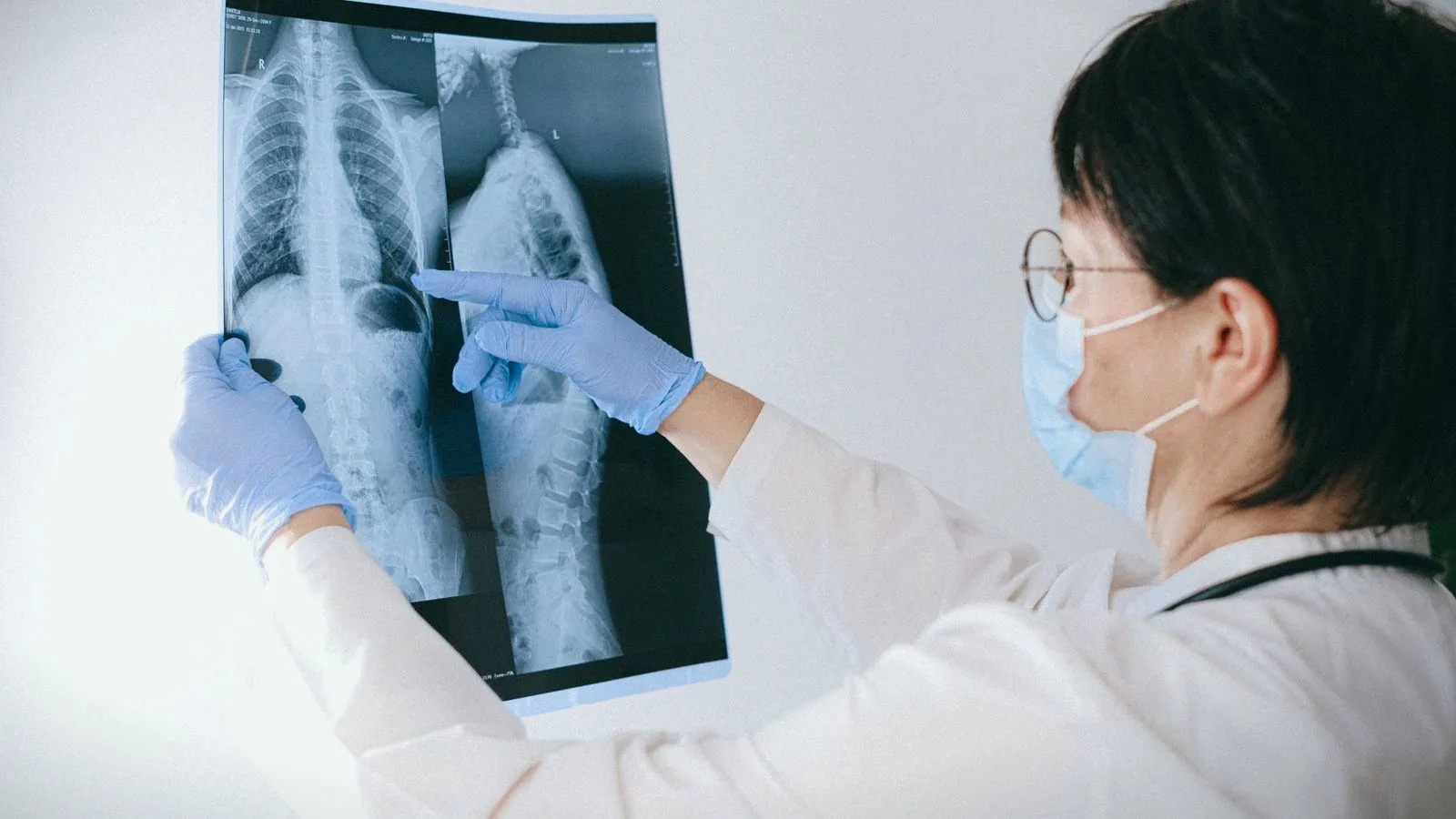
- Emphysema spotted by chance on a screening scan tracked 54% higher death risk.
- It showed up in one adult in eleven, including people who had never smoked.
- Among never-smokers with emphysema, not a single participant died.
- The signal held after accounting for how much people had smoked.
- 41,000 adults followed a median of 8.5 years, with 284 deaths.
Screening scans find things nobody was looking for. A chest scan ordered as part of a health check turns up a nodule, a calcification, a patch of lung that has lost its structure, and the report notes it in a population who feel entirely well.
Emphysema is one of the commonest such findings, and one of the most casually handled. The person has no cough, no breathlessness, no diagnosis. The word appears in a report and is often the end of the matter.
Researchers writing in the journal Chest asked whether it should be. Its prognostic significance in asymptomatic populations is characterized poorly, they note, and previously nobody had followed these incidental findings long enough to say. So they tracked a Korean screening cohort for a median of 8.5 years.
The finding
Emphysema was present in 3,774 participants, about one in eleven of those scanned.
Over the follow-up, 284 deaths occurred. Emphysema was associated with all-cause mortality, carrying roughly 54% higher risk in the main analysis.
That association survived the most important test. Among those who had ever smoked, after adjusting for how much they had smoked, the figure was slightly larger rather than smaller. And when the scan finding was updated at repeat imaging, rather than fixed at baseline, it was larger again.
The group where nothing happened
One line in the results does more work than the headline, and it points the other way.
Among people who had never smoked, no participant with emphysema died during the follow-up. Not a raised risk, not a small effect. Zero deaths.
That absence is what pulled one version of the analysis below significance. The authors are explicit that the full-cohort estimate was diluted by never-smokers, and the arithmetic is straightforward: a group with no events cannot contribute an association.
Why that changes the interpretation
Read one way, this is a study showing that incidental emphysema predicts death. Read properly, it is a study showing that incidental emphysema predicts death in people who have smoked.
The usual cause of emphysema is long-term exposure to irritants that damage your lungs, and the same appearance on a scan can arise from different histories. In a lifelong smoker it sits at the end of decades of injury that has also affected arteries, kidneys and cancer risk. In someone who has never smoked it may reflect aging, genetics, or a quirk of the imaging.
Same word in the report, different thing underneath, and this cohort could see the difference only because it was large enough to contain both groups.
The cancer signal, and how far to trust it
An exploratory analysis found roughly double the cancer risk, concentrated in lung cancer.
It rests on 13 events. The authors label it exploratory for exactly that reason, and a reader should treat it as a suggestion of where to look next rather than as a result.
What a prediction study still has to answer
The researchers tested whether adding emphysema to a standard risk model improved prediction, which is the right question to ask of any incidental finding.
The harder question sits downstream. A finding is worth reporting to a patient if somebody can do something differently as a result, and this study does not test any intervention. Nobody was randomized to closer follow-up, to spirometry, or to smoking cessation support.
Without that, an incidental finding that predicts death risks becoming an incidental finding that generates anxiety and follow-up scans without changing outcomes. That pattern is well documented across screening medicine.
The reasonable reading
If a scan done for something else shows emphysema and the person has smoked, it is information: a marker that the damage went further than the symptoms suggest, in a person who may still benefit from stopping.
If the same finding appears in someone who has never smoked, this cohort offers no reason for alarm at all. Over eight and a half years, none of them died.
People also ask
What did the study find?
Emphysema was associated with all-cause mortality in the designated complete-case analysis (hazard ratio 1.54; 95% CI 1.05-2.25), among those who had ever smoked after pack-years adjustment (HR 1.63; 1.09-2.43), and when exposure was updated at repeat imaging (HR 1.69; 1.18-2.41). Full-cohort pack-years imputation was not significant (HR 1.36; 0.97-1.91).
What is incidental emphysema?
Emphysema found on a scan done for another reason, in someone who has no breathing symptoms and no diagnosis. Health screening programs generate a lot of it.
How common was it?
Present in 9.1% of participants, rising from 2.6% among people who had never smoked to 14.6% among current smokers. So it is mostly, but not only, a smoking finding.
Why did one analysis come out non-significant?
The version imputing smoking history across the full cohort gave a weaker estimate whose range crossed no effect. The authors attribute the dilution to never-smokers, among whom no participant with emphysema died during follow-up.
Is it the emphysema or the smoking?
The analysis adjusted for pack-years, and the association persisted among people who had ever smoked. That is the right test and it does not fully separate the two, because smoking history recorded in a questionnaire is a blunt measure of a lifetime of exposure.
Should this change screening?
The authors tested whether adding emphysema improved risk prediction beyond a standard model. Whether a finding is worth reporting depends on whether anyone can act on it, which this study does not address.
What should someone told they have this do?
Discuss it with their doctor rather than acting on a report alone. Stopping smoking remains the single intervention with the clearest effect on lung outcomes. This is general information rather than medical advice.