News · Heart & Metabolic
Squeezing a handgrip for 12 weeks lowered blood pressure in medicated hypertensive women
Isometric handgrip training is already in clinical guidelines, but its effect during physical stress was untested in women. A Journal of Human Hypertension trial found 12 weeks lowered resting pressure and the pressure reached under strain.
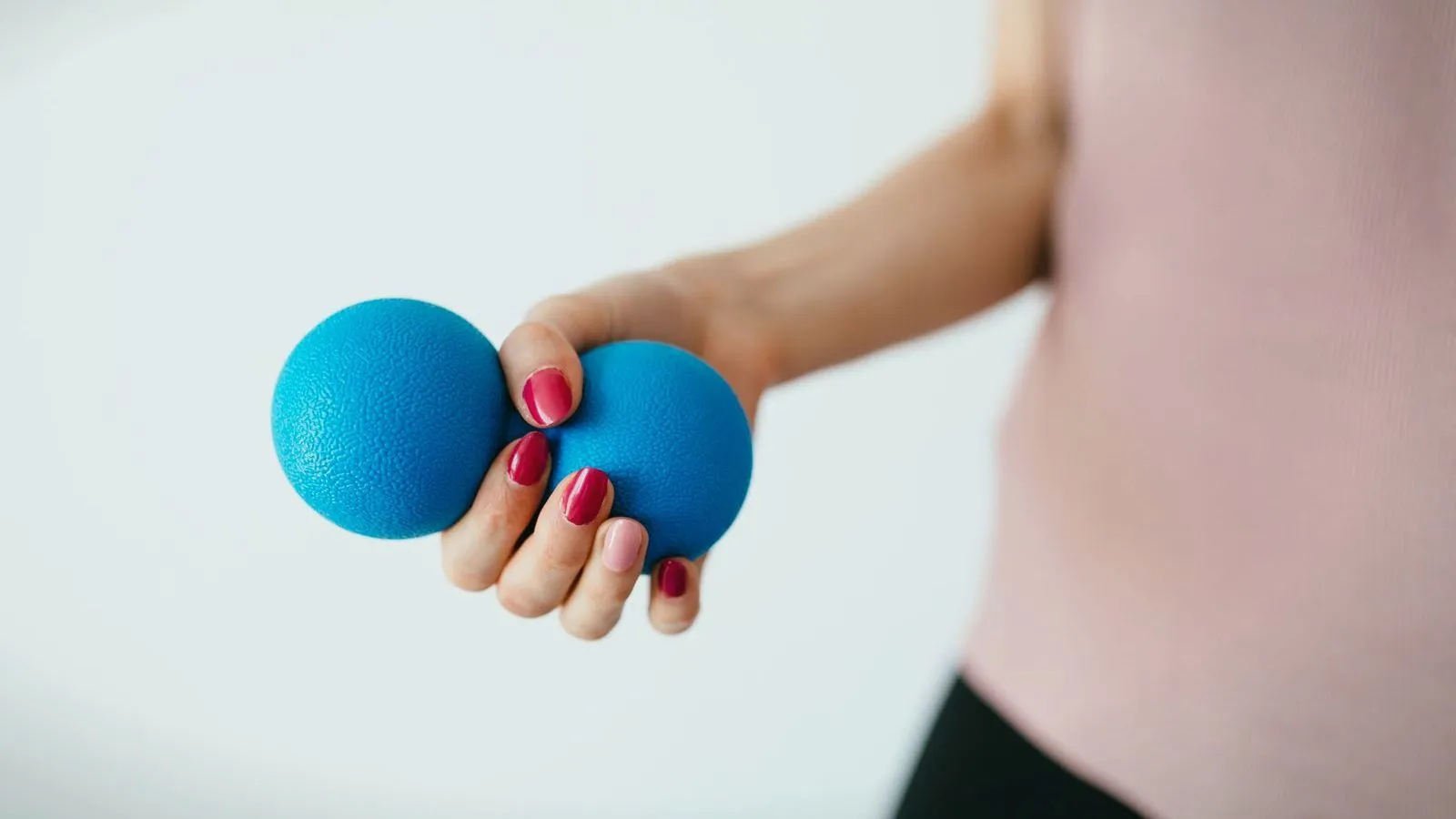
- Secondary analysis of a randomized controlled trial in medicated hypertensive women.
- 12 weeks of isometric handgrip training lowered resting blood pressure.
- It also lowered the absolute pressure reached during a handgrip stress test.
- The size of the rise, the reactivity, did not change. Only the starting level did.
- Women have lower blood pressure control rates than men and were under-studied here.
The exercise sits still. You hold a spring-loaded grip at a fraction of your maximum squeeze, for two minutes, four times, with rests between. Nothing moves, nothing gets sweaty, and the whole session runs about a quarter of an hour.
Isometric handgrip training has recently been incorporated into clinical guidelines as a non-pharmacological strategy for blood pressure control, which is a remarkable place for it to have arrived given how little it looks like exercise. What guidelines rest on is the resting number: squeeze regularly for a few months and the reading at the clinic goes down.
Felicio-Lopes and colleagues in the Journal of Human Hypertension asked a different question. Blood pressure at rest is not when arteries take their heaviest load, and until now the effect under strain had been insufficiently characterized, particularly in women. Across 12 weeks, the training reduced resting and absolute blood pressure levels during an isometric handgrip test, in women whose pressure was already being medicated.
Two numbers that sound alike and are not
The distinction this paper turns on is easy to slide past. During a stress test, blood pressure has a starting level and a climb. The level is where it ends up; the climb is how far it rose.
Training moved one and left the other. The magnitude of BP reactivity, meaning blood pressure reactivity, remained unchanged: the climb was the same size as before. The absolute pressure reached during the test was lower, because the starting point had dropped and the whole curve came down with it.
An artery does not experience a percentage change. It experiences the pressure that is actually in it, so a curve shifted downward is a real reduction in load even when its shape is identical. The authors put it as the training allowing the cardiovascular system to operate within a lower pressure range.
Why stress readings are the ones worth having
Blood pressure is the force of your blood pushing against the walls of your arteries, and a clinic measures it in the least demanding circumstance available: sitting down, arm supported, after five minutes of quiet.
That is a useful standardized number and a poor description of a day. The pressure a person’s arteries meet while carrying shopping up stairs, or lifting a grandchild, or arguing on the phone, is higher and less studied. An outcome strongly associated with cardiovascular risk and target-organ damage is how the authors describe pressure during acute physical stress, which is why they went looking for it.
Left unmanaged, the consequences are structural rather than symptomatic. When blood pressure stays high over time, it causes the heart to pump harder and work overtime, possibly leading to heart attack, stroke, heart failure, and kidney failure. High blood pressure usually has no symptoms, so none of that announces itself.
The gap this fills for women
Women exhibit lower blood pressure control rates and greater susceptibility to hypertension-related cardiovascular complications, and the effects of handgrip training during physical stress remain insufficiently characterized, particularly in women.
That sentence describes a familiar shape in cardiovascular research. A technique gets tested, mostly in men, then enters guidelines that apply to everyone, and the sex-specific work happens afterwards if it happens at all. This study is the afterwards.
Everyone in it was already on medication, which matters for how to read the finding. The training did not replace anything. It added a reduction on top of drugs that were already working, in a group whose pressure is statistically harder to control.
What a secondary analysis can and cannot claim
This is a secondary analysis of a randomized controlled trial, and that phrase carries a real limit.
The trial was designed to answer a different question, and this outcome was examined afterwards from data already collected. Secondary analyses are how good trials get their full value extracted, and they are also where chance findings surface, because the more outcomes you look at the more likely one clears the threshold. The result is a strong reason for a purpose-built trial rather than a settled fact.
The sample is the other constraint. This is one trial in one population of medicated hypertensive women, not a pooled estimate across many.
Whether to buy the grip device
Regular exercise is one of the best things you can do for your health, and handgrip training is an unusually low-friction way to get some: no gym, no kit beyond a device that costs less than a month’s membership, and about fifteen minutes three times a week.
The caution is specific to isometric work, and it is the reverse of what people expect. Holding a hard squeeze pushes blood pressure sharply up while you are doing it, even though the long-run effect is downward. For someone whose hypertension is poorly controlled, or who has heart disease, that acute spike is a reason to get clearance before starting rather than a reason to avoid it entirely.
And nobody in this trial stopped taking anything. The finding is that squeezing a grip adds something to medication. It is not that it substitutes for it.
People also ask
What did the trial find?
In this secondary analysis of a randomized controlled trial, 12 weeks of IHT reduced resting and absolute BP levels during an isometric handgrip test, while the magnitude of BP reactivity remained unchanged.
What is isometric handgrip training?
Squeezing a spring-loaded or electronic grip device at a set fraction of your maximum, holding for about two minutes, resting, and repeating. A session takes roughly 12 to 15 minutes and involves no movement at all, which is what isometric means.
Why is it in guidelines already?
Because the resting blood pressure effect has been replicated often enough that professional bodies now list it as a non-drug option. Isometric handgrip training has recently been incorporated into clinical guidelines as a non-pharmacological strategy for BP control.
What is the difference between absolute pressure and reactivity?
Absolute pressure is the number reached during the stress. Reactivity is how far it climbed from where it started. Training moved the first and not the second, so the whole curve shifted down rather than flattening.
Why does that distinction matter?
Because arteries respond to the pressure they actually experience, not to the size of the increase. The authors argue the training lowers the absolute hemodynamic load during stress, allowing the cardiovascular system to operate within a lower pressure range.
Why study women specifically?
Women exhibit lower blood pressure control rates and greater susceptibility to hypertension-related cardiovascular complications, and the effects of this training during physical stress remain insufficiently characterized, particularly in women.
Should someone with high blood pressure try it?
It is low-cost and in guidelines, which is an unusual combination, and the device costs less than a month of gym membership. Isometric exercise raises blood pressure sharply while you are doing it, so anyone with poorly controlled hypertension, heart disease or a recent cardiac event should get clearance first. Nobody in this trial stopped their medication. This is general information rather than medical advice.
References
- Felicio-Lopes, M., Farah, B. Q., Gerage, A. M., Correia, M. A., Domingues, W. J. R., Cucato, G. G., de Melo, P. H., Ritti-Dias, R. M., Andrade-Lima, A. Isometric handgrip training improves resting and absolute blood pressure during stress in hypertensive women: randomized controlled trial. Journal of Human Hypertension, 2026.
- MedlinePlus. High Blood Pressure. US National Library of Medicine.
- MedlinePlus. Exercise and Physical Fitness. US National Library of Medicine.