News · Brain & Mental Health
Febrile seizures and school: children scored almost the same as peers in a 672,000-child study
A seizure during a fever is terrifying to watch, and parents often worry about lasting effects. National test records from Denmark suggest most children go on to do just as well at school.
- An observational study of 672,119 Danish children who took national school tests between 2010 and 2019.
- 26,173 of them (3.9%) had been to hospital for a febrile seizure.
- Their reading and math scores were less than half a point lower on a 100-point scale.
- Gaps were larger in children with seven or more seizure visits, or who later developed epilepsy.
- Most children who have a febrile seizure do about as well at school as their peers.
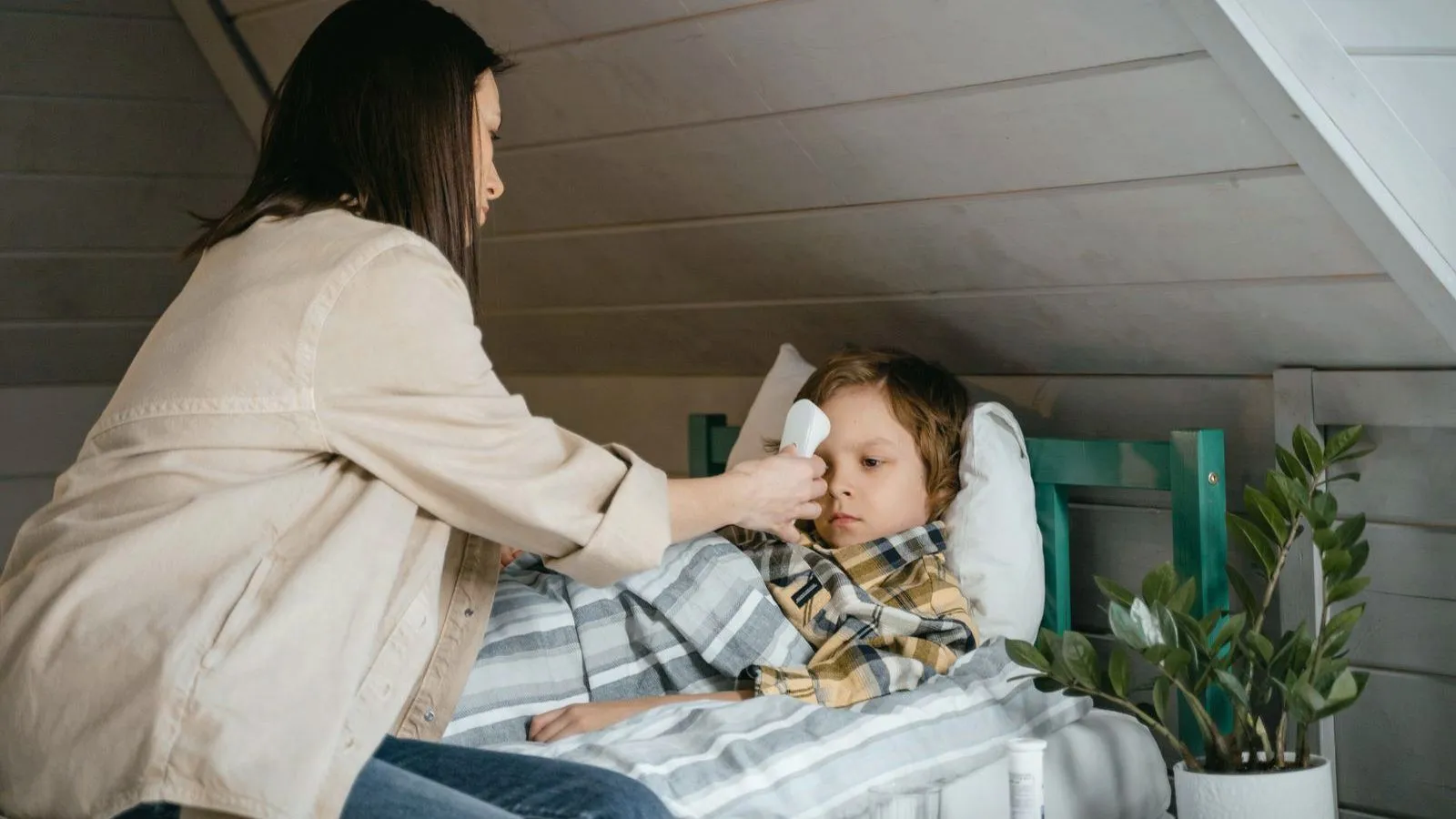
Few things frighten a parent like watching a feverish child go stiff and start to shake. Febrile seizures are common and usually brief, but many parents are left wondering whether the episode could affect how their child learns and develops.
A study in JAMA Network Open, a journal of the American Medical Association (JAMA), looked at national school test results for 672,119 children in Denmark. Those who had been to hospital with a febrile seizure scored almost exactly the same as their classmates.
What febrile seizures are
MedlinePlus explains that a febrile seizure is a convulsion in a child triggered by a fever. They are most common in otherwise healthy children between 6 months and 5 years of age, and often happen in the first day of a cold or other viral illness.
The same source notes that most of the time, a febrile seizure does not cause any harm. Even so, the authors write that febrile seizures are associated with substantial parental distress and concerns about the child’s long-term cognitive development.
How the Danish febrile seizure study worked
The researchers linked Denmark’s national hospital records to its national school testing program. They included children born between 1997 and 2009 who took standardized tests between 2010 and 2019, at ages 7 to 17.
Reading was tested in grades 2, 4, 6 and 8, and math in grades 3, 6 and 8. Scores were ranked on a national scale from 1 to 100. The team compared children who had been to hospital for a febrile seizure with all other children, and with their own brothers and sisters.
How children with febrile seizures scored
Of 672 119 children, 26 173 (3.9%) with a history of febrile seizures were identified. Their average combined score was 54.7 points, against 55.8 for other children. After accounting for background factors, the gap was less than half a point.
The gap was slightly larger in girls than in boys, and similar when children were compared with their siblings. It grew with the number of hospital visits for febrile seizures, reaching almost 6 points for children with seven or more.
Why the febrile seizure findings reassure parents
For most families, this is good news. A single febrile seizure, or a few, went with school results that were practically the same as those of other children. A gap of less than one point on a 100-point scale would not be noticeable in a classroom.
The authors conclude that school performance was generally comparable to that of their peers. They add that a smaller group, children with repeated seizures or who later developed epilepsy, were at risk of poorer results and may benefit from extra support at school.
What the school test records cannot show
The study only counted febrile seizures that led to a hospital contact. Milder episodes managed at home or by a family doctor were missed, although those children are likely to do at least as well.
School tests measure reading and math, not every kind of learning or behavior. Epilepsy was more common in children with febrile seizures, 3.2% against 0.9%, and those children had the largest gaps. The study cannot say whether the seizures themselves, the epilepsy, or an underlying cause explains that difference.
What this changes for families after febrile seizures
For parents whose child has had a febrile seizure, the study offers reassurance that most children go on to learn normally. It is still important to see a doctor after a first seizure, to check the cause of the fever.
For children with many febrile seizures, or who are later diagnosed with epilepsy, it makes sense to keep an eye on school progress and to ask for support early if problems appear.
People also ask
What did the study find?
Combined test scores were 54.7 points in children with febrile seizures and 55.8 in those without, on a percentile scale of 1 to 100. The adjusted mean difference was -0.4 point (95% CI -0.7 to -0.2). It was -0.7 in girls and -0.2 in boys, -5.8 points with 7 or more seizure-related hospital contacts, and -7.2 points with both febrile seizures and epilepsy. Compared with unaffected siblings, the difference was -0.6 point.
What is a febrile seizure?
A convulsion in a young child triggered by a fever, usually during a cold or other viral illness. They are most common between 6 months and 5 years of age.
How common are febrile seizures?
They affect 2% to 5% of children. In this study, 3.9% of Danish schoolchildren had a hospital contact for one.
Why compare with siblings?
Siblings share family background and some genes. A similar small gap between siblings suggests the result is not explained by family factors alone.
Which children had larger gaps in school scores?
Children with many hospital visits for febrile seizures and those who later developed epilepsy. The authors suggest these children may benefit from additional educational support.
What should parents do during a febrile seizure?
Place the child on their side on a safe surface, do not put anything in their mouth, and time the seizure. Seek emergency care if it lasts more than 5 minutes or the child does not recover normally. This is general information rather than medical advice.