Explainer · Fitness & Exercise
Exercise for weight loss: what 116 trials show, why the scale moves slowly and where exercise helps most
A JAMA Network Open analysis of 116 trials found that 150 minutes of aerobic exercise a week took off about 2.8 kg on average. Other research shows the body claws back some of the calories, and that activity may matter most after weight is lost.
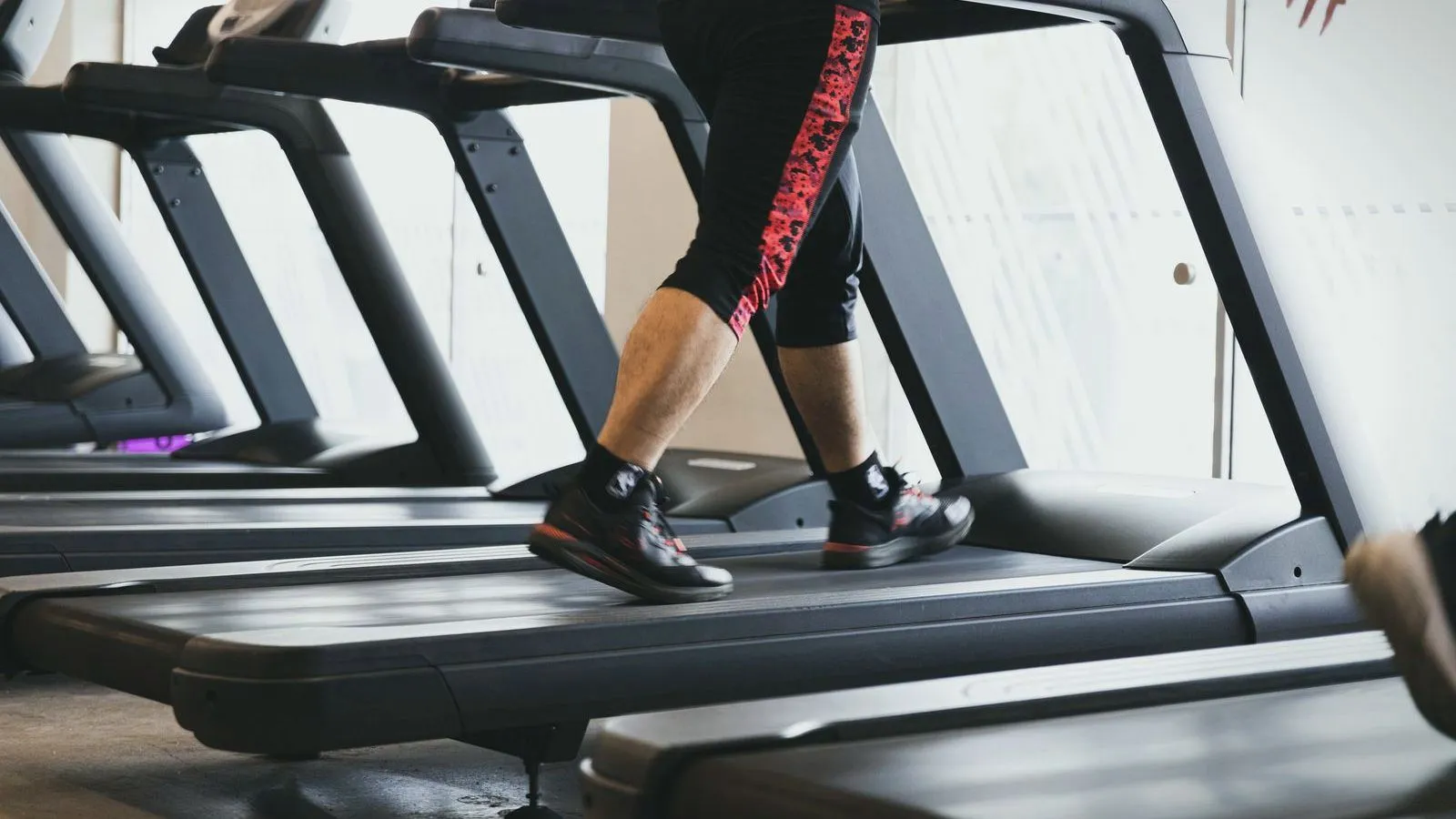
- In 116 trials, each extra 30 minutes of aerobic exercise a week took off about half a kilogram.
- At 150 minutes a week the average loss was about 2.8 kg, or roughly 6 pounds.
- The body offsets some of the calories burned, which is one reason losses are smaller than expected.
- Waist size and deep abdominal fat responded more reliably than body weight.
- Most trials were short and did not track diet, and the evidence on keeping weight off is observational.
Join a gym in January, go three times a week, and by March the scale has barely moved. It is one of the most common disappointments in fitness, and it has led some commentators to announce that exercise is useless for slimming.
The research supports neither the old promise nor the new dismissal. Exercise does reduce body weight, by an amount that trials can now put a number on. That amount is smaller than most people expect, for reasons physiologists have begun to measure. And the place where activity seems to matter most comes later, once the weight is already off. Professional guidance reflects this: the American College of Sports Medicine says the standard 150 to 250 minutes of weekly activity will provide only modest weight loss.
How much weight does exercise take off in trials?
The best single estimate comes from a 2024 meta-analysis in JAMA Network Open. Ahmad Jayedi and colleagues gathered trials in which adults with overweight or obesity were randomly assigned to supervised aerobic exercise, such as brisk walking, running or cycling, for at least eight weeks. They found 116 randomized clinical trials involving 6880 participants.
Their question was how weight loss scales with the amount of exercise. The authors note that guidance on that point comes primarily from individual trials, many of them old, and that no earlier meta-analysis had pooled trials by the amount of exercise. Their answer was a straight line. Each 30 minutes per week of aerobic exercise was associated with reduced body weight by 0.52 kg, a little over a pound. Someone exercising at 150 minutes per week, the usual guideline minimum, lost about 2.8 kilograms on average, around 6 pounds. Doubling that to 300 minutes brought the figure to about 4.2 kilograms.
The direction was consistent even though the size varied. Of the trials that measured body weight, 104 trials reported a reduction in body weight associated with aerobic exercise, and five did not. The authors rated the certainty of the weight result as moderate, on a scale that runs from very low to high.
A broader look gives the same range. An overview in Obesity Reviews that combined 12 earlier systematic reviews found average losses from exercise programs of 1.5 to 3.5 kilograms. The kind of exercise mattered less than the amount: no difference in weight, fat, and visceral loss was found between aerobic and high-intensity interval training as long as energy expenditure was equal.
Why does the scale move less than the calorie math predicts?
A common calculation says that burning 300 calories a day on a treadmill should take off about a pound every 12 days. Real bodies fall well short of that. One reason is that appetite can rise with exercise. Another is stranger and has only recently been measured: the body quietly spends less elsewhere.
Herman Pontzer, an evolutionary anthropologist now at Duke University, tested the idea in 332 adults from five populations whose daily calorie burn was measured precisely. If movement simply added to the total, the most active should burn the most. They did not. In the model the data supported, total energy expenditure increases with physical activity at low activity levels but plateaus at higher activity levels as the body adapts.
A larger analysis five years later put a figure on the effect. Using measurements from 1,754 adults, an international team found that energy compensation by a typical human averages 28%. In their words, only 72% of the extra calories we burn from additional activity translates into extra calories burned that day. The offset was larger in those carrying more body fat, which may make fat loss progressively harder for the very group trying hardest to achieve it.
Compensation does not cancel exercise. It taxes it. A session that burns 400 calories might net closer to 290.
What exercise changes besides body weight
Weight is a blunt measure, because it cannot tell fat from muscle or say where the fat sits. The 116-trial analysis looked past the scale and found its firmest results there.
Waist circumference shrank by about half a centimeter for each weekly half hour of exercise, and visceral fat, the fat packed around the liver and other abdominal organs, shrank too. The authors graded both results as high certainty, a step above the result for weight. At 150 minutes a week, body fat fell by about two percentage points.
Muscle is the other half of the picture. Dieting alone removes some lean tissue along with fat. In the overview of reviews, resistance training reduced lean mass loss during weight loss by a little under a kilogram.
Exercise also carried a small cost. In the trials it was associated with modestly increased mild to moderate adverse events, which were mostly musculoskeletal symptoms, amounting to about two extra people with aches or strains for every 100 who exercised.
Does exercise help keep weight off?
This is where the strongest claims are made and where the evidence is hardest to read. Most dieters regain much of what they lose, and those who do not are often strikingly active.
Researchers at the University of Colorado compared adults who had kept off a large weight loss with others of normal weight and with others who had obesity. The maintainers, who had held a loss of about 26 kilograms for an average of nine years, burned roughly 180 more calories a day through movement than either comparison group. The authors concluded that this group relies on high levels of energy expended in physical activity to remain in energy balance.
A smaller and more famous example points the same way. Six years after the television contest The Biggest Loser, scientists at the US National Institutes of Health re-examined 14 former contestants. Those who had kept the most weight off had more than doubled their physical activity, while those who regained had increased it by about a third. Food intake had changed about equally in both groups. The team concluded that large and persistent increases in activity may be required for long-term maintenance of lost weight.
Both studies are observational. Those who keep weight off may be the ones who are able to stay active, because of their health, time or circumstances. Randomized trials have been less encouraging: the Obesity Reviews overview found no clear effect of exercise programs on weight maintenance and said that more research is needed to identify training modalities that promote weight maintenance.
What guidelines say about exercise and weight
The American College of Sports Medicine’s position stand separates three goals. For preventing weight gain it cites 150 to 250 minutes of moderate activity a week. For losing weight, that same amount will provide only modest weight loss, and larger losses have been seen above 250 minutes. It adds that still more activity may be necessary to prevent weight regain after weight loss.
A 2018 review in Progress in Cardiovascular Diseases reached a similar view, describing exercise as something that facilitated weight loss through creating a negative energy balance, with the standard activity minimum generally too little to produce large losses unless food intake also falls.
The World Health Organization’s activity guidelines are written for health in general and make no weight-loss promise. Their summary is that more physical activity is better for optimal health outcomes.
Where the exercise and weight evidence is thin
The trials behind the headline numbers were short and supervised, and real life is neither. Most ran for weeks or months, with staff watching each session. How much weight comes off when someone exercises alone for years is a different question.
Diet is the largest blind spot. The JAMA Network Open authors note that the trials included in the meta-analysis provided insufficient data regarding the dietary habits of participants, so nobody knows how much eating changed alongside the exercise. The estimates are also averages built from study-level results. Individual responses differ widely, and an average of 2.8 kilograms includes some who lost far more and some who lost nothing.
How exercise fits into any one person’s plan for their weight depends on their health, their medicines and what their joints will tolerate, which is assessed with their doctor.
The evidence gives exercise a modest role in losing weight, a clearer one in losing fat from the waist, and a probable but unproven one in keeping lost weight off.
People also ask
How much weight does aerobic exercise take off?
In a meta-analysis of 116 randomized trials, each 30 minutes per week of aerobic exercise was associated with 0.52 kg lower body weight (95% CI 0.44 to 0.61 kg). The modeled loss was 2.79 kg at 150 minutes a week and 4.19 kg at 300 minutes a week.
Why do people lose less weight than the calories burned would suggest?
Partly because of energy compensation, meaning the body spends less energy elsewhere when activity rises. A study of 1,754 adults estimated that compensation averages 28%, so about 72% of the extra calories burned in activity show up as extra calories burned that day.
Does exercise reduce belly fat?
The 116-trial analysis found reductions in waist circumference of 0.56 cm for each 30 minutes of weekly exercise, and in visceral fat, meaning the fat packed around the abdominal organs. The evidence for both was graded high certainty, higher than for body weight.
Is one type of exercise better for weight loss?
An overview of 12 systematic reviews found no difference in weight, fat or visceral fat loss between aerobic training and high-intensity interval training when the energy burned was equal. Resistance training reduced the loss of lean mass during weight loss by about 0.8 kg.
What do guidelines say about exercise and weight?
The American College of Sports Medicine's 2009 position stand says 150 to 250 minutes a week of moderate activity prevents weight gain and provides only modest weight loss, and that more than 250 minutes a week has been associated with larger losses. The World Health Organization recommends 150 to 300 minutes of moderate activity a week for health generally. This is general information rather than medical advice.
References
- Jayedi, A., Soltani, S., Emadi, A., Zargar, M.-S., Najafi, A. Aerobic Exercise and Weight Loss in Adults: A Systematic Review and Dose-Response Meta-Analysis. JAMA Network Open, 2024.
- Bellicha, A., van Baak, M. A., Battista, F., et al. Effect of exercise training on weight loss, body composition changes, and weight maintenance in adults with overweight or obesity: An overview of 12 systematic reviews and 149 studies. Obesity Reviews, 2021.
- Pontzer, H., Durazo-Arvizu, R., Dugas, L. R., et al. Constrained Total Energy Expenditure and Metabolic Adaptation to Physical Activity in Adult Humans. Current Biology, 2016.
- Careau, V., Halsey, L. G., Pontzer, H., et al. Energy compensation and adiposity in humans. Current Biology, 2021.
- Donnelly, J. E., Blair, S. N., Jakicic, J. M., Manore, M. M., Rankin, J. W., Smith, B. K. Appropriate Physical Activity Intervention Strategies for Weight Loss and Prevention of Weight Regain for Adults. Medicine & Science in Sports & Exercise, 2009.
- Swift, D. L., McGee, J. E., Earnest, C. P., Carlisle, E., Nygard, M., Johannsen, N. M. The Effects of Exercise and Physical Activity on Weight Loss and Maintenance. Progress in Cardiovascular Diseases, 2018.
- Ostendorf, D. M., Caldwell, A. E., Creasy, S. A., et al. Physical Activity Energy Expenditure and Total Daily Energy Expenditure in Successful Weight Loss Maintainers. Obesity, 2019.
- Kerns, J. C., Guo, J., Fothergill, E., et al. Increased Physical Activity Associated with Less Weight Regain Six Years After The Biggest Loser Competition. Obesity, 2017.
- Bull, F. C., Al-Ansari, S. S., Biddle, S., et al. World Health Organization 2020 guidelines on physical activity and sedentary behaviour. British Journal of Sports Medicine, 2020.