Explainer · Heart & Metabolic
Dietary cholesterol sent the liver's LDL receptors to be destroyed, in cells and mice
Whether the cholesterol you eat affects the cholesterol in your blood has been argued for decades. This describes a mechanism by which it could: the liver dismantles the receptors that clear LDL.
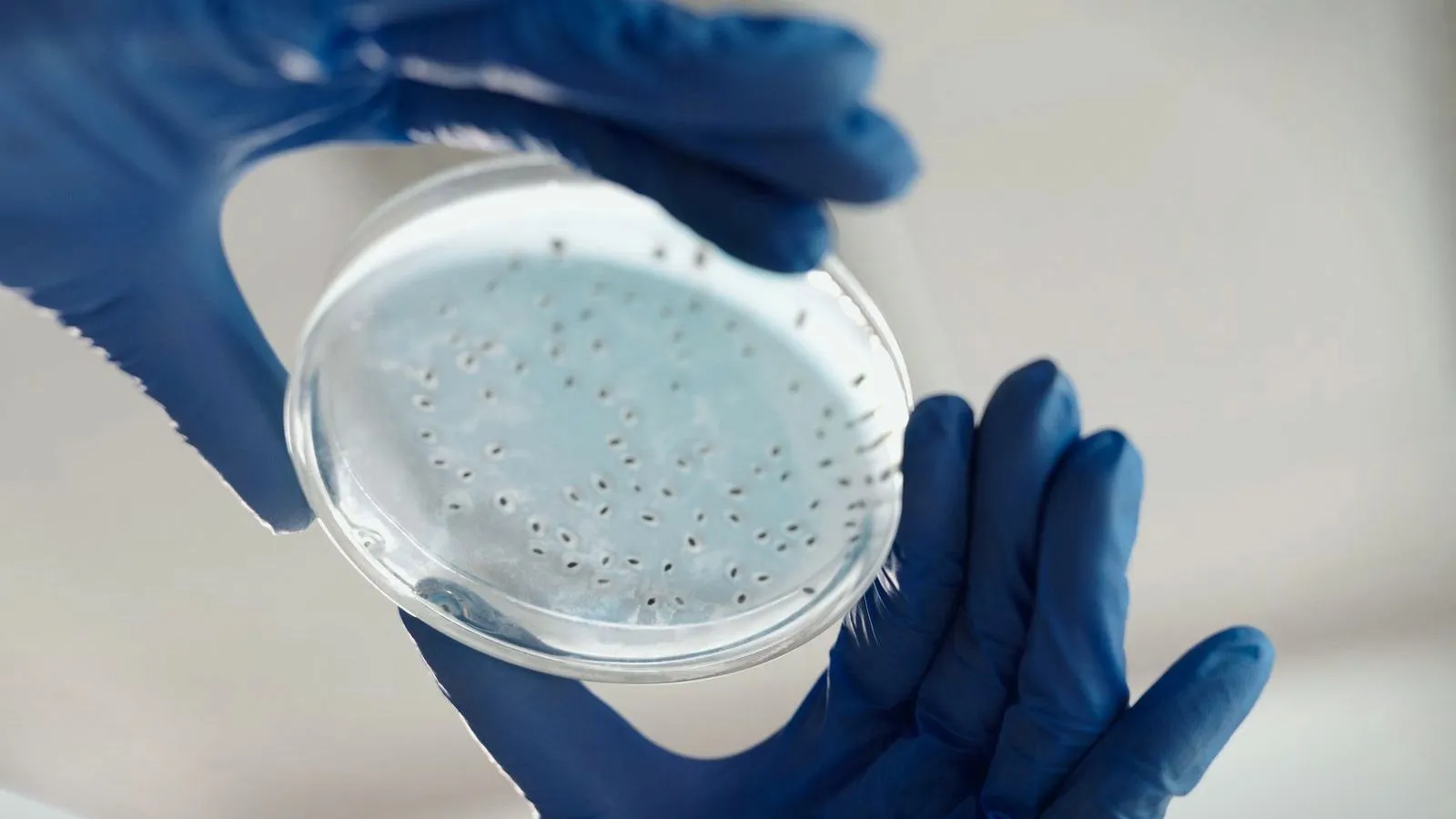
- Laboratory work in liver cells and mice, with a supporting look at human genetic data.
- The LDL receptor is the liver's tool for pulling cholesterol out of the blood.
- A cholesterol-rich diet switched on a pathway that sent those receptors to be destroyed.
- The route runs around the drug target that existing cholesterol medicines already use.
- Nothing here was tested in people, and it does not tell anyone how many eggs to eat.
The question of whether the cholesterol in food raises the cholesterol in blood has been answered both ways for fifty years. Eggs were restricted, then unrestricted, then cautiously restricted again, and the population studies that were supposed to settle it keep coming back mixed. Behind that mess sits a real gap: nobody could describe a mechanism specific enough to test.
Work published in Nature, done in liver cells and mice, offers one. A cholesterol-rich diet, it reports, prompts the liver to dismantle the very receptors it uses to clear cholesterol from the blood.
What the LDL receptor does
Everything in blood cholesterol comes back to this protein. The liver puts LDL receptors on its surface, each one able to catch a passing LDL particle and pull it inside, where the cholesterol is broken down or recycled. How many receptors are on display largely determines how much LDL stays circulating.
That is why the receptor is the target of almost every cholesterol treatment. MedlinePlus describes LDL as the one sometimes called bad cholesterol, noting that a high LDL level leads to a buildup of cholesterol in your arteries.
Statins work indirectly: by blocking cholesterol production inside the cell, they prompt the liver to make more receptors. The injectable drugs that target a protein called PCSK9 work differently, by stopping receptors being sent for destruction. Both routes change the receptor count.
What the study says dietary cholesterol does
It adds a third route, and it runs through destruction rather than production. The paper reports that chronic dietary cholesterol activates the Ral proteins by increasing RAS activity, routing LDLR to lysosomes for degradation and inhibiting its recycling.
Unpacking that: a lysosome is the cell’s disposal unit. Normally a receptor that has delivered its cargo is recycled back to the surface to work again. Here the receptor is diverted to the disposal unit instead, so each one does its job fewer times before being destroyed.
Crucially, this happens independently of transcriptional regulation or PCSK9. The liver is not making fewer receptors, and this is not the pathway the existing injectable drugs target. It is a separate lever, which is what makes the finding interesting to anyone designing treatments.
How the pathway was tested in cells and mice
By pushing it both ways, in cells and animals. Constitutive activation of Ral via RalGAPB deletion or overexpression of constitutively active Ral mutants in hepatocytes reduces LDLR levels and impairs cholesterol clearance: switch the pathway on artificially, and the receptors disappear even without the diet.
They then followed the machinery to the specific enzyme doing the destroying, reporting that the receptor is degraded by the lysosomal protease cathepsin A, and that the pathway also directs that enzyme towards lysosomes in the first place.
The step that lifts this beyond mouse biology is the human genetic check. Genetic variants in this pathway significantly associate with altered cholesterol in humans, which is the sort of corroboration that makes a mechanism worth taking seriously: people who inherit differences in these genes have different cholesterol levels.
Why a new lever on cholesterol matters
Because the existing ones do not work for everybody. Some people cannot tolerate statins, some do not reach target on them, and the injectable drugs are expensive.
The authors test that directly. Blocking cathepsin A with a drug, they report, increases receptor function in the liver and improves cholesterol clearance. They put it forward as a possible new way to treat high cholesterol and heart disease.
That is a long way from a medicine. It is, however, a drug target with a mechanism, an enzyme, and a human genetic signal behind it, which is a better starting position than most.
What cells and mice cannot settle about eggs
The temptation here is to read this as vindication for whichever side of the dietary cholesterol argument you already held, and it does not support that.
Feeding cholesterol to a mouse is not the same as a person eating eggs. Mice handle cholesterol differently, the experimental diets are far richer than an ordinary human one, and the study measured receptor biology rather than what happened to anyone’s blood over years.
The human evidence on dietary cholesterol remains what it was: mixed, confounded by everything else eaten alongside, and complicated by large differences between individuals in how much a dietary change moves blood levels. This work explains how the effect could occur in the people where it does. It does not measure how big that effect is in a population, and it was not designed to.
What this changes for cholesterol advice today
For anyone eating breakfast, nothing. The advice that has evidence behind it has not moved, and no one should reorganise their diet around a mouse liver pathway.
What it changes is the research question. For decades, the dietary cholesterol argument has been conducted almost entirely through population studies, with no agreed mechanism to explain why some people respond strongly and others not at all. A specific pathway, with genes attached, is the kind of thing that lets that question finally be asked properly, and it points at a drug target along the way.
People also ask
What did the study find?
Chronic dietary cholesterol activates Ral proteins by increasing RAS activity, routing the LDL receptor to lysosomes for degradation and inhibiting its recycling, independently of transcriptional regulation or PCSK9. Genetic variants in this pathway were significantly associated with altered cholesterol in humans, and blocking the lysosomal protease cathepsin A with a drug increased LDL receptor function in the liver and improved cholesterol clearance.
What is the LDL receptor?
A protein on the surface of liver cells that grabs LDL particles out of the blood and pulls them inside, where the cholesterol is dealt with. How many of these receptors the liver has on display is the main determinant of LDL cholesterol in the blood.
How is this different from what statins do?
Statins block cholesterol production, which prompts the liver to make more receptors. This pathway does not change how many receptors are made; it changes how fast existing ones are destroyed, which is a separate lever.
What is PCSK9?
A protein that also sends LDL receptors for destruction, and the target of a class of injectable cholesterol drugs. The authors report that this new pathway works independently of it, which is what makes it potentially useful.
Does this settle whether eating cholesterol raises blood cholesterol?
No. It describes a plausible mechanism in cells and mice by which it could, which is different from measuring what happens in people eating ordinary diets. Population studies on eggs remain mixed for reasons this work does not resolve.
Should anyone change their diet because of this?
No. This is mechanism research, not dietary advice, and the dietary cholesterol question in humans is not decided by a mouse liver. This is general information rather than medical advice.