Explainer · Longevity & Aging
Bunions: what they are, who gets them, what shoes and splints can and cannot do and what surgery involves
A bunion is the visible part of a shift in the big toe joint, found in about one in five adults. Wider shoes and pads can ease pain without straightening the toe. In one trial, 83% felt better a year after surgery and 24% after waiting.
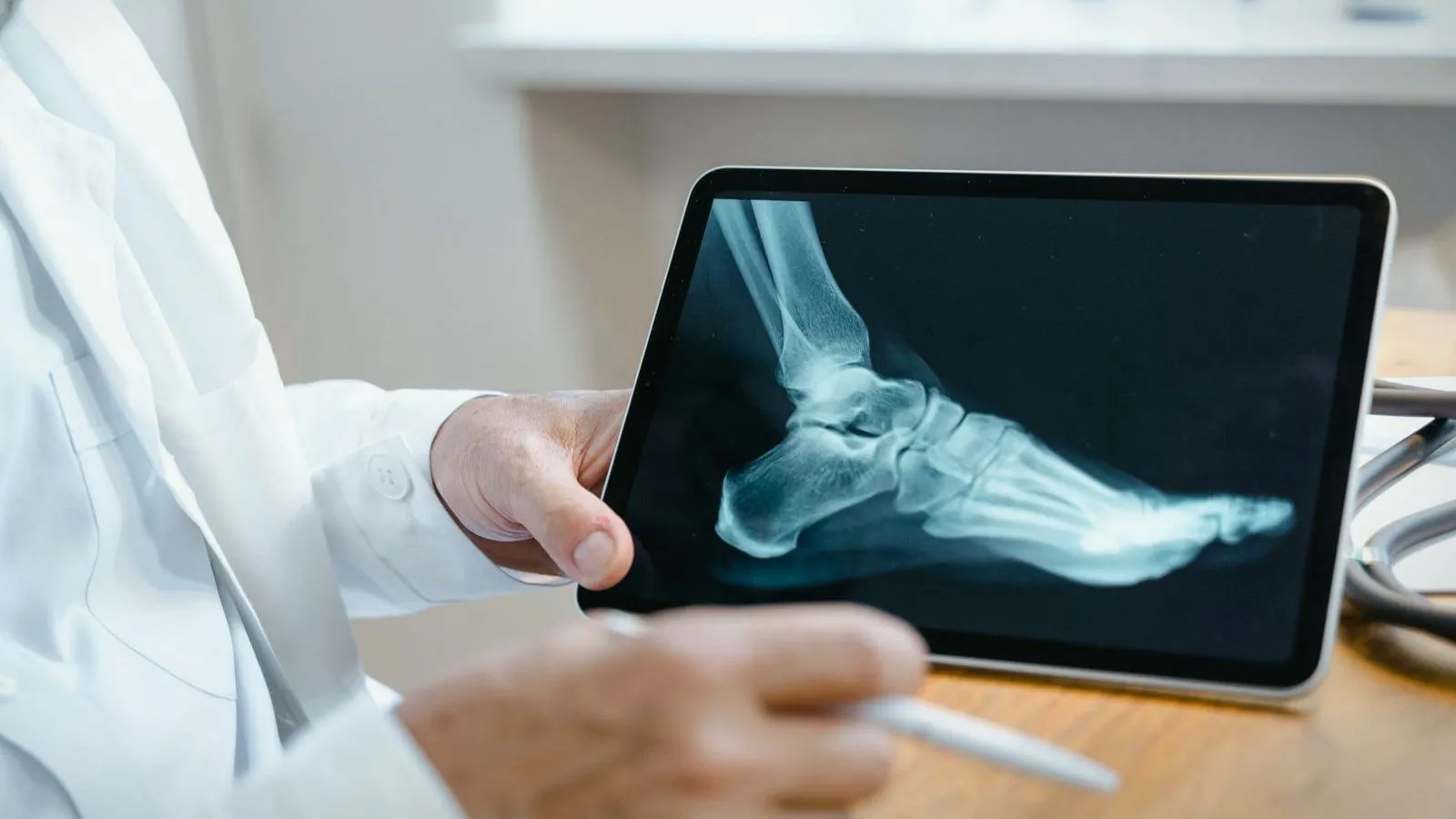
- A bunion is the bump at the base of the big toe that forms as the toe drifts toward the others.
- Pooled surveys put bunions in 19% to 23% of adults, and about twice as often in women as in men.
- Wide shoes, pads and insoles can ease pain, but reviews find they do not straighten the toe.
- In a trial of 209 patients, 83% felt better a year after surgery, against 24% of those who waited.
- No operation has been shown to be best, the trials are small, and bunions can return after surgery.
Bunions affect about one in five adults, and an analysis published on June 9, 2026, in the journal BMC Musculoskeletal Disorders revisited an old argument over how much shoes are to blame. It tied narrow-toed shoes to bunions more strongly than high heels. For a person who already has a bunion, the questions are how to ease the pain and whether surgery helps.
The research gives a plainer answer to the first question than to the second. Roomier shoes, pads and insoles can make a bunion hurt less, and the reviews agree that they do not move the toe back. Exercises with taping shifted it by a few degrees in small trials. Surgery corrects the deformity, and in the one trial that compared it with waiting it left most patients feeling better a year on. But there are more than 100 operations, none has been shown to be best, and bunions can return.
What a bunion is
A bunion is the bump on the inner edge of the foot at the base of the big toe. The medical name for the condition behind it is hallux valgus. Hallux is the Latin word for the big toe, and valgus means angled away from the midline of the body.
The bump is not a growth. A 2019 review in the journal Foot & Ankle Orthopaedics explains that it appears because two bones have moved. The first metatarsal is the long bone that runs along the inner side of the foot to the big toe. In a bunion that bone drifts inward, toward the other foot, while the toe on the end of it leans the other way, toward the second toe. The head of the metatarsal is left sticking out at the joint.
The review stresses that the visible bump is only one component of the 3-dimensional deformity. The toe also rotates, and the small bones under the joint shift out of place. Hallux valgus can lead to considerable pain and altered joint mechanics, the review says, and other problems often travel with it, including hammertoes and flat feet. A hammertoe is a smaller toe that stays bent at its middle joint.
Doctors grade a bunion from X-rays taken with the person standing. They measure the angle between the big toe and the metatarsal behind it. On the review’s figures, an angle under 20 degrees is mild, 20 to 40 degrees is moderate and over 40 degrees is severe.
How common bunions are and who gets them
The most widely quoted figures come from a 2010 analysis that pooled prevalence surveys from around the world. A total of 78 papers reporting results of 76 surveys (total 496,957 participants) were included. It estimated that 23% of adults aged 18 to 65 had the condition and 35.7% of people over 65.
A 2023 update drew on more databases, including Chinese ones, and came out a little lower. The overall pooled estimated prevalence was 19%, with a range from 13% to 25%. The individual surveys disagreed widely, partly because they defined and measured bunions in different ways.
Both analyses found the same pattern by sex and age. In the first, prevalence increased with age and was higher in females, at 30% of women against 13% of men. In the second, it was 23.74% of women and 11.43% of men.
Family history is a strong signal. The 2019 review cites a study of 350 people in which 90% of patients with hallux valgus had at least 1 similarly affected family member.
Why bunions form is less clear. The review says the precise biomechanical etiology remains under debate. Etiology means cause. It lists the factors that make a bunion more likely. Predisposing factors include female sex, age, constricting footwear, and family history.
Shoes are the factor people can change, and a 2026 analysis tried to size it. Pooling 23 observational studies, it found that people who wore narrow-toed shoes had about 2.3 times the odds of a bunion, and those who wore high heels about 1.7 times. Female sex carried about 2.6 times the odds. The authors concluded that the condition is primarily associated with female sex, aging, and mechanical constriction from narrow footwear, which poses a greater risk than high heels.
Those are associations. Observational studies record who has bunions and what they wear, and they cannot show that the shoes came first.
What shoes, pads and splints can do for bunions
The first line of treatment is to stop the bump being rubbed. The review describes nonoperative care, meaning care without an operation, as symptom control. Its list starts with comfortable shoes with a wide toe box to help decrease pain, blistering, and inflammation. A toe box is the front part of a shoe. It adds that toe spacers and cushions can also help to further mitigate pain.
None of this straightens the toe, and the review says so directly. Shoe and activity changes may reduce the symptoms, but they do not correct the underlying pathology and thus will not reduce the deformity.
The trial evidence for these measures is thin. A 2009 Cochrane review, which is a systematic summary of trials produced by an international research network, looked at every randomized comparison it could find. Three trials involving 332 participants evaluated conservative treatments versus no treatment. Conservative means non-surgical. They found no evidence of a difference in outcomes, and the review’s conclusion named two devices. In its words, orthoses and night splints did not appear to be any more beneficial in improving outcomes than no treatment. That leaves the case for wider shoes and pads resting on the 2019 review, a summary by specialists.
Insoles have been tested in one sizable trial, and the relief it found was short-lived. An orthosis is a shaped insole or support worn in the shoe. Finnish researchers enrolled people whose bunions hurt but were not severe. They were two hundred nine consecutive patients (mean age, 48 years; 93% women) with a painful bunion and a toe angle of 35 degrees or less. One group was given orthoses, one had surgery and one was put on a year-long waiting list.
Pain was scored from 0 to 100. At six months, pain had fallen 14 points more in the orthosis group than in the waiting group. At one year, the differences the trial reported were between surgery and the other two groups. Its conclusion on insoles was brief. Orthoses provide short-term symptomatic relief.
Exercise is the newest candidate. A 2025 analysis pooled 11 small trials with 401 patients who did exercise therapy, alone or with taping or orthoses. Exercise alone reduced the toe angle by about 3 degrees compared with a placebo treatment. Exercise combined with taping was the most effective intervention, reducing the angle by about 7 degrees, with exercise plus orthoses close behind. The trials involved mild and moderate bunions, and the authors asked for larger studies and for checks on side effects before the result is relied on.
When surgery for bunions is considered
The 2019 review is clear that looks alone are not a reason to operate. The appearance of the foot in the absence of other symptoms is not an indication for surgery. An indication is a medical reason for a treatment.
In the review’s account, surgery comes after shoes and pads have been tried, for people with persistent pain or continuing trouble finding shoes they can wear. The aims it gives are pain relief, correction of the deformity, improved first ray stability, and improved quality of life. The first ray is the big toe together with the metatarsal behind it.
The 2024 Cochrane review of bunion surgery describes the same order. Conservative (non-surgical) interventions treating pain rather than curing deformity are usually first-line treatments.
What bunion surgery involves and what the trials show
There is no single bunion operation. More than 100 different procedures have been described to treat hallux valgus, the 2019 review notes. Most involve an osteotomy. Osteotomy means cutting a bone so that it can be moved into a better position and fixed there. The cut can be made near the toe, in the middle of the metatarsal or near the ankle end, and some operations, such as the chevron, are named for the shape of the cut. Other operations fuse a joint, which means joining two bones so they heal as one.
Which is chosen depends on how far the bones have shifted. The choice of procedures depends on the severity and location of the deformity as well as surgeon preference. In general, the review says, cuts near the toe are used for mild bunions and cuts or fusions further back for severe ones.
The Finnish trial is still the only one to have tested surgery against doing nothing. Its operation was a chevron osteotomy, a V-shaped cut near the toe. A year later the three groups had parted. In the paper’s words, 83%, 46%, and 24% in the surgery, orthosis, and control groups, respectively, thought they had improved compared with baseline.
The 2024 Cochrane review went back to that trial’s data. At 12 months, average pain was 21 points out of 100 in the surgery group and 39 in the untreated group. Function scores were 75 against 66 on a 100-point scale where higher is better. Quality of life was 93 in both. The review’s wording is careful. Surgery may result in a clinically important reduction in pain, it says, and it rates the evidence as low in certainty because patients knew which treatment they had received and the numbers were small.
That review covered 25 trials with 1,597 participants in all. Most compared one operation with another. It grouped the operations into simpler and more complex bone cuts and found little to separate them. Complex and simple osteotomies demonstrated similar results for pain. The more complex ones may lead to more repeat operations. The earlier Cochrane review had reached the same verdict. When one bone cut was compared with another, no technique was shown to be superior to any other.
Keyhole surgery is the main recent change. Minimally invasive means working through small punctures in the skin with a fine burr, a small rotating cutter, in place of a long incision. A 2025 analysis pooled six studies with 342 patients that compared a keyhole chevron with the open version. Pain in the first weeks was a little lower after keyhole surgery and one X-ray measure slightly favored the open operation. The authors judged that all differences were small in magnitude and unlikely to be clinically meaningful. Complication rates were comparable between the techniques.
A group of anesthesiologists and surgeons known as the PROSPECT Working Group, which writes procedure-by-procedure guidance on pain control, begins its 2025 update on bunions with the point. Hallux valgus repair surgery is associated with moderate-to-severe postoperative pain. Its guidance covers the nerve blocks and medicines used around the operation, and it now favors keyhole techniques over open ones on pain grounds.
Risks of bunion surgery and how often bunions return
Surgery does not always satisfy. The 2009 Cochrane review drew attention to a pattern across trials. It was notable that the numbers of participants in some trials remaining dissatisfied at follow-up were consistently high (25 to 33%), even when the hallux valgus angle and pain had improved.
The bunion can also come back. Recurrence is the most common complication, with rates ranging from as low as 8% to as high as 78%, according to the 2019 review. The spread reflects different operations, different lengths of follow-up and different definitions. In one series the review cites, patients who had a scarf osteotomy, a Z-shaped cut along the middle of the metatarsal, were doing well ten years later on pain and function scores, and 30% of them had a toe angle back above 20 degrees.
Other complications in the review include pain shifting to the ball of the foot if the metatarsal ends up shorter, stiffness, a toe that is over-corrected and points inward, and, rarely, loss of blood supply to the head of the bone.
What the bunion evidence cannot show
Whether shoes cause bunions. The link with narrow shoes and heels comes from surveys and other observational studies. It is an association.
Whether surgery beats a sham. The Cochrane authors are blunt on this. There were no trials comparing surgery to placebo or sham. A sham is a pretend operation used to separate the effect of the surgery from the effect of expecting to get better. The one comparison with waiting comes from 140 of the trial’s 209 patients, who knew what they had received.
Which operation is best. Most trials were small and short. Most trials were susceptible to bias, the 2024 review found. The earlier review noted that results were mostly measured at one year, for a joint people will walk on for decades.
How well exercise works. The exercise trials were small, and what was measured was mostly an angle on an X-ray.
Who wrote the 2019 review. The 2019 paper is a narrative review, a summary by specialists of the studies they selected. Its conflict statement says four of its eight authors are paid consultants for Treace Medical Concepts, a company, and the text states the authors’ own preference for one newer fusion technique whose outcome studies were still under way.
Whether surgery makes sense for a bunion in a particular person is assessed by their doctor.
A bunion can be made to hurt less without an operation, small trials suggest exercise moves the toe a few degrees, and the trials have yet to say which operation corrects it best.
People also ask
What is a bunion?
It is the bony bump on the inner side of the foot at the base of the big toe. It forms when the long bone behind the toe drifts inward and the toe itself leans toward the second toe. Doctors call the condition hallux valgus.
What causes bunions?
The exact cause is debated. Bunions run in families and are more common in women and with age. Narrow-toed shoes and high heels are linked to them in surveys, which can show an association but cannot prove that the shoes caused the bunion.
Do bunion correctors and splints work?
A Cochrane review found that night splints did no better than no treatment. Pads, spacers and wider shoes can ease pain, but a 2019 review says they do not reduce the deformity. Small trials suggest exercises with taping or insoles may reduce the toe angle by a few degrees.
Does bunion surgery work?
In the one trial that compared it with waiting, pain a year later averaged 21 points on a 100-point scale after surgery and 39 without it. A Cochrane review rates that evidence as low in certainty. In some trials a quarter to a third of patients were still dissatisfied.
Can a bunion come back after surgery?
Yes. A 2019 review calls recurrence the most common complication and cites reported rates from 8% to 78%, depending on the operation and how recurrence is defined. Whether surgery makes sense for a bunion in a particular person is assessed by their doctor. This is general information rather than medical advice.
References
- Ray, J. J., Friedmann, A. J., Hanselman, A. E., et al. Hallux Valgus. Foot & Ankle Orthopaedics, 2019.
- Nix, S., Smith, M., Vicenzino, B. Prevalence of hallux valgus in the general population: a systematic review and meta-analysis. Journal of Foot and Ankle Research, 2010.
- Cai, Y., Song, Y., He, M., et al. Global prevalence and incidence of hallux valgus: a systematic review and meta-analysis. Journal of Foot and Ankle Research, 2023.
- Zhang, G., Ma, Y., Zhang, S. Determinants and associated factors for hallux valgus: a systematic review and meta-analysis. BMC Musculoskeletal Disorders, 2026.
- Torkki, M., Malmivaara, A., Seitsalo, S., Hoikka, V., Laippala, P., Paavolainen, P. Surgery vs Orthosis vs Watchful Waiting for Hallux Valgus: A Randomized Controlled Trial. JAMA, 2001.
- Ferrari, J., Higgins, J. P. T., Prior, T. D. Interventions for treating hallux valgus (abductovalgus) and bunions. Cochrane Database of Systematic Reviews, 2009.
- Zhu, Z., Liu, Y., Wang, L., Liu, H., Wang, J. Effects of exercise combined with external support on hallux valgus angle and pain: A systematic review and network meta-analysis. Foot and Ankle Surgery, 2025.
- Dias, C. G. P., Godoy-Santos, A. L., Ferrari, J., Ferretti, M., Lenza, M. Surgical interventions for treating hallux valgus and bunions. Cochrane Database of Systematic Reviews, 2024.
- Tham, A., Rubin, J., Lowton, E., et al. Minimally invasive chevron osteotomy provides comparable outcomes to open surgery for hallux valgus: A systematic review and meta-analysis. Foot and Ankle Surgery, 2025.
- Wust, M., Desai, N., Joshi, G. P., et al. Pain management after hallux valgus repair surgery: an updated systematic review and procedure-specific postoperative pain management (PROSPECT) recommendations. European Journal of Anaesthesiology, 2025.