News · Longevity & Aging
Ablation for atrial fibrillation did not clearly beat a sham on quality of life in a 262-patient trial
Both groups felt better at six months, and the gap between them could have been chance. Ablation did keep more patients in a normal heart rhythm. Most of those invited declined to join, and a smaller earlier trial found a clear benefit.
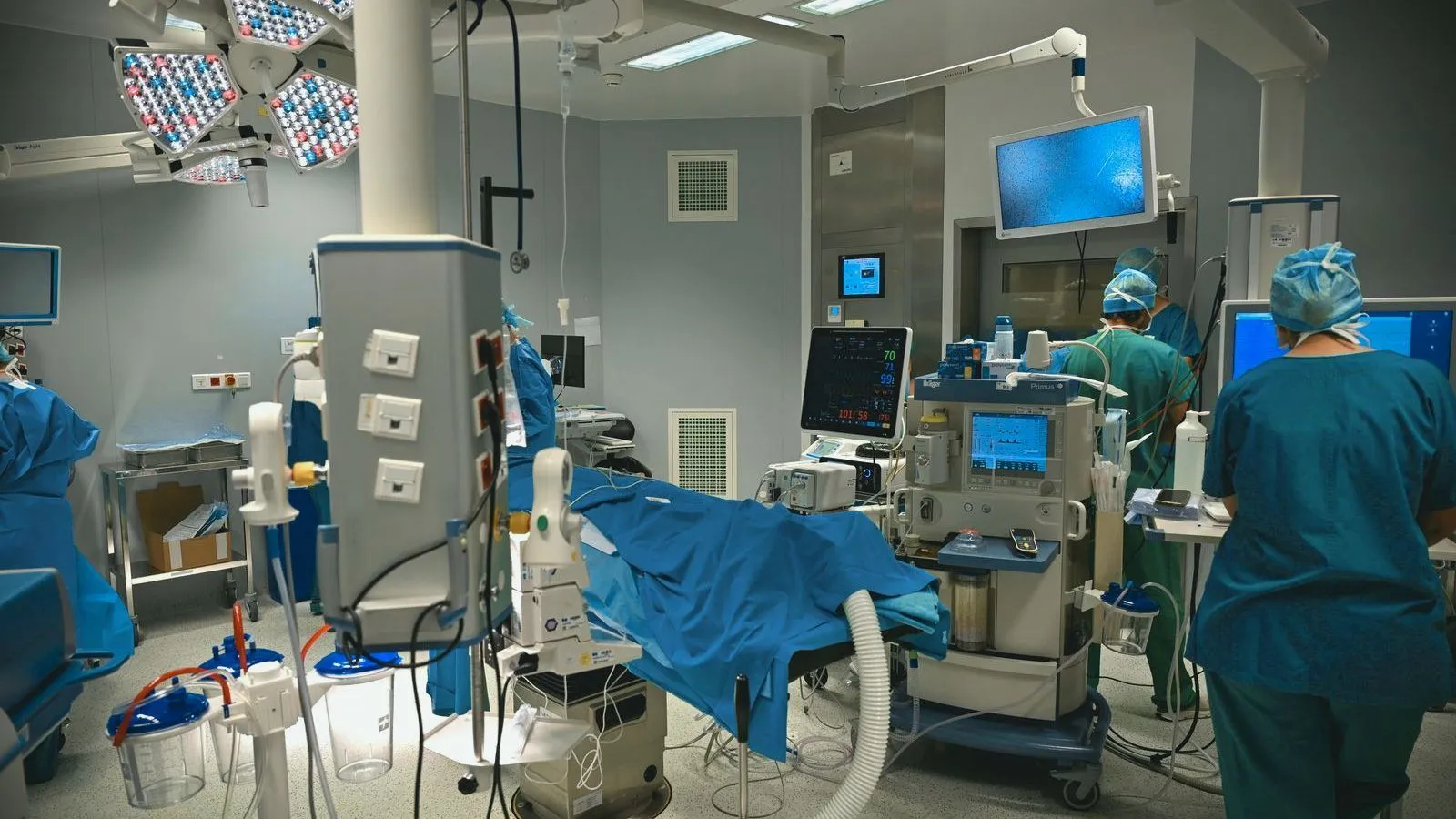
- In 262 patients, quality-of-life scores rose about 20 points after ablation and about 16 after a sham.
- The trial's estimate of the difference between the groups, 2.6 points, was small enough to be chance.
- At six months, 21% of the ablation group were in atrial fibrillation, against 41% of the sham group.
- A smaller sham-controlled trial in 2024 found an 18-point quality-of-life advantage for ablation.
- Only 262 of 1,199 invited patients agreed to take part, and results beyond six months are not yet in.
A widely used heart procedure has been tested against a fake version of itself, and on how patients said they felt it came out barely ahead. People with atrial fibrillation who had a catheter ablation reported a better quality of life six months later. So did people who were sedated and wheeled out again without the ablation being done.
The trial, called PVI-SHAM-AF, was published in The Lancet on August 30 and presented at the European Society of Cardiology (ESC) congress in Munich. It did find that ablation does its mechanical job. More patients were in a normal rhythm afterward. What it calls into question is how much of the relief patients feel comes from the procedure. The answer is not final: a smaller trial two years ago found a clear benefit.
What the sham-controlled ablation trial did
Atrial fibrillation (AF) is an irregular, often rapid heartbeat that can bring palpitations, breathlessness and fatigue, and it raises the risk of stroke. Catheter ablation involves disrupting the abnormal electrical pathways that cause the condition. Thin tubes are threaded through a vein in the groin to the heart, where tissue around the veins from the lungs is scarred. More than 500,000 catheter ablations are performed each year globally, according to the society.
Guidelines recommend catheter ablation for symptom relief in patients with atrial fibrillation. The evidence behind that advice comes mostly from trials in which patients knew what treatment they had received, and how a patient feels is the kind of outcome most open to expectation. A sham-controlled trial removes that problem by making both groups believe they may have been treated.
The trial was conducted at nine study sites in Germany and Poland. Patients had atrial fibrillation that caused symptoms, of either main type: paroxysmal, meaning it comes and goes, or persistent, meaning it continues until treated. They were randomly assigned in a 2:1 ratio to catheter ablation or a sham procedure, so two had the ablation for every one given the sham. In all, 262 patients consented and were randomly assigned, 173 to ablation and 89 to the sham. Their median age was 67, and about half were women.
The sham was built to be convincing. The sham procedure consisted of conscious sedation and two punctures in the groin, lead investigator Rolf Wachter of University Hospital Leipzig told a press conference, with no catheter passed into the heart. Conscious sedation leaves a patient drowsy but awake. According to the society, patients received conscious sedation for the same length of time and in the same setting as the standard procedure.
One element was shared. In both groups, any patient who went into AF during the procedure was cardioverted, cardioversion being a controlled electric shock that resets the heart’s rhythm. It is a treatment in its own right.
Quality of life after ablation and after the sham
The main measure was a standard questionnaire on how atrial fibrillation affects daily life, scored from 0 to 100. Higher scores are better.
| Before | At six months | Change | |
|---|---|---|---|
| Ablation (173 patients) | 61.3 | 81.1 | 19.8 points higher |
| Sham (89 patients) | 59.2 | 74.9 | 15.7 points higher |
Both groups improved by a wide margin. The paper’s estimate of the difference between them in that improvement was 2.6 points. It is worked out from the middle of all the patient-to-patient comparisons, which is why it is not the same as the 4.1-point gap between the two average changes in the table. It came with a plausible range running from 2.7 points in favor of the sham to 8.0 points in favor of ablation. A range that spans zero means the trial cannot say the two differ.
The authors put it formally. Catheter ablation did not demonstrate superiority over a sham procedure for improving atrial fibrillation-related quality of life at 6 months. Superiority means doing better by more than chance would explain. The analysis counted every randomized patient in the group they were assigned to.
Wachter did not hide the team’s reaction, telling reporters they had been surprised and suggesting the sham had simply been a good one. Wachter also drew a broader conclusion about what patients respond to. The impact of the procedure “probably has been overestimated in previous research, and we have underestimated the impact of active human care on these patients,” Wachter said.
Heart rhythm, where ablation did better than the sham
On the heart’s rhythm, the trial showed ablation doing what it is designed to do. The percentage of patients with AF at 6 months was 21% in the catheter ablation group and 41% in the sham group. On a second measure, freedom from atrial fibrillation after six months, the figures were 73% against 52%.
So the two results pull apart. A procedure that halved the share of patients in atrial fibrillation produced only a small, uncertain extra gain in how they said they felt. The 41% figure also means that most of the sham group were in a normal rhythm at six months without an ablation, which may reflect the cardioversions and the natural coming and going of the condition.
Harms were recorded in both groups, because a sham still involves sedation and punctures. Serious adverse events judged related or possibly related to the procedure occurred in six patients after ablation and four after the sham. Because the ablation group was twice the size, that is 3.5% against 4.5%. One of the four was a stroke caused by a blocked vessel, a known risk of atrial fibrillation itself. There were five vascular access complications, three with ablation and two with the sham, meaning problems where the vein was entered. One death occurred in each group; neither was considered related to the study procedure.
How the ablation result fits with earlier trials
It conflicts with the only comparable study. In 2024 a British team published the first sham-controlled trial of the procedure, in JAMA. A total of 126 participants were randomized. Six months later the estimated difference in quality-of-life score on the same questionnaire, favoring catheter ablation, was 18.39 points. That is seven times the gap seen in the new trial.
Nobody has a full explanation. The British trial enrolled mostly patients whose atrial fibrillation was persistent, and it used cryoablation, a freezing technique. Its sham also included pacing of a nerve in the chest. Wachter noted that ablation patients improved by a similar amount in both trials, and that the British sham group improved far less than the sham group in the new trial, without claiming to know why.
The largest trial of ablation also favored it on quality of life, by a much smaller margin and with a caveat. That study, run at 126 centers in 10 countries, compared ablation with drug treatment and was not blinded. Among 2204 randomized patients, quality-of-life scores at 12 months were 86.4 points vs 80.9 points in favor of ablation. A gap of that size lies inside the range the new trial could not rule out. Patients knew which treatment they had received, which is exactly the weakness a sham is meant to remove.
That same trial did not find that ablation saved lives. Its main measure combined four events, the primary composite end point of death, disabling stroke, serious bleeding, or cardiac arrest, and the difference between the groups, 8.0% against 9.2%, could have been chance. Atrial fibrillation returned in 49.9% of the ablation group and 69.5% of the drug group.
Taken together, the trials agree that ablation controls rhythm better than the alternatives. They disagree on how much of the improvement in daily life belongs to the ablation.
What the atrial fibrillation ablation trial cannot show
Who took part. Most of those approached said no: 937 out of 1,199 patients invited to participate in the trial declined. “Willingness to accept sham allocation may have selected patients with different symptom burden, treatment expectations or preferences,” said Nikolaos Dagres of the German Heart Center at Charite in Berlin, who led the trial with Wachter.
The longer term. The result covers six months. The authors note that 12-month follow-up is ongoing. A benefit that depends on staying free of atrial fibrillation could widen with time, or not.
The comparison itself. The sham group was sedated, punctured, monitored and, where needed, cardioverted. That is a good deal of medical attention, and it is not the same as doing nothing.
Other reasons for ablation. The trial measured quality of life. It was not designed to test effects on stroke, heart failure or survival.
Size and funding. With 89 patients in the sham group, the estimate is imprecise, and a modest real benefit is not ruled out. The trial was funded by Helios Gesundheit, a German hospital operator. Wachter has received research grants from a maker of ablation equipment and fees from several drug and device companies, for work declared as outside this study.
Wachter was careful about what should follow. Asked whether the result changes who should be offered the procedure, Wachter said that “if quality of life is the one and only reason” for it, “I think we should look closer than before”.
Whether ablation is right for a particular patient depends on their symptoms, their heart and the alternatives, which is assessed by their doctor.
In a double-blind trial of 262 patients, catheter ablation kept more people out of atrial fibrillation than a sham procedure but did not clearly improve how they felt at six months, a result that conflicts with a smaller earlier trial and awaits longer follow-up.
People also ask
What is catheter ablation?
A procedure for atrial fibrillation in which thin tubes are passed through a vein in the groin to the heart, where tissue that carries abnormal electrical signals is deliberately scarred. More than 500,000 are performed each year worldwide, according to the European Society of Cardiology.
What did the trial find?
Patients felt better after ablation, and almost as much better after a sham procedure in which they were sedated but no catheter was placed. The estimated difference in quality-of-life scores between the groups was 2.6 points and could have been due to chance.
Does this mean ablation does not work?
No. Ablation kept more patients in a normal rhythm: 21% were in atrial fibrillation at six months, against 41% after the sham. What the trial questions is how much of the improvement in how patients feel comes from the ablation itself.
Why did an earlier trial find a clear benefit?
That is not settled. A British trial of 126 patients in 2024 found a clear quality-of-life advantage for ablation over a sham. The British trial enrolled mostly patients with persistent atrial fibrillation and used a freezing technique, and its sham group improved far less. The lead investigator of the new trial said the team was surprised by its result.
What are the limits of the trial?
It reports six months of follow-up, with 12-month results still to come. Most patients who were invited declined, so those who took part may differ from typical patients. Whether ablation suits a particular person is assessed by their doctor. This is general information rather than medical advice.
References
- Wachter, R., Haag, P., Uhe, T., et al. Catheter ablation for symptomatic atrial fibrillation (PVI-SHAM-AF): a randomised, double-blind, sham-controlled, multicentre trial. The Lancet, 2026.
- European Society of Cardiology. Catheter ablation reduces AF recurrence but not quality of life. News-Medical, 2026.
- Swain, E. Catheter ablation for AF does not improve quality of life vs. sham procedure in new trial. Healio, 2026.
- Dulai, R., Sulke, N., Freemantle, N., et al. Pulmonary Vein Isolation vs Sham Intervention in Symptomatic Atrial Fibrillation. JAMA, 2024.
- Mark, D. B., Anstrom, K. J., Sheng, S., et al. Effect of Catheter Ablation vs Medical Therapy on Quality of Life Among Patients With Atrial Fibrillation. JAMA, 2019.
- Packer, D. L., Mark, D. B., Robb, R. A., et al. Effect of Catheter Ablation vs Antiarrhythmic Drug Therapy on Mortality, Stroke, Bleeding, and Cardiac Arrest Among Patients With Atrial Fibrillation. JAMA, 2019.