News · Brain & Mental Health
Cannabis use disorder rose among US adults from 2021 to 2024 while alcohol use disorder held steady or fell
In national surveys of 186,823 adults, the share of men with cannabis use disorder went from 7.3% to 9.3% and of women from 4.5% to 5.6%. The steepest rises were at ages 35 and over. The figures come from questionnaires, not diagnoses.
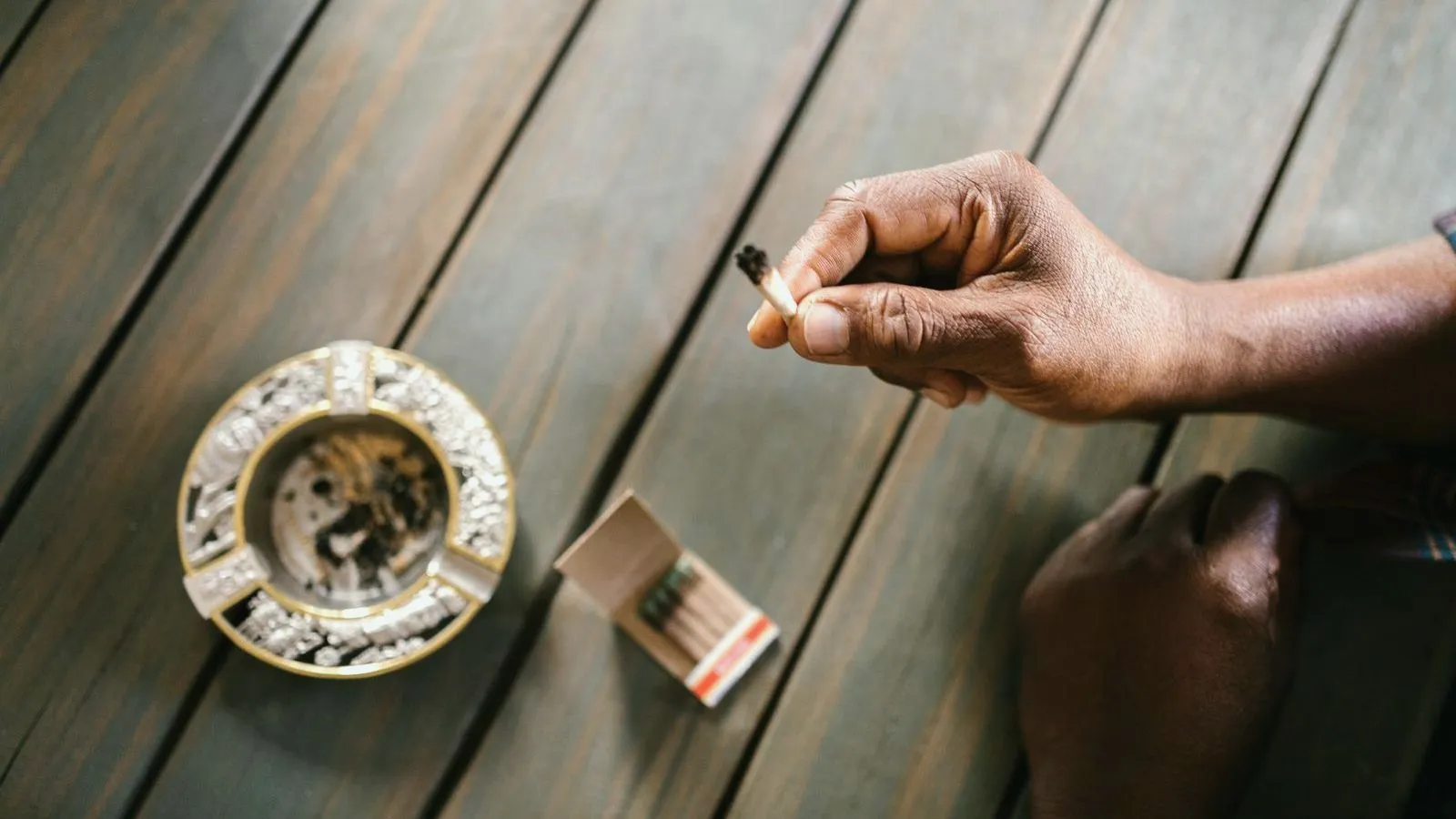
- US surveys of 186,823 adults from 2021 to 2024 tracked cannabis and alcohol use disorders by age and sex.
- Cannabis use disorder rose from 7.3% to 9.3% of men and from 4.5% to 5.6% of women.
- An estimated 19.4 million adults had cannabis use disorder in 2024, up from 15.3 million in 2021.
- Alcohol use disorder was still more common, at 27.1 million adults, and was level or falling in most groups.
- The figures rest on self-reported symptoms, and mild disorder needs only two of eleven.
Two of America’s most used drugs are moving in opposite directions. Problem drinking is flat or falling. Problem cannabis use is rising, and the rise is not confined to the young. An analysis of four years of national survey data, published in JAMA Psychiatry by US government scientists including the director of the National Institute on Drug Abuse, puts numbers on both.
The paper was published in August and drew wide coverage. Its authors argue that it undercuts the belief that cannabis carries little risk of dependence. The figures do show that many users report problems. They also come from a questionnaire, and what they count as a disorder covers a wide range.
How cannabis and alcohol use disorders were measured
The data come from the National Survey on Drug Use and Health, a yearly government survey that provides nationally representative data on cannabis and alcohol use. The analysis covered 186,823 adults who took part from 2021 through 2024.
The survey does not diagnose anyone. It asks people about their use over the past year and scores the answers against the symptom list in the American psychiatric manual known as DSM-5. That manual, revised in 2013, dropped an older two-way split by combining abuse and dependence criteria into a single substance use disorder with levels of severity.
A news report on the study set out the thresholds. The researchers classified survey participants as having a moderate to severe cannabis use disorder if they reported at least four out of 11 symptoms, and two or three symptoms counted as mild. Symptoms include being unable to cut back, and continuing to use despite problems with other people.
The headline totals frame the paper. Although alcohol use disorder (AUD) remains a highly prevalent substance use disorder, the number of US adults with AUD declined from 28.8 million to 27.1 million from 2021 through 2024. By contrast, the number of adults with cannabis use disorder (CUD) increased from 15.3 million to 19.4 million.
Cannabis use disorder rose in men and women
| 2021 | 2024 | |
|---|---|---|
| Men who used cannabis in the past year | 22.2% | 25.7% |
| Men with cannabis use disorder | 7.3% | 9.3% |
| Men with the moderate-to-severe form | 3.1% | 4.1% |
| Women who used cannabis in the past year | 17.7% | 21.2% |
| Women with cannabis use disorder | 4.5% | 5.6% |
| Women with the moderate-to-severe form | 1.7% | 2.5% |
Among men, two things rose together. More used cannabis, and a larger share of those who used it met the criteria for a disorder, 36.2% in 2024 against 32.9% in 2021. Among women the pattern was simpler. By this article’s arithmetic from the published rates, about a quarter of women who used cannabis met the criteria in both years, so their rise came from more women using it.
Severity also shifted among women. Of women with cannabis use disorder, the share whose disorder was moderate to severe went from 37.0% to 45.0%.
Nora Volkow, who directs the National Institute on Drug Abuse and is the paper’s senior author, drew the conclusion in an interview with The New York Times. “The notion that cannabis is not addictive may basically be incorrect,” Volkow said. Volkow linked the change to products that contain far more tetrahydrocannabinol, or THC, the main psychoactive compound, than cannabis did in the past.
The authors make the same connection in the paper, describing the rise as paralleling increasing cannabis potency, expanding legalization, and decreasing perceived harm. Those are offered as context. The study did not measure potency or compare states with different laws.
The steepest rises in cannabis use disorder came after 35
Cannabis problems are usually thought of as a matter for the young. In these data the fastest growth was in middle age and beyond. The authors report that the steepest increases occurred among both males and females aged 35 to 49 years and males aged 50 years or older.
Among men aged 35 to 49, cannabis use disorder rose from 7.2% to 10.4%. Among men aged 50 or older it went from 2.4% to 3.8%. Among women aged 35 to 49 it rose from 3.8% to 5.6%.
The most striking single figure is also the most fragile. The authors report a 7-fold increase in moderate-to-severe CUD among females aged 50 years or older. In percentages, that is a move from 0.1% to 0.7%. A sevenfold rise from a very small base is still a small number, and the estimate for 2021 carries a wide margin of uncertainty.
Laura Bierut, a professor of psychiatry at Washington University School of Medicine who was not an author, expressed concern about the pattern in midlife to The New York Times, noting that people in that age group are often raising teenagers.
Alcohol use disorder held steady or fell
Alcohol went the other way. In a summary from the American Psychiatric Association, the prevalence of AUD remained stable among males from 2021 to 2024, at 13.3% and then 12.4%. Among women it fell from 9.7% to 8.2%.
The clearest declines were among adults in their twenties and early thirties. For men aged 21 to 34, alcohol use disorder fell from 20.0% to 17.0%, and its moderate-to-severe form from 9.4% to 6.8%.
One group moved against the trend. Among men aged 18 to 20, who are below the legal drinking age in the United States, alcohol use disorder rose from 6.9% to 10.4%.
Alcohol problems were mostly at the mild end. Most males and females with AUD, the authors write, overall and in every subgroup, presented with mild AUD during 2021-2024.
The authors suggest a reason for the split. This divergence may reflect behavioral and cultural shifts, they write, including a growing preference for cannabis over alcohol.
Among young adults, cannabis users met disorder criteria more often than alcohol users
The comparison is sharpest in the youngest adults. Among 18- to 20-year-olds in 2024, about half had drunk alcohol in the past year and about three in ten had used cannabis. Yet more of them had cannabis use disorder, 14.5% to 14.9% depending on sex, than alcohol use disorder, 10.3% to 10.4%.
The explanation lies in the rate among users. The authors write that “CUD prevalence among those who used cannabis was more than twice that of AUD among those who used alcohol”. Roughly half of young cannabis users met the criteria, against about a fifth of young drinkers. And of the 18- to 20-year-olds with cannabis use disorder, more than half had the moderate-to-severe form.
Daniel Myran, who studies cannabis and health at the University of Ottawa and was not involved, told The New York Times that the study shows an anticipated consequence of rising levels of use and increasing potency of the product.
How the trends fit with earlier research
The rise is not new, but its character has changed. A comparison of two national surveys a decade apart found that cannabis use more than doubled between 2001-2002 and 2012-2013. Disorder rose too, but for a simple reason: there were more users. In that period the risk among users did not go up, and its authors concluded that the increase in prevalence of marijuana use disorder is owing to an increase in prevalence of users in the US adult population.
The new data differ, at least for men. From 2021 to 2024, use rose and so did the share of male users with a disorder. That is what would be expected if the product, or the way it is used, had become more habit-forming. The share among female users did not rise.
Patterns of use point the same way. An analysis of four decades of the same survey found that the 2022 survey, for the first time, recorded more daily and near daily users of cannabis than alcohol, 17.7 million against 14.7 million, even though far more people drink.
The rate of disorder among users in the new study is also on the high side internationally. A pooled analysis of 21 studies estimated that among people who used cannabis, 22% (18-26%) have CUD. The American figure for men in 2024 was 36.2%, and for women about 26%. Differences in method, and the wide definition used here, may account for some of that gap.
Limits of the survey trends
Self-report. The paper says plainly that the survey is a self-report survey and is subject to social-desirability bias, meaning people may shade their answers toward what seems acceptable. As cannabis becomes more accepted, people may also become more willing to admit to using it, which would look like a rise.
A wide definition. Two symptoms out of eleven is enough for a mild disorder. The figures of 9.3% and 5.6% include many people at that level. The moderate-to-severe figures, 4.1% and 2.5%, are the ones the authors say call for treatment.
Who was left out. The survey excluded unsheltered individuals and incarcerated populations, groups in which substance problems are common, so the survey may understate the true rates.
Many comparisons. The analysis looked at many age and sex groups, and multiple-comparison corrections were not applied. Some of the changes in smaller groups could be chance.
Snapshots. Each year’s survey questions a different sample. The study describes populations over time and does not follow individuals, so it cannot show who went on to develop a disorder or why.
Causes. Potency and legalization are plausible explanations that the study did not test. The authors note that future research may examine how trends vary by state-level cannabis policy.
Treatment. The paper points out that medicines exist for alcohol dependence but that no approved medications exist for CUD. For cannabis use disorder, it also reports that treatment rates have declined, alongside expanding cannabis legalization and increasing perceived benefits.
Whether a person’s own use amounts to a disorder depends on its effects on their life and health, which is assessed by their doctor.
Cannabis use disorder rose between 2021 and 2024 from 7.3% to 9.3% of men and from 4.5% to 5.6% of women in US surveys of 186,823 adults, with the steepest increases after age 35, while alcohol use disorder stayed level or fell, in figures that rest on self-reported symptoms and count mild cases alongside severe ones.
People also ask
What is cannabis use disorder?
A condition in which cannabis use causes problems a person cannot easily control, such as being unable to cut down or continuing despite harm to relationships. It is defined by a list of eleven symptoms. Two or three count as mild, and four or more as moderate to severe.
How much did it rise?
Among men, from 7.3% in 2021 to 9.3% in 2024. Among women, from 4.5% to 5.6%. The moderate-to-severe form rose from 3.1% to 4.1% of men and from 1.7% to 2.5% of women.
Is cannabis now a bigger problem than alcohol?
Not in total. An estimated 27.1 million US adults had alcohol use disorder in 2024, against 19.4 million with cannabis use disorder. But the alcohol figure was falling and the cannabis figure rising, and among 18- to 20-year-olds cannabis use disorder was the more common of the two.
Why is it rising?
The study does not test causes. Its authors point to stronger cannabis products, wider legalization and a falling sense that cannabis is harmful. More people are also using cannabis, which by itself would raise the number with a disorder.
What are the limits of the study?
It relies on what people report about themselves in a survey, not on clinical assessment, and it left out people who were homeless or in prison. Whether someone's use amounts to a disorder is assessed by their doctor. This is general information rather than medical advice.
References
- Han, B., Compton, W. M., Hobin, J. A., Volkow, N. D. Trends in the Prevalence and Severity of Alcohol and Cannabis Use Disorders Among US Adults. JAMA Psychiatry, 2026.
- The Boston Globe. As more Americans turn to cannabis, problem use is increasing. 2026.
- Psychiatric News Alert. Cannabis Use Disorder on the Rise as Alcohol Use Disorder Falls. American Psychiatric Association, 2026.
- Hasin, D. S., Saha, T. D., Kerridge, B. T., et al. Prevalence of Marijuana Use Disorders in the United States Between 2001-2002 and 2012-2013. JAMA Psychiatry, 2015.
- Leung, J., Chan, G. C. K., Hides, L., Hall, W. D. What is the prevalence and risk of cannabis use disorders among people who use cannabis? a systematic review and meta-analysis. Addictive Behaviors, 2020.
- Caulkins, J. P. Changes in self-reported cannabis use in the United States from 1979 to 2022. Addiction, 2024.
- Hasin, D. S., O'Brien, C. P., Auriacombe, M., et al. DSM-5 Criteria for Substance Use Disorders: Recommendations and Rationale. American Journal of Psychiatry, 2013.