News · Sleep
Acupuncture and massage moved insomnia by the same amount in advanced cancer
234 people with advanced cancer and insomnia got ten weeks of acupuncture or massage. Both improved by about 3.85 points on a 28-point scale. Neither arm was a placebo, so what the needles or the hands added is unknown.
- Insomnia symptoms affect over half of patients with advanced cancer, often alongside pain.
- 234 people, ten weeks of acupuncture or massage, followed out to week 26.
- Acupuncture improved insomnia scores by 3.86 points, massage by 3.83.
- A responder needed an 8-point drop. The average change was under half of that.
- No sham and no untreated arm, so both numbers carry everything else that happened.
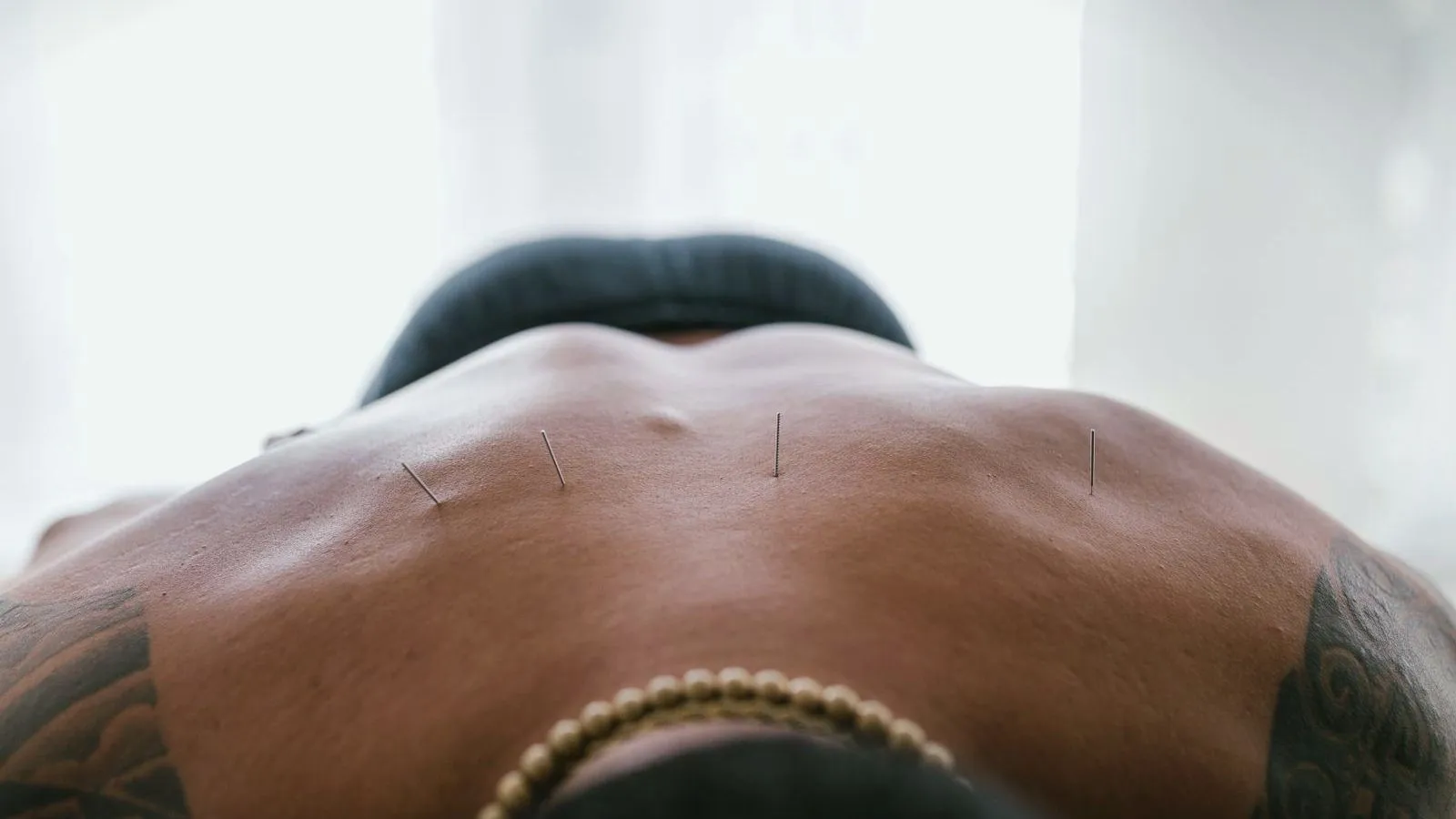
Acupuncture involves fine needles inserted into the skin at specific points. Massage involves hands, pressure and no needles at all. The two share almost nothing except a practitioner and an hour of your time.
Run them head to head in 234 people with advanced cancer who could not sleep, and they came out at 3.86 and 3.83 points of improvement.
A gap of three hundredths. That is close enough to be worth thinking about carefully, and the trial was not built in a way that lets anyone say why.
The insomnia that gets treated last
Insomnia symptoms affect over half of patients with advanced cancer and frequently co-occur with other conditions, particularly pain.
Sleep tends to lose the queue in oncology, behind the tumor, the treatment and the pain, which is part of why this analysis exists at all. Kwag and colleagues drew it from a multicenter pragmatic randomized clinical trial comparing acupuncture and massage therapy for pain in advanced cancer, then went back to look at the 234 participants who had been sleeping badly at the start. That inheritance matters: the parent trial was powered and designed around pain, sleep was a passenger, and everything reported here is a second look at data gathered to answer a different question.
The insomnia itself is also unlikely to be a standalone problem. Most cases of chronic insomnia are secondary, meaning they are the symptom or side effect of some other problem, such as certain medical conditions, medicines, and other sleep disorders. In advanced cancer, all three of those are usually present at once.
Ten weeks of acupuncture or massage, one number
Participants received 10 weeks of treatment with follow-up through week 26, measured on the Insomnia Severity Index, or ISI, a questionnaire running from 0 to 28.
At week 10, both acupuncture and massage significantly improved ISI scores, by -3.86 and -3.83 points respectively.
Set that against the paper’s own definition of success. Responder analyses defined ISI responders as those with an 8-point reduction or more, and the average patient in either arm moved less than half that distance.
Averages conceal individuals, and some people in both groups will have improved a great deal while others got worse. Still, the number carried out of this study by anyone reading quickly is a modest shift, in a population where a modest shift is not nothing and is also not a treated illness. Someone whose insomnia score falls from 18 to 14 has had a slightly better ten weeks, not a solved problem.
What the acupuncture and massage tie tells you
Two treatments with different mechanisms, different theory and different physical procedures produced the same result to two decimal places. There are two ways to read that. Read it generously and both therapies work, roughly equally, which means a cancer patient can be offered whichever they prefer or can reach. Kwag and colleagues write that the pairing supports integrative approaches targeting symptom clusters, treating the two as complementary rather than competing.
Read it skeptically and neither therapy is doing much that belongs to it alone. Both numbers would then be made of what the two share: a practitioner’s attention, ten weeks of routine, touch, the expectation of relief, and the ordinary tendency of a symptom measured at its worst to look better later.
The National Center for Complementary and Integrative Health is direct about the last of these: how acupuncture works is not fully understood, but there’s evidence that acupuncture may have effects on the nervous system, effects on other body tissues, and nonspecific (placebo) effects.
Nothing in this trial adjudicates between the two readings, because there was no sham arm and no untreated arm. A design that compares two active therapies can rank them against each other, and this one found no rank to report.
The sleep and pain finding that survives
Alongside the comparison, the researchers looked at how sleep and pain moved together, and found that sleep and pain showed a bidirectional relationship, supporting integrative approaches targeting symptom clusters. Bidirectional is the load-bearing word. Pain wrecks sleep, and poor sleep lowers the threshold at which pain registers, so the two feed each other. Treating them in separate appointments, with separate clinicians, on separate referral pathways, fights the problem in one direction at a time.
That conclusion does not depend on knowing whether needles beat hands. It holds even if both arms improved for entirely nonspecific reasons.
What to ask about acupuncture or massage
Acupuncture is widely used and, by that agency’s account, has been in use in some form for at least 2,500 years, with use by US adults more than doubling between 2002 and 2022. Neither it nor massage carries much risk in trained hands, and both were delivered here inside cancer care rather than instead of it. So the reasonable position is to treat either as a comfort measure worth asking about, with modest expectations attached to the number. This analysis is exploratory, drawn from a trial about something else, and its own authors label it that way in the title.
A different non-drug route has just been pooled for the first time at scale. Across 10 randomized trials, cannabinoids for sleep cut insomnia severity and added about half an hour of total sleep time, at the cost of four times the rate of mild side effects.
The stronger practical message is the boring one about symptom clusters: if you are being treated for pain and sleeping badly, say both things in the same appointment. On this evidence they are one problem wearing two labels, and the treatments that helped helped both.
People also ask
What did the analysis find?
Both acupuncture and massage significantly improved ISI scores at week 10, by -3.86 and -3.83 points respectively. ISI is the Insomnia Severity Index, a questionnaire scored from 0 to 28. The two therapies produced changes within 0.03 points of each other.
Where did the data come from?
From a multicenter pragmatic randomized clinical trial comparing acupuncture and massage therapy for pain in advanced cancer. Among 300 participants, 234 with baseline insomnia, defined as an ISI of 8 or above, were included in this analysis. The parent trial was designed around pain, not sleep.
Is a 3.85-point change clinically meaningful?
Probably not on its own. The paper's own responder definition required a reduction of 8 points or more, and the average change in both arms came in at under half that. A group average can hide responders, but the headline number is a modest shift on a 28-point scale.
Why does the absence of a sham arm matter?
Because both groups received a hands-on therapy from a practitioner over ten weeks, and neither was compared against no treatment or a convincing placebo. Symptoms in advanced cancer fluctuate, people enrolled at a bad moment tend to improve afterwards regardless, and attention has its own effect. The design can compare the two therapies with each other; it cannot size either against doing nothing.
What was the sleep and pain finding?
Sleep and pain showed a bidirectional relationship, supporting integrative approaches targeting symptom clusters. In other words the two symptoms tracked each other in both directions over time, which argues for treating them together rather than in separate clinics.
Does this mean acupuncture and massage work equally well?
It means they performed equally in this population on this outcome. Two very different treatments landing on nearly the same number is compatible with both working through the same shared route, and also compatible with both genuinely working. This design cannot separate those readings.
Should someone with cancer-related insomnia ask for either?
Both were tested in people receiving ongoing cancer care and neither is a substitute for it. Insomnia can be acute or chronic, and most cases of chronic insomnia are secondary, meaning the symptom of some other problem, which is worth addressing first. This is general information rather than medical advice; a palliative care or oncology team is the right place to raise it.
References
- Kwag, E., Fok, R. W. Y., Li, Q. S., et al. Acupuncture vs. Massage for Insomnia and Pain in Advanced Cancer: Exploratory RCT. Journal of Pain and Symptom Management, 2026.
- National Center for Complementary and Integrative Health. Acupuncture: Effectiveness and Safety. US National Institutes of Health.
- MedlinePlus. Insomnia. US National Library of Medicine.