News · Fitness & Exercise
Swimming beat advice alone for chronic back pain
A British Journal of Sports Medicine trial randomized 76 adults with chronic low back pain to swimming plus education or education alone, and found a real short-term gain that faded by a year.
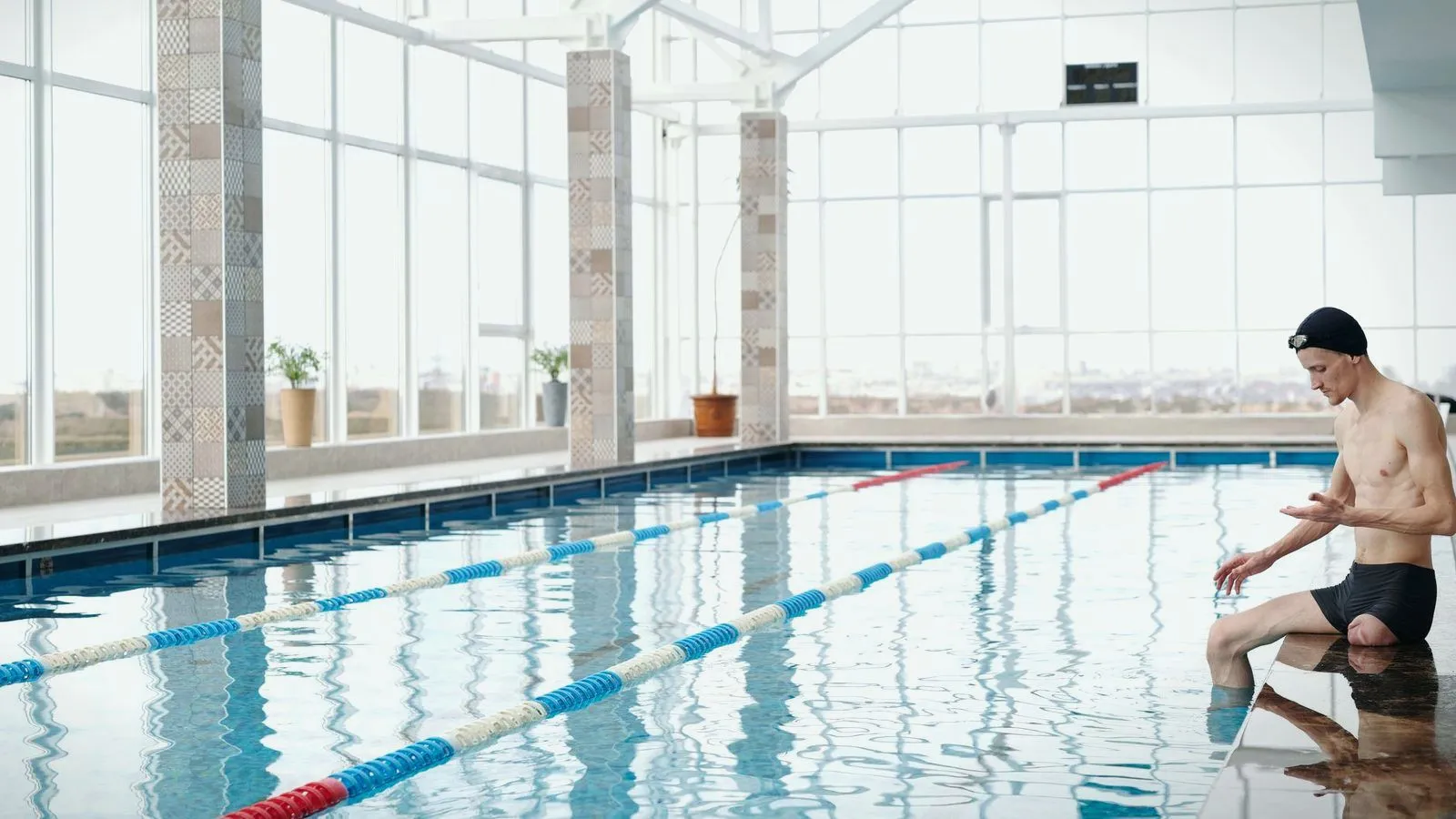
- 76 Australian adults with chronic low back pain, randomized to swimming plus education or education alone.
- Disability at 8 weeks improved more with swimming, by 2.5 points (95% CI, -4.5 to -0.5).
- That difference was gone by 52 weeks, which is the part most exercise headlines leave out.
- The swimming group had more adverse events, though almost all were non-serious.
- 76 people is small for a trial, and the comparison group got education, not nothing.
Chronic low back pain is the most common reason people stop moving, and moving is the main thing that helps. Swimming has an obvious appeal in that loop, since the water takes the load off. A trial in the British Journal of Sports Medicine put it to the test.
Swimming and education together was more effective than education alone for disability at 8 weeks. By 52 weeks the two groups had converged.
Why swimming needed a trial at all
Exercise is standard advice for chronic back pain, but “exercise” covers everything from walking to weights. Swimming has been recommended constantly and, until now, tested directly almost never.
The trial set out to assess the effectiveness of a swimming and education program compared with education alone for patients with chronic low back pain. That comparison is the interesting choice: not swimming against nothing, but swimming against the advice a patient would get anyway.
How the two arms differed
Adults with chronic, non-specific low back pain were randomized to a swimming and education group or an education alone group.
The swimming arm received an individualized swimming and education program facilitated by four physiotherapy telehealth sessions delivered over 8 weeks. The control arm received up to two telehealth sessions with a physiotherapist covering the same educational content.
So the control group was not left alone. They got the same information, from the same profession, with less contact time. Anything the swimming group gained had to come from the swimming, or from the extra attention that came with it.
What improved, and by how much
76 participants were randomized, 39 to intervention and 37 to control.
At 8 weeks the swimming group was better off, with a mean difference of 2.5 points on the Roland Morris Disability Questionnaire. On a 24-point scale that is a modest but real gain.
Pain was less convincing. The intervention showed a small benefit at 8 weeks that may not be clinically significant, which is the authors’ own assessment rather than a skeptical reading of it.
The part that fades
The headline finding comes with an expiry date. The between-group difference was not sustained at 52 weeks.
Every other outcome followed the same arc. All other secondary outcomes showed a pattern of better outcomes in the intervention group early, which typically reduced over time.
Two explanations fit equally well, and the trial cannot separate them. People may have stopped swimming once the supervised program ended. Or the control group caught up on its own, as chronic back pain tends to fluctuate.
What the EduSwim trial cannot show
Seventy-six people is a small trial, and the interval around the main result runs from 4.5 points down to 0.5, so the true effect could be much larger or barely there.
The swimming group also had more adverse events, although almost all were non-serious, which is what you would expect when you add activity to people who already hurt.
The authors’ conclusion is deliberately bounded: a swimming and education program was more effective than education alone for short-term improvement of chronic low back pain.
Short-term is doing real work in that sentence. For a condition measured in years, an eight-week edge is a beginning rather than an answer.
Swimming is also one option among several. Cognitive behavioral therapy for chronic pain is the other first-line non-drug treatment, and it has been tested at much greater scale.
People also ask
Is swimming better than other exercise for back pain?
This trial cannot say. The comparison was swimming plus education against education alone, not swimming against walking, strength work or physiotherapy. Current guidance for chronic low back pain already recommends staying active with whatever exercise a person will actually keep doing. What this adds is that swimming belongs on that list, not that it sits above it.
Why did the benefit disappear by a year?
The study does not answer that, and there are two very different explanations. People may have stopped swimming once the supervised program ended, or the control group may simply have caught up as chronic back pain fluctuates over time. Both produce the same converging lines. It is a common pattern in exercise trials and a reason to treat 8-week results cautiously.
How big is a 2.5-point change on the Roland Morris scale?
The scale runs from 0 to 24, where higher means more disability. A 2.5-point difference is modest but within the range usually treated as meaningful for this measure. The pain finding was weaker: the authors themselves flag that it may not be clinically significant.
What were the adverse events?
The swimming group had more of them, though almost all were non-serious. That is unremarkable for an exercise intervention in people with existing pain, and the trial reported it rather than burying it. Anyone with back pain starting a new activity should expect some soreness and should raise anything sharp or persistent with a clinician.
Is 76 participants enough?
It is on the small side, which mainly affects precision rather than validity. The confidence interval on the primary outcome runs from -4.5 to -0.5, so the true effect could be substantially larger or barely there. A larger trial would narrow that, and would also have more power to detect whether the year-long convergence is real.
References
- Wareham DM, Fuller JT, Graham PL, et al. Effectiveness of an individualised swimming and education programme for chronic low back pain (EduSwim): a randomised controlled trial. British Journal of Sports Medicine (2026).
- National Institute of Arthritis and Musculoskeletal and Skin Diseases. Back Pain.