News · Sleep
In sleep apnea, waist beat BMI at predicting heart events
Among 2,662 people in the SAVE trial with sleep apnea and existing heart disease, 32% counted as obese by BMI. By waist-to-height ratio, 96% did. Only the waist measure tracked repeat cardiovascular events.
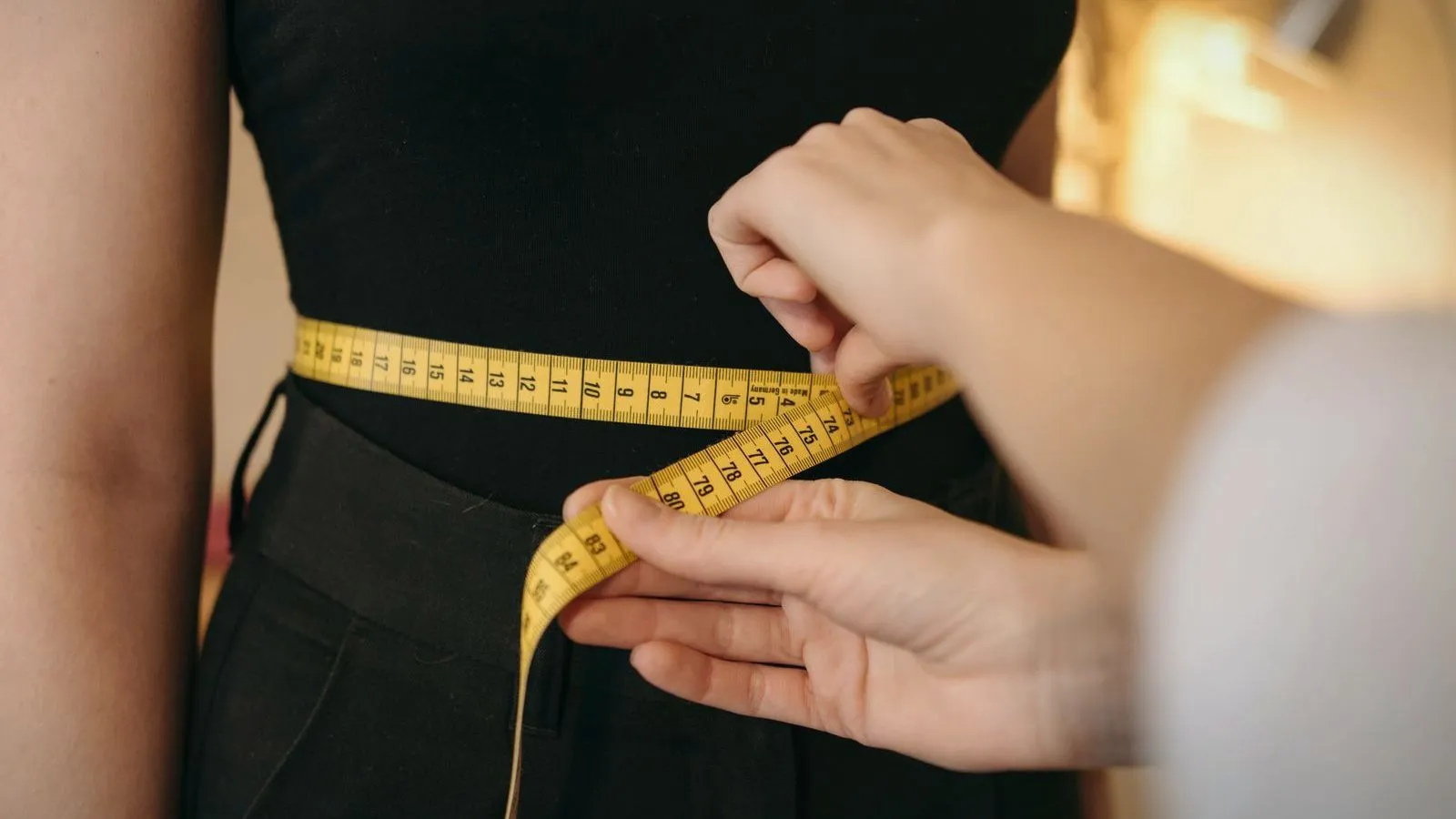
- BMI classed 846 of 2,662 as obese. Waist-to-height ratio classed 2,544 as centrally obese.
- BMI categories were not clearly associated with repeat cardiovascular events.
- The top quarter by waist-to-height ratio carried 1.52 times the risk of the bottom.
- Waist-to-height ratio is your waist divided by your height. Above 0.50 is the threshold.
- This is a post hoc analysis of a trial designed to answer a different question.
Almost everyone with sleep apnea carries extra weight, and almost everyone with sleep apnea and heart disease carries it around the middle. That makes body size a hard thing to study in this group: if nearly all of them are heavy, the measure you use has to be sharp enough to separate them.
A post hoc analysis of the SAVE (Sleep Apnea Cardiovascular Endpoints) trial, published in Neurology, compared two measures in 2,662 people who had both conditions. One of them barely sorted anybody. The other predicted who had another cardiovascular event.
Two ways of measuring the same body in sleep apnea
Obstructive sleep apnea causes your airway to collapse or become blocked during sleep, and normal breathing starts again with a snort or choking sound.
The reason weight enters the picture is that obesity is a key risk factor underlying both obstructive sleep apnea (OSA) and cardiovascular disease (CVD). Fat around the neck and abdomen narrows the airway and loads the heart at the same time.
Body-mass index is the usual measure: weight against height squared, sorted into categories. Waist-to-height ratio is the alternative used here, and it is exactly what it sounds like, your waist divided by your height, with 0.50 the threshold for carrying too much around the middle.
How differently BMI and waist sort people
This is the part worth pausing on. Of 2,662 participants with OSA with established CVD, 846 (31.8%) were obese by BMI (>=30 kg/m2), while 2,544 (95.6%) had central adiposity (WHtR >=0.50).
Under one measure, a third of the group qualifies as carrying dangerous weight. Under the other, effectively all of them do.
That is not a contradiction. BMI is a whole-body average and waist-to-height ratio is specific to the middle, so a person of normal BMI can sit well above the waist threshold. In this population that describes roughly two people in three.
Which measure tracked repeat heart events
Over a 3.7-year follow-up, conventional BMI categories were not clearly associated with composite CVD events, although spline analyses suggested potential nonlinear associations. Splines fit a curve rather than boxes, and the hint of one is not a result.
The waist measure behaved differently. WHtR showed a clear overall association with composite CVD events.
Sorted into four equal groups, those at the top for waist-to-height ratio had a 1.52-fold higher risk of composite CVD events than those in the lowest, about half again the rate of the bottom group.
The authors’ summary is that WHtR showed a more consistent association with the risk of future CVD events, while the relationship between BMI and CVD outcomes appeared more complex.
What this says about CPAP and heart events
SAVE was not designed to ask about waistlines. It was built to test whether treating sleep apnea prevents heart attacks and strokes in people who have already had one, and its answer was no: CPAP (continuous positive airway pressure) as an addition to usual care is not superior to usual care alone for secondary prevention of cardiovascular events, with individual and composite cardiovascular outcomes unaffected in patients using CPAP for an average of 3.3 hours per night.
One reasonable hope after a null trial is that it worked for somebody, and body shape is an obvious place to look.
It did not. There was no heterogeneity in the effect of CPAP treatment on composite CVD events or CPAP adherence by any baseline adiposity measures. Neither fatter nor thinner participants got more out of the machine, and neither used it more.
What a post hoc sleep apnea analysis cannot establish
The question was asked after the data were collected. Post hoc analyses are exploratory by nature: with enough measures and enough outcomes, something will separate, and the finding needs replicating before it is treated as settled.
The population is also narrow and unusual. Everyone here had moderate-to-severe sleep apnea and established cardiovascular disease, and 96% had central adiposity. A measure that works in a group where almost nobody is lean may behave differently elsewhere.
Waist measurement itself carries error, since where the tape sits changes the number, and this was not a study of whether reducing your waist reduces your risk.
The paper is paywalled, so the authors’ own limitations section was not available for this piece.
What to do with a tape measure and your waist
If you have sleep apnea, or heart disease, or both, this is a small argument for tracking your waist alongside your weight. Divide your waist by your height in the same units; above 0.50 is the threshold this study used, and it takes a minute.
That is a monitoring suggestion rather than a treatment. Nothing here shows that shrinking a waist changes cardiovascular risk, only that the measurement sorted people better than BMI did.
The wider point is about the instrument. In a group where almost everyone is heavy, a category that calls two thirds of them normal is not measuring the thing that matters.
There is a further reason to watch the waist rather than the scale. Visceral adiposity and sleep apnea appear to predict each other over nine years rather than running in one direction, which makes either one a place to intervene.
People also ask
What is waist-to-height ratio?
Your waist measurement divided by your height, in the same units. A ratio of 0.50 or above is the usual threshold for central adiposity, which is the fat carried around the middle rather than on the hips and limbs. It needs a tape measure and no calculation beyond division, and unlike BMI it distinguishes where weight sits.
What did the study find?
Of 2,662 participants, 846 (31.8%) were obese by BMI (30 kg/m2 or above), while 2,544 (95.6%) had central adiposity (waist-to-height ratio 0.50 or above). Over 3.7 years, conventional BMI categories were not clearly associated with composite cardiovascular events, while waist-to-height ratio showed a clear overall association. Participants in the highest quartile had a 1.52-fold higher risk than those in the lowest (hazard ratio 1.52; 95% CI 1.12-2.05).
Why would BMI miss it?
BMI is weight against height squared and cannot tell muscle from fat, or fat around the organs from fat elsewhere. In a group where almost everyone carries weight around the middle, sorting by BMI puts people with very different abdominal fat into the same category. The authors conclude that conventional BMI categories may not adequately capture cardiovascular risk in this population.
What was the SAVE trial originally?
A randomized trial of CPAP for preventing cardiovascular events in people who already had heart disease and moderate-to-severe sleep apnea. Its main result, published in 2016, was that CPAP as an addition to usual care is not superior to usual care alone for secondary prevention of cardiovascular events, with outcomes unaffected in patients using CPAP for an average of 3.3 hours per night.
Did CPAP work better in any body-size group?
No. There was no heterogeneity in the effect of CPAP treatment on composite cardiovascular events or CPAP adherence by any baseline adiposity measures. Body shape did not identify anyone who benefited from the machine, which is a useful negative in its own right.
Does this mean I should measure my waist instead of my BMI?
For this population it is the better-performing measure, and it is easy to take at home. This is general information rather than medical advice. The finding comes from people who already had both sleep apnea and heart disease, so it does not automatically transfer to healthy adults, though waist-to-height ratio has performed well in other groups too.
How strong is this evidence?
Moderate. It is a post hoc analysis, meaning the question was asked after the trial finished rather than planned in advance, which raises the chance of a finding that will not replicate. Against that, the measurements were taken prospectively in a large multinational trial and the cardiovascular events were formally adjudicated.
References
- You, S., Zheng, D., Loffler, K. A., et al. Central Obesity and Recurrent Cardiovascular Events in Patients With Obstructive Sleep Apnea. Neurology, 2026.
- McEvoy, R. D., Antic, N. A., Heeley, E., et al. CPAP for Prevention of Cardiovascular Events in Obstructive Sleep Apnea. New England Journal of Medicine, 2016.
- MedlinePlus. Sleep Apnea. US National Library of Medicine.