News · Heart & Metabolic
People given the newer shingles vaccine had 9% less heart disease over the next seven years
A Nature Medicine team used America's abrupt switch from the live to the recombinant shingles vaccine as a natural experiment in adults over 60. Heart disease, heart failure and atrial fibrillation were all lower seven years on.
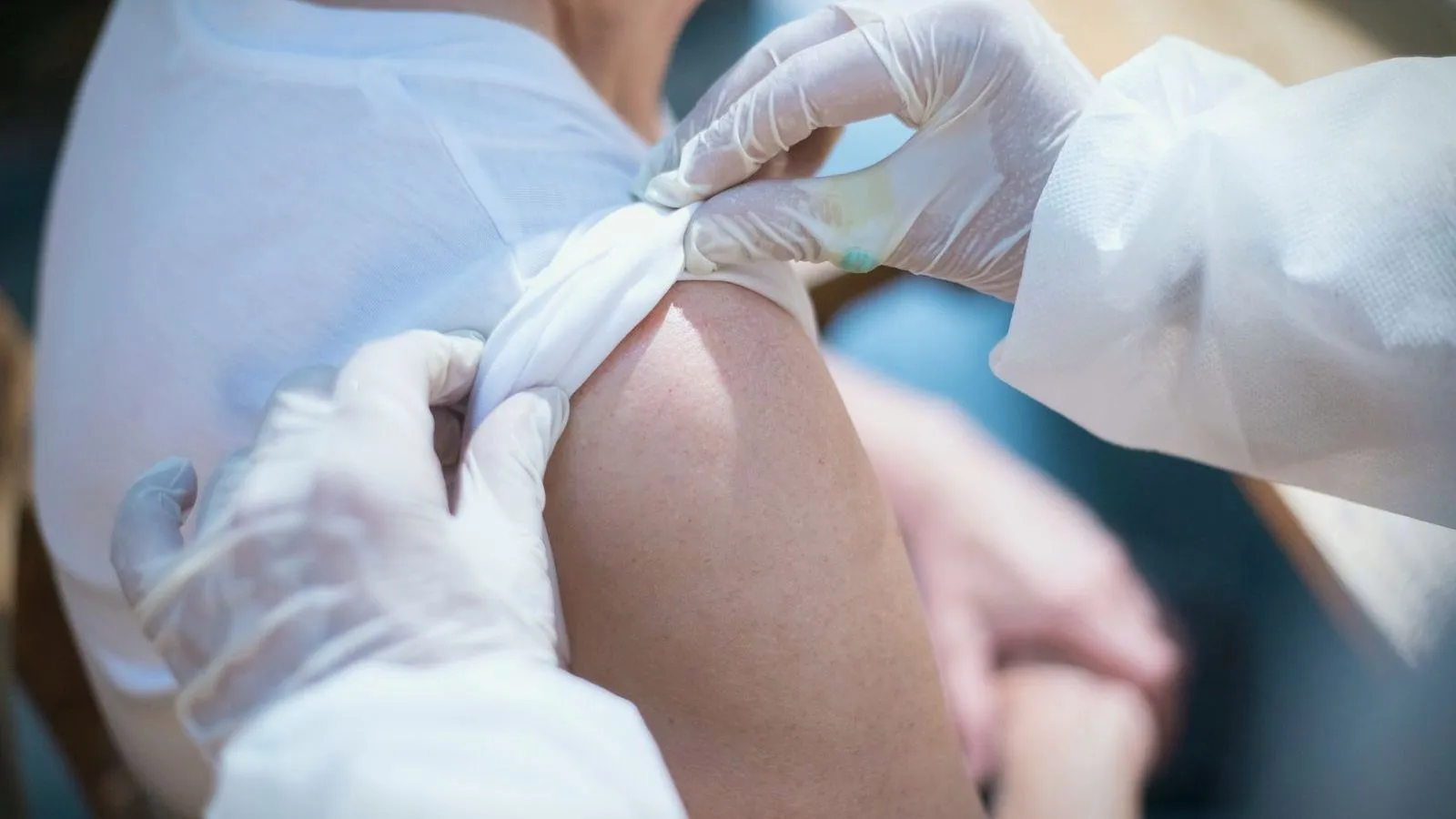
- People given the newer shingles vaccine had 9% less heart disease over seven years.
- Heart failure was down 12%, ischemic heart disease 10%, atrial fibrillation 7%.
- The comparison uses America's abrupt switch between two vaccines as a natural experiment.
- The signal faded over time and did not show up for other blood vessel problems.
- Nobody was randomized, so this is a strong design for an observation, not proof.
For about a decade, studies have hinted that the shingles vaccine is good for your arteries. The problem has always been who gets vaccinated.
People who turn up for an optional vaccine are, on average, more health-conscious, better insured and more likely to see a doctor about a chest pain than people who do not. Every one of those things also lowers heart disease risk, which means the comparison that matters cannot be made simply by counting.
Writing in Nature Medicine, Corsi-Zuelli and colleagues found a way around it. They conducted a natural experiment created by the rapid transition from the live attenuated to the recombinant shingles vaccine in the United States, and compared people vaccinated immediately before the switch with people vaccinated immediately after.
The recombinant vaccine was associated with a 9% decrease in cardiovascular burden over 7 years.
Why the switchover is the clever part
Both groups made the same decision. They walked into a pharmacy, agreed to a shingles vaccine, and got whichever product was on the shelf that month.
That is close to the thing a trial buys you. The people who arrived in the last months of the old vaccine and the people who arrived in the first months of the new one are not obviously different in health-seeking behavior, income or attentiveness, because their behavior was identical. What differed was a supply decision made above their heads.
It is not a randomized trial, and the authors do not claim it is. But it removes the specific bias that has made every previous version of this finding hard to trust.
What actually moved
The composite endpoint was ischemic heart disease, heart failure or ischemic stroke among adults aged 60 years and over, and two of those three carried the result.
Ischemic heart disease fell 10% and heart failure 12%, in both sexes. The stroke result was narrower: a 12% decrease for ischemic stroke in males, with no equivalent finding in women. Atrial fibrillation, examined separately, fell 7%.
The pattern of what did not move is as informative. The association was seen for atrial fibrillation but not other cardiac, peripheral and cerebrovascular outcomes. A vaccine that improved every outcome measured would look more like a difference between two kinds of person than a biological effect. This one is selective, and it is selective in a direction that fits.
The mechanism nobody has tested
Shingles is not a skin condition that happens to be painful. It is a virus coming out of hiding.
Shingles is an infection that causes a painful rash, caused by the varicella-zoster virus, the same virus that causes chickenpox. After chickenpox the virus stays in the body, and as you get older, the virus may become active again and cause shingles. Reactivation inflames nerves and the blood vessels around them.
Inflammation of blood vessels is one of the routes by which arteries narrow, and infections already sit on the standard list: the causes of heart disease depend on the type, and some possible causes include lifestyle, genetics, infections, medicines, and other diseases. A vaccine that prevents reactivation would remove a recurring inflammatory event in exactly the age group where arteries are least forgiving.
That story is plausible. This study does not test it, and the authors are explicit that these results justify clinical trials and mechanistic studies to investigate potential cardioprotective effects of shingles vaccines.
What the fading effect suggests
The association attenuated over time, which is worth sitting with.
An effect that is largest early and shrinks later is what you would expect if the vaccine’s protection against reactivation wanes, or if the two groups gradually converge as the older vaccine’s recipients get the newer one later. It is also what you would expect if a residual difference between the groups washed out.
The honest reading is that a fading signal is consistent with a real but time-limited effect and with an artifact, and seven years of data cannot separate them.
What this changes for a person over 60
Very little in the short term, and that is not a criticism of the study.
Anyone who has had chickenpox can get shingles, and the risk goes up as you get older, with shingles most common in people over age 50. There is a vaccine, called Shingrix, to help prevent shingles and its complications, and the Centers for Disease Control and Prevention recommends that healthy adults 50 years and older get the vaccine. That recommendation already exists, and it is justified by shingles alone: the rash, the nerve pain that can follow it for months, the hospital admissions.
What this adds is a reason to stop thinking of the shingles vaccine as a narrow product for one unpleasant condition. If the finding holds up in a trial, it belongs in the same conversation as blood pressure and cholesterol rather than in the same conversation as travel jabs.
The same age problem shapes other vaccines. A high-dose influenza vaccine exists precisely because older immune systems answer a standard shot weakly, and in the frailest population it has been shown to prevent hospital admissions the standard product does not.
Until that trial exists, the practical version is unchanged and unglamorous: if you are over 50 and have not had it, the vaccine is recommended anyway. The heart may be a bonus.
People also ask
What did the study find?
The recombinant vaccine was associated with a 9% decrease in cardiovascular burden over 7 years (restricted mean time lost ratio 0.91, 95% CI 0.88 to 0.95). It was significant for ischemic heart disease (10% decrease; 0.90, 0.87 to 0.94) and heart failure (12% decrease; 0.88, 0.83 to 0.93) in both sexes, and ischemic stroke in males (12% decrease; 0.88, 0.78 to 0.98).
Why is the vaccine switchover useful?
Because it removes the biggest problem with earlier studies. Comparing people who chose a vaccine with people who did not compares two different sorts of person. Comparing people vaccinated shortly before a national product switch with people vaccinated shortly after compares two groups who made the same choice and got different products.
What is restricted mean time lost?
A way of measuring how much disease-free time a group loses over a fixed window, rather than counting events. It captures both whether something happened and how early, which suits a long follow-up better than a simple event count.
Does this prove the vaccine protects the heart?
No. It is an observational design, however cleverly built, and the authors say the results justify clinical trials and mechanistic studies rather than settling the question. Nobody was randomized to a vaccine.
What might the mechanism be?
Shingles is a reactivation of a virus that inflames blood vessels, and inflammation is part of how arteries narrow. Preventing the reactivation would remove a recurring inflammatory insult. That is plausible and untested here.
Which outcomes did not move?
An association was also seen for atrial fibrillation but not other cardiac, peripheral and cerebrovascular outcomes. Ischemic stroke reached significance in males only. A finding that applies to some outcomes and not others is more believable than one that moves everything.
Should this change who gets vaccinated?
Not on its own. The recommendation to vaccinate adults over 50 already stands on shingles prevention, which is reason enough. This adds a possible second benefit that has yet to be tested directly. This is general information rather than medical advice.
References
- Corsi-Zuelli, F., Li, F., Upthegrove, R., Todd, J. A., Raman, B., Harrison, P. J., Taquet, M. Recombinant shingles vaccination and the risk of cardiovascular events. Nature Medicine, 2026.
- MedlinePlus. Shingles. US National Library of Medicine.
- MedlinePlus. Heart Diseases. US National Library of Medicine.