News · Longevity & Aging
Working more than 52 hours a week tracked with more tooth decay across 1.1 million check-ups
Dental decay is rarely treated as an occupational matter. A Korean health-screening database found a small but consistent link with long hours, holding across twelve years.
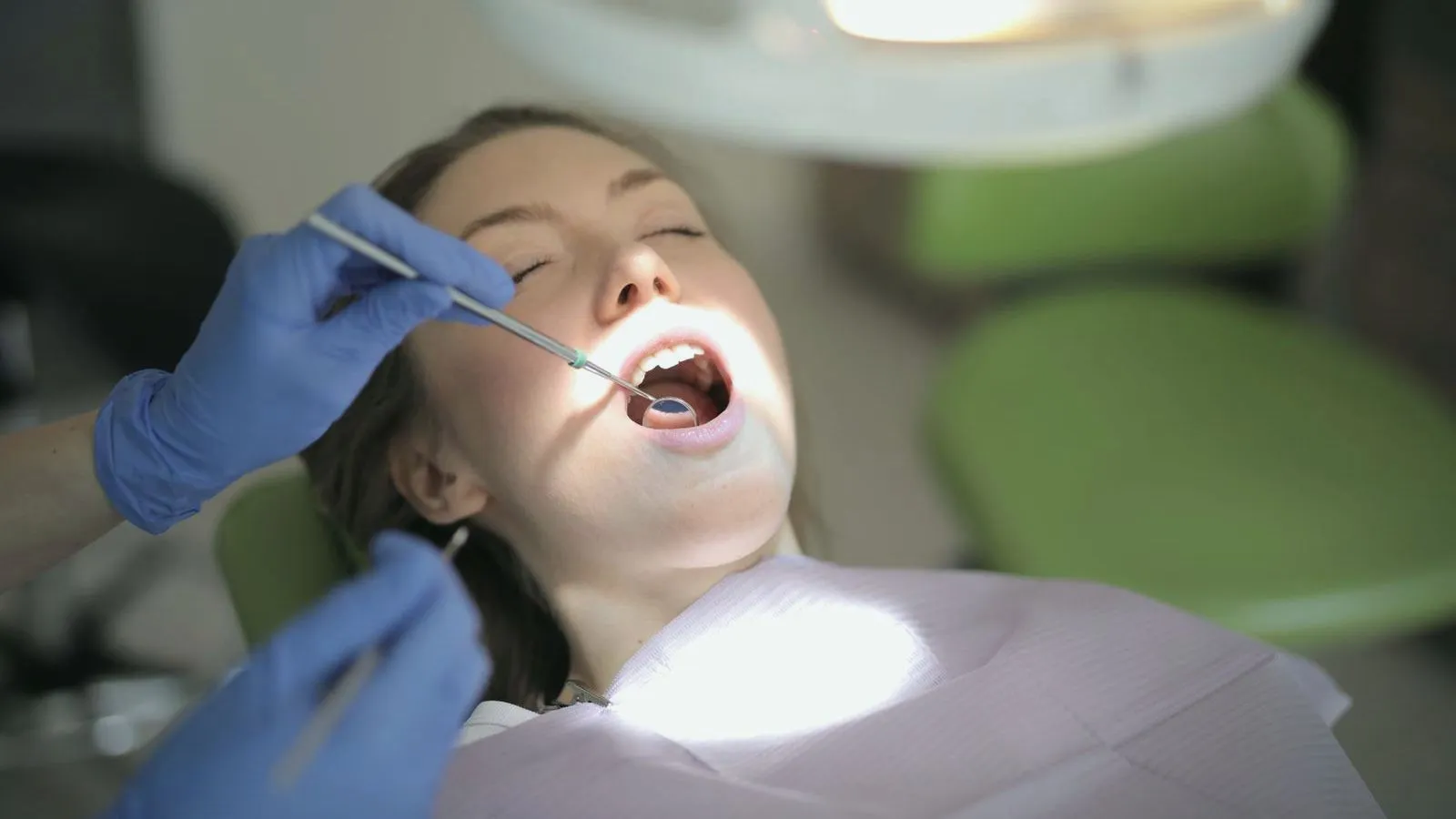
- An observational study of 1,136,767 health-screening visits by Korean workers aged 20 to 64.
- Long hours meant more than 52 a week, the legal threshold in South Korea.
- Decay was found by dentists at examination, not reported by the workers.
- The association was real but small: a few percent higher odds, not a doubling.
- Hours travel with income, shift patterns and stress, and the analysis adjusted for only a few.
Occupational health research asks about hearing, backs, lungs and hearts. It does not usually ask about teeth, which is odd, because a long working day reshapes exactly the behaviors that determine whether someone gets a cavity: when they eat, what they drink, whether they brush at all after lunch, and whether they can take an afternoon off to see a dentist.
A Korean study in the Scandinavian Journal of Work Environment and Health put the question to a database of 1,136,767 health-screening visits, where the teeth were examined by dentists rather than described by the workers. Previously the evidence was a handful of small surveys in which workers described their own teeth, which is a poor way to count cavities. People working more than 52 hours a week had modestly more decay.
Why tooth decay is worth studying at all
It is easy to treat cavities as a cosmetic footnote, and wrong to. The authors open by placing it properly: dental caries is a leading noncommunicable disease worldwide, and it is largely preventable, which is what makes patterns in who gets it interesting.
MedlinePlus describes how it happens: tooth decay is damage to a tooth’s surface, caused by bacteria in the mouth making acids that attack the enamel. The bacteria feed on sugars, so decay is driven less by how much sugar someone eats than by how often it arrives.
That detail matters here, because a long shift is a structure that spreads small amounts of sugar across many hours.
How 1.1 million check-ups were analyzed
The data come from the Kangbuk Samsung Health Study, a Korean occupational health-screening program, covering 2013 to 2024. The analysis used 1 136 767 person-visits of workers aged 20-64 years, meaning repeated visits by the same people over the twelve years rather than a million separate individuals.
Two features make it stronger than most research on this topic. Dental caries was identified from clinical oral examinations performed by licensed dentists, which removes the self-reporting problem entirely. And long working hours were defined as more than 52 hours per week, the legal maximum in South Korea, which makes the threshold meaningful rather than arbitrary.
What the working hours association looked like
Real, consistent, and small. Long working hours were significantly associated with dental caries, at odds roughly 2% higher than among those working fewer hours.
The size deserves emphasis because the headline number of participants invites over-reading. With more than a million visits, an association this small becomes statistically detectable, and statistical detectability is not the same as importance for any individual. Nobody’s dental future turns on a 2% difference in odds.
Where it does matter is in aggregate. Across a national workforce, a small shift in the odds of decay translates into a large number of fillings, and that is the scale at which a labor regulation operates.
The study also reports that the association was stronger in some subgroups than others, which is the usual pattern and the usual caution: subgroup differences in a study this large are easy to find and hard to trust.
Why hours might reach the teeth
No mechanism was tested, so what follows is reasoning rather than finding, and it should be read that way.
A long day rearranges eating. Meals become snacks, coffee arrives with sugar, and the mouth spends more hours in the acidic state that follows eating. Brushing after lunch, never universal, becomes less likely when lunch happens at a desk.
Access is the second route. Dental appointments happen during working hours, and the people least able to take a weekday afternoon are precisely those working the longest weeks. A small problem found late is a larger problem.
Stress is the third and least certain. It reduces saliva, which is the mouth’s main defense against acid, and it tracks with long hours for obvious reasons.
What a Korean database cannot show about working hours
The adjustment is thin, and this is the study’s main weakness. Associations were adjusted for age, gender, and educational level, which leaves out income, occupation type, shift work, smoking and sugar intake. Every one of those travels with working hours and with dental health, and any of them could be producing the association.
The setting is also specific. South Korea has a distinctive working culture, a distinctive diet and a health-screening system that brings workers in routinely, and the 52-hour threshold is a local legal line rather than a biological one.
And people who attend occupational health screening are employed and attending, which excludes the workers whose conditions are worst.
What to take from a 2% difference in decay
Not personal alarm. If you work long hours, this is not a reason to worry about your teeth beyond the ordinary reasons everyone has, and the things that protect them are unchanged: fluoride, cleaning between the teeth, and keeping sugar to mealtimes rather than spreading it across a day.
The finding’s real audience is the people who design work. If a 52-hour week leaves a measurable mark on something as basic as enamel, that is a small piece of evidence about what long hours do to the rest of a life, in a literature that mostly measures hearts and minds. Teeth are simply easier to count.
People also ask
What did the study find?
Long working hours were significantly associated with dental caries (odds ratio 1.024, 95% confidence interval 1.007-1.041) across 1,136,767 person-visits. Subgroup analyses found the association was stronger in some groups than others, and sensitivity analyses were also performed.
How small is a few percent higher odds?
Small. At the population scale it means a meaningful number of extra cavities across millions of workers, but for one person it is a nudge rather than a warning, and much smaller than the effect of sugar intake or brushing.
Why 52 hours?
It is the statutory weekly maximum in South Korea, where the study was run, which makes it a meaningful line rather than an arbitrary one and gives the finding direct policy relevance there.
How was the decay measured?
By licensed dentists at a clinical oral examination during routine health screening, which is far more reliable than asking people about their teeth and is the study's main strength.
Why would long hours cause cavities?
The study does not test any mechanism. Plausible routes include skipped brushing, snacking and sweet drinks through long shifts, less time for dental appointments, and the effect of stress on saliva.
What actually prevents decay?
Fluoride toothpaste, cleaning between the teeth, less frequent sugar, and seeing a dentist regularly. This is general information rather than medical advice.