News · Heart & Metabolic
Lean people with fatty liver and no risk factors still faced 2.5 times the liver death rate
Fatty liver is treated as a consequence of obesity and metabolic problems. A Gut analysis of 30,847 MRI-scanned UK Biobank participants found a slim group with none of those markers, and followed it to a higher rate of liver-related death.
- Slim people with fatty liver and none of the usual risk factors still died of liver disease more often.
- Their liver-related death rate was about two and a half times higher.
- Fatty liver is normally treated as a consequence of obesity, and this group breaks that.
- Liver fat was measured by scan rather than estimated from a blood test.
- They more often carried two gene variants linked to fat handling in the liver.
Fatty liver has a story attached to it, and the story is about weight.
Steatotic liver disease, formerly called fatty liver disease, happens when too much fat builds up in your liver, and the version that dominates clinical practice is the metabolic one: overweight, raised blood sugar, high blood pressure, bad lipids. The name of the condition was changed a few years ago to put metabolic dysfunction in the title.
Which leaves a question nobody had answered. What about the people who have fat in the liver and none of that?
Writing in Gut, Yoon and colleagues investigated the clinical features and outcomes of cryptogenic SLD, meaning liver fat in slim people with no recorded cardiometabolic risk factors. In a Korean national cohort, the group was associated with liver-related death at about two and a half times the rate.
Why the scan is the point
Most large studies of fatty liver never look at a liver.
They estimate it from a formula built out of body mass index, waist size and blood tests, which is cheap, reasonable at population scale, and useless for this particular question. If your measurement of liver fat is partly constructed from metabolic risk factors, you cannot then ask whether liver fat exists without them. The answer is baked in.
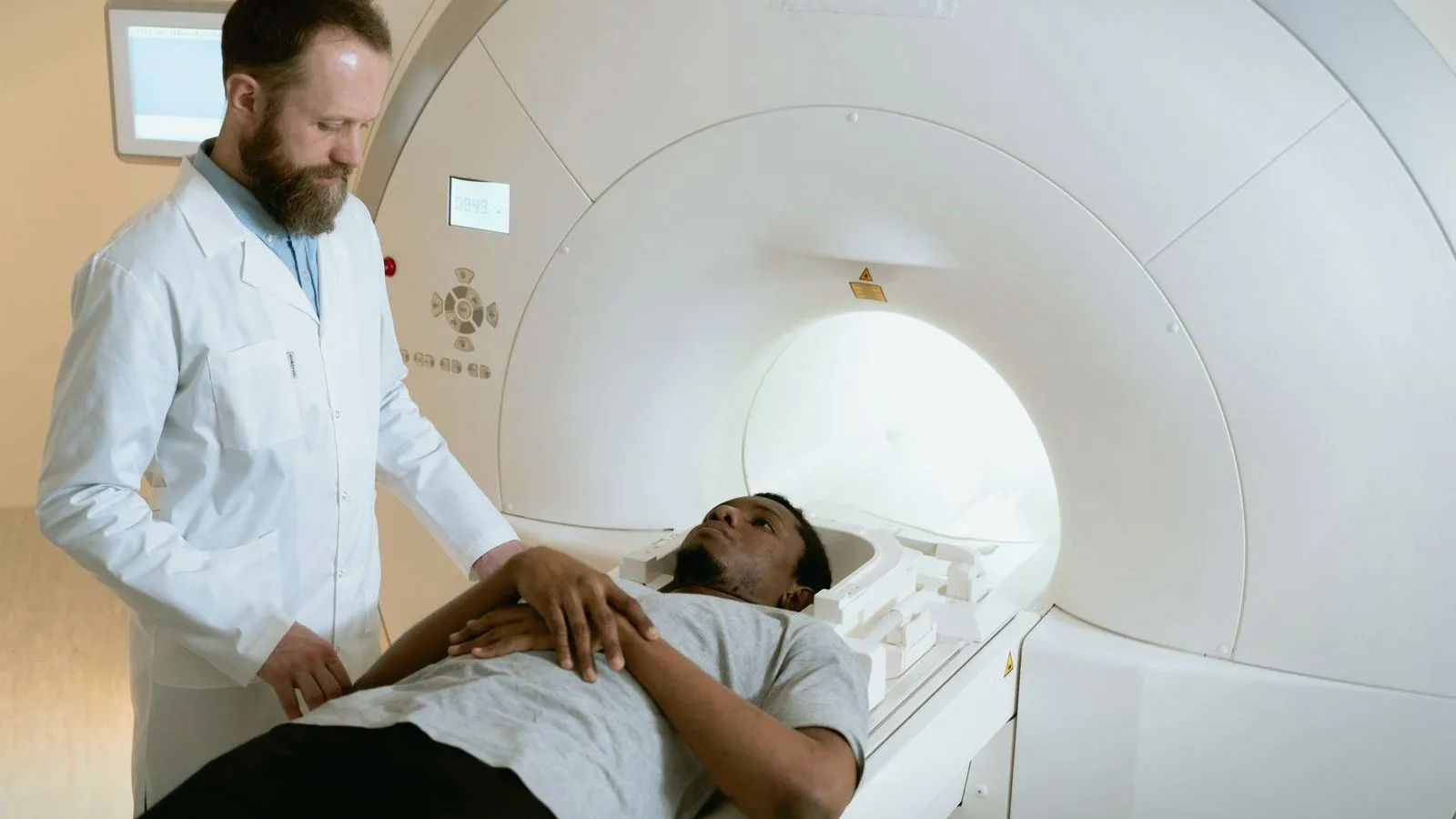
This analysis used direct measurement instead. Among 30 847 MR-PDFF participants, liver fat came from magnetic resonance imaging, which counts fat in the organ rather than inferring it from the body around it.
That is what makes the lean group visible. 1195 (3.4%) had non-obese steatotic liver disease, and 13.7% of those had no recorded metabolic risk factors at all.
What happened to them
The two longitudinal cohorts disagreed about how much, and agreed about the direction.
In the Korean national insurance data, the association with liver-related death came in at two and a half times, with a range from 1.4 to 4.3. In the UK Biobank analysis, a similar but imprecise association was observed, and imprecise is doing a great deal of work: that estimate ranges from just under 2 to over 90.
The honest way to report the second number is not to report it as a number. It tells you the direction and nothing about the size, because liver-related deaths are rare and a handful of events cannot pin down a rate.
The Korean figure is the one worth carrying, and even that rests on a small number of deaths in a small subgroup.
The obvious objection, and what was done about it
If a slim person has a fatty liver and no metabolic explanation, the first thing any doctor thinks is alcohol.
Alcohol-associated liver disease is caused by heavy alcohol use, and the process of breaking alcohol down creates substances that can damage liver cells, cause inflammation, and weaken your body’s natural defenses. It produces exactly this picture: fat in the liver of somebody who is not overweight.
The authors tested it. The Korean association persisted after stricter alcohol exclusion, which does not eliminate the possibility, because self-reported drinking is under-reported everywhere, but does mean the finding is not simply a drinking cohort in disguise.
The genetics underneath it
Something has to be putting fat in these livers, and one candidate has a name.
Cryptogenic liver fat came with an increased prevalence of PNPLA3 and TM6SF2 risk variants, two genes that govern how the liver packages and exports fat. People carrying certain versions accumulate liver fat at any weight, and the association has been known for over a decade.
That fits the rest of the picture. Higher fibrosis rates were observed in the scanning cohort, meaning more scarring, which is the change that actually predicts liver failure.
A genetic route to liver fat is a different disease from a dietary one, and it would explain why this group looks metabolically clean and dies of liver disease anyway.
What this means for anyone slim
Very little as a routine matter, and one thing that is worth remembering.
There is no screening program for liver fat, no test a well person should be asking for, and this is a subgroup of a subgroup: 13.7% of the 3.4% who had liver fat without obesity. Most slim people have nothing to think about here.
The useful piece is narrower. If liver fat has already been found, on a scan done for something else or in a blood test that came back odd, being thin is not a reason to file it as a mistake. The clinical instinct that fatty liver belongs to heavy patients is why this phenotype went undefined for so long.
Blood and urine tests, and scans, are how organ damage gets noticed before it announces itself. The finding here is that in one small group, the absence of the usual risk factors was not the reassurance it looked like.
People also ask
What did the study find?
Among 30,847 MR-PDFF participants, 1,195 (3.4%) had non-obese steatotic liver disease; 13.7% of those had cryptogenic SLD. In longitudinal analyses, cryptogenic SLD was associated with liver-related death in the Korean cohort (HR 2.5, 95% CI 1.4 to 4.3). A similar but imprecise association was observed in the UK Biobank hepatic steatosis index cohort (HR 13.2, 95% CI 1.9 to 92.4).
What is cryptogenic steatotic liver disease?
Fat in the liver of someone who is not overweight and has none of the recorded cardiometabolic risk factors that usually explain it. Cryptogenic means the cause is unknown, and until this analysis the category was not formally defined.
Why does the MRI matter?
Because most studies of fatty liver estimate it from blood tests and body measurements, which build the answer partly out of the risk factors being tested. Measuring liver fat directly by scan breaks that circularity.
How can a slim person get a fatty liver?
Genetics is one route. PNPLA3 and TM6SF2 risk variants were more common in this group, and both affect how the liver handles fat. Alcohol is another, and the study addressed it with a stricter exclusion that did not remove the association.
Why quote one hazard ratio and not the other?
Because the Korean estimate of 2.5 comes with a range of 1.4 to 4.3, and the UK Biobank estimate of 13.2 comes with a range of 1.9 to 92.4. The second is consistent with almost any effect size and should not be reported as a number.
Is this the same as alcohol-related liver disease?
No, and the authors tested that. The Korean association persisted after stricter alcohol exclusion. Alcohol-associated liver disease is a separate category caused by heavy drinking, and it is not what this group was defined by.
What should a slim person do with this?
Nothing routine. There is no screening program for liver fat in people without risk factors, and this describes a small subgroup. If a scan or blood test has already flagged liver fat, being thin is not a reason to dismiss it. This is general information rather than medical advice.
References
- Yoon, E. L., Lee, H. Y., Lee, J., Oh, J. H., Hwang, I., Park, C. H., Kim, S., Park, H., Jo, A. J., Jun, D. W. Cryptogenic steatotic liver disease: a lean phenotype associated with increased liver-related mortality. Gut, 2026.
- MedlinePlus. Fatty Liver Disease. US National Library of Medicine.
- MedlinePlus. Healthy Aging. US National Library of Medicine.