Explainer · Supplements
Glucosamine and Alzheimer's: what a study tying the joint supplement to faster decline does and does not show
Among people with dementia in Florida health records, glucosamine use went with a 25% higher risk of death, and mice bred to develop Alzheimer's-like disease did worse on a memory test when given it. Studies of healthy adults found no such link. No trial has tested it.
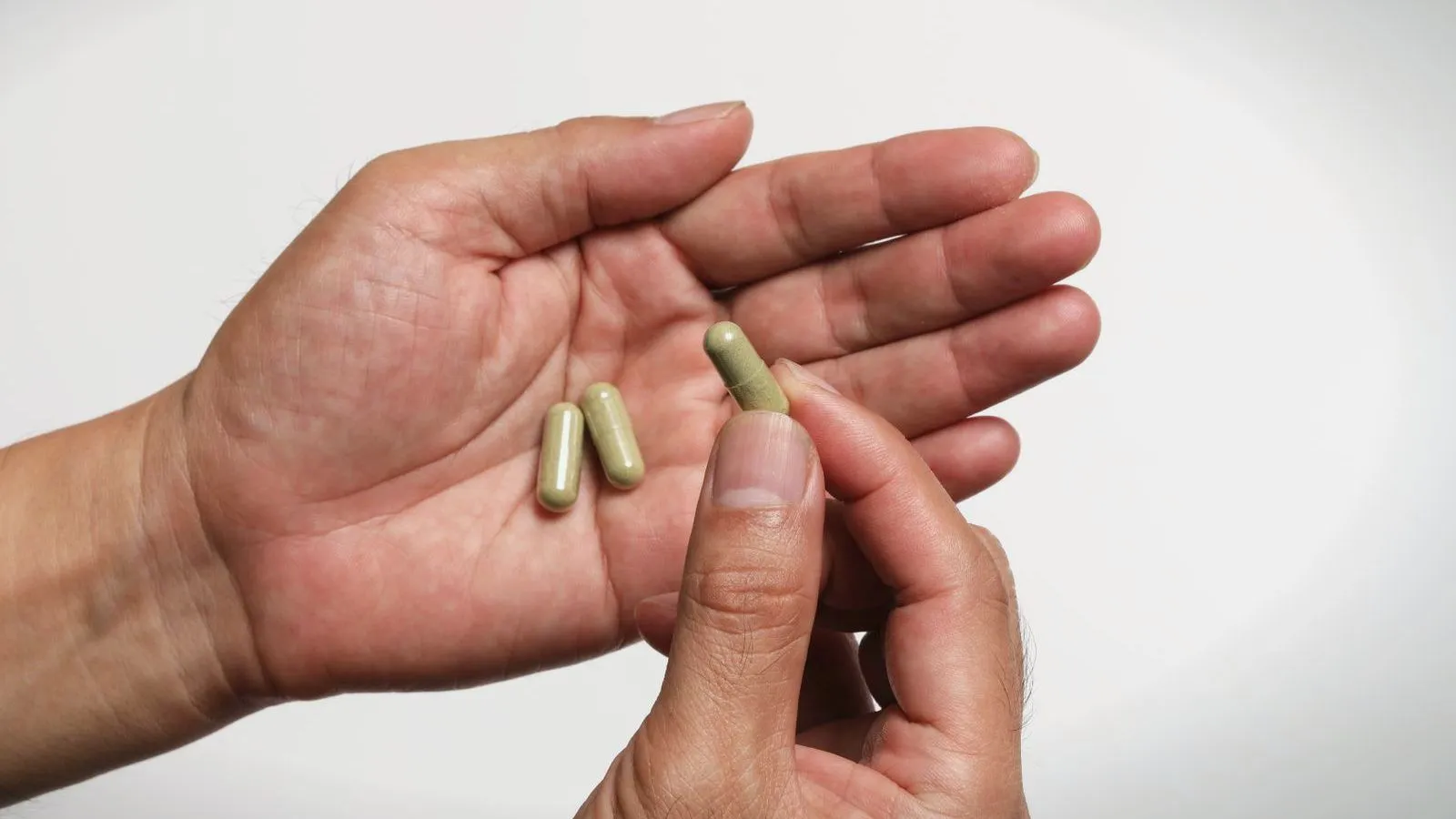
- In health records, glucosamine use was linked to a 25% higher risk of death among people with dementia.
- It was also linked to a 25% higher likelihood of mild cognitive impairment progressing to dementia.
- Mice bred to develop Alzheimer's-like disease had worse memory after two weeks of glucosamine.
- In UK studies of healthy adults, glucosamine users developed dementia less often or at the same rate as non-users.
- The human evidence is observational and conflicting, and no randomized trial has tested the question.
Glucosamine is a widely used supplement, sold without a prescription and bought mainly by older adults for aching joints. A study from the University of Florida, published in June 2026 in Nature Metabolism and widely reported in late September and early October, suggests it may be a poor choice for one group of them: people who already have dementia.
“A lot of these people actively take an over-the-counter supplement that could be making their disease progression worse,” said Ramon Sun, the study’s senior author.
The claim rests on three kinds of evidence of very different strength, and it runs against earlier studies in healthy adults. This explainer sets out each piece.
What glucosamine is and whether it works for joints
Glucosamine is a naturally occurring, sugar-related molecule that can cross the blood-brain barrier, the boundary that controls which substances pass from the bloodstream into the brain. Commercial glucosamine supplements can be produced from materials including shellfish shells or corn.
Use is common. In the UK Biobank, a research project that enrolled about half a million British adults, 19.1% of the participants reported regular use of glucosamine supplements.
Supplements are not held to the standard of medicines. The Florida authors note that glucosamine is a widely used dietary supplement that is less stringently regulated by the FDA than prescription drugs, and can vary considerably in quality and purity.
The evidence that it relieves arthritis is weak. An international group obtained the raw data from trials of glucosamine for osteoarthritis of the knee and hip. Five trials (all independent of industry, n=1625) compared glucosamine with placebo. Glucosamine was no better than placebo for pain or function at short (3 months) and long-term (24 months) follow-up. Most of the 21 eligible trials, including those sponsored by industry, did not share their data.
So the question raised by the new study is about a product whose main benefit is unproven.
What the Alzheimer’s study did
The Florida team did not set out to study a supplement. Their subject was a process called glycosylation, in which cells attach chains of sugar molecules to proteins. The attachments help proteins fold and reach the right place, and nearly every cell depends on them.
The study had three parts.
| Strand of evidence | What was done | What it showed |
|---|---|---|
| Human brain tissue | Samples from 3 people with Alzheimer’s and 3 without | More sugar chains attached to proteins in Alzheimer’s tissue |
| Mice | Mice bred to develop Alzheimer’s-like disease, with the sugar pathway turned down or fed glucosamine | Turning the pathway down improved memory; glucosamine worsened it |
| Health records | Patients with dementia or mild cognitive impairment, 2012 to 2024 | Glucosamine users with dementia died sooner |
In brain tissue donated after death, samples from people with Alzheimer’s disease (AD) carried far more of these sugar attachments than samples from people without it. The comparison involved healthy controls and patients with AD (n = 3 each).
The mouse experiments tested whether that excess matters. When the researchers used genetic tools to dial down the enzymes that build the sugar chains, memory improved in mice with Alzheimer’s-like disease. Glucosamine supplies raw material for the same pathway, so they then did the reverse and fed it to the animals for two weeks. In the paper’s summary, genetic knockdown of glycan biosynthetic enzymes improves cognitive outcomes in AD mice whereas oral glucosamine supplementation impairs them. Glycans are the sugar chains.
The memory test used was recognition of other mice. Treated animals behaved as though they had never met a mouse they had encountered repeatedly.
One detail from the mouse work shapes the interpretation. Healthy mice given glucosamine showed no memory problems. The authors suggest the supplement’s effect depends on the state of the brain it enters.
What the health records showed about glucosamine
The human analysis used records from the University of Florida’s hospital system. The researchers identified patients with a diagnosis of Alzheimer’s disease or a related dementia, a group known as ADRD, and patients with mild cognitive impairment, or MCI, an earlier stage in which memory or thinking has slipped without disrupting daily life.
Supplements are bought without a prescription, so their use does not appear in pharmacy records. Instead, glucosamine users were identified through a natural language processing pipeline that extracted glucosamine-related records from clinical notes. Software searched doctors’ notes for mentions of the supplement. Across the groups, approximately 8% of patients were identified as glucosamine users. That included 1,896 people with ADRD and 2,750 people with MCI.
The comparison between users and non-users produced two headline numbers. After matching for age, sex and other demographic factors, glucosamine use was associated with a 25% higher likelihood that mild cognitive impairment would progress to dementia. Among people who already had dementia, glucosamine use was also associated with a 25% higher mortality risk.
There was a notable exception. The researchers did not observe that mortality association in the MCI group. People with milder impairment who took glucosamine did not die sooner than those who did not.
The paper’s abstract compresses all of this into one sentence: a retrospective analysis of electronic health records from patients with AD with varying disease severity shows that glucosamine supplementation is associated with accelerated AD progression and worsened survival. Retrospective means the researchers looked back at records already collected for other purposes.
The authors themselves stress the limits of the word “associated.” “While it’s an association and not proof of causality, it does raise an important clinical question that now deserves much more attention,” said Matt Gentry, a co-author who chairs the university’s biochemistry department.
Why earlier glucosamine studies look different
The Florida result arrives in a literature that had been reassuring, even flattering, about glucosamine.
Three analyses of the UK Biobank followed people who were free of dementia when they enrolled. In one, glucosamine users were 16% less likely to develop dementia over a median of nine years, and the apparent protection extended to Alzheimer’s disease specifically. The inverse associations between glucosamine use and AD appeared to be stronger among participants aged below 60 years.
A second team, using the same database with different methods, found nothing either way. In that analysis glucosamine supplementation was measured by questionnaire at baseline, and users were neither more nor less likely to develop dementia than non-users. The estimate was 6% higher risk, with a range from 1% lower to 14% higher.
A third looked at deaths from all causes among nearly half a million participants. Regular glucosamine supplementation was associated with lower mortality due to all causes, cancer, cardiovascular, respiratory and digestive diseases, with users about 15% less likely to die during nine years of follow-up.
Taken at face value, these results would make glucosamine protective against dementia, cancer, heart disease and lung disease at once. Few researchers read them that way. A supplement that seems to prevent everything is usually a marker for the kind of person who takes supplements: health-conscious, better off, more active and more likely to see a doctor. Epidemiologists call this the healthy-user effect, and statistical adjustment only partly removes it.
The same caution applies in reverse to the Florida records. People with dementia whose notes mention glucosamine may differ from other patients in ways that affect survival. They may have more arthritis and less mobility, or more medical contact in general, or caregivers who add supplements as illness advances.
The populations also differ. The British studies enrolled healthy middle-aged volunteers. The Florida study examined people already diagnosed. The authors’ proposal is that both sets of results could be real, with glucosamine harmless in a healthy brain and harmful in one where the sugar pathway is already overactive. Their mouse data fit that idea. It has not been tested in people.
What the glucosamine study cannot show
The laboratory evidence is early. The human tissue comparison involved six brains. The mice are genetically engineered to develop a disease resembling Alzheimer’s, which is not the same as the human illness.
The records analysis has several soft spots. Exposure was inferred from mentions in clinical notes, which say nothing reliable about dose, duration or whether the person was still taking it. A patient who uses glucosamine and never tells a doctor is counted as a non-user. Matching on age and demographics does not account for arthritis, frailty or other illness.
The data come from one health system in one state.
A 25% higher risk is a relative measure. On its own it does not say how many additional deaths or diagnoses occurred per hundred patients.
Above all, no randomized trial has assigned people with dementia to take glucosamine or a placebo. The university’s release says as much: the results remain preliminary and will need to be tested in a human clinical trial.
What changes for people taking glucosamine
The researchers have not called for people to stop taking glucosamine. The release states that the results do not yet establish that people need to stop taking the supplement.
What the study does is raise a question about a product widely assumed to be harmless. Sun’s argument is for attention to a neglected side of the disease. “Our results suggest that altered metabolism is a significant contributor to Alzheimer’s progression and, in addition, addressing the metabolic defect could be an important complement to approaches focused on Alzheimer’s plaques and tangles,” Sun said.
For a person with dementia or memory problems who takes glucosamine, whether to continue depends on why they take it and on their overall health, which is assessed by their doctor.
Glucosamine use went with shorter survival among dementia patients in one hospital system’s records and with better outcomes among healthy adults in a national cohort, and neither kind of study can show whether the supplement itself is responsible.
People also ask
What did the study find about glucosamine and Alzheimer's?
In a review of health records, glucosamine use was associated with a 25% higher risk of death among people with Alzheimer's disease or related dementias, and a 25% higher likelihood that mild cognitive impairment progressed to dementia. In mice with Alzheimer's-like disease, glucosamine worsened memory.
Does this prove glucosamine makes dementia worse?
No. The human data are an association found in medical records, and people who take a supplement differ from those who do not. A co-author described the result as an association and not proof of causality. The researchers say a clinical trial is needed.
Does glucosamine cause dementia in healthy people?
The evidence does not suggest that. Two analyses of UK Biobank data, which followed people who did not have dementia at the start, found glucosamine users were either less likely to develop it or no different from non-users.
Does glucosamine work for arthritis?
A pooled analysis of five industry-independent trials with 1,625 participants found glucosamine was no better than placebo for pain or function in knee or hip osteoarthritis at 3 months or 24 months.
How could a joint supplement affect the brain?
Glucosamine can cross from the blood into the brain, where it feeds a process that attaches sugar chains to proteins. The Florida team found that process overactive in Alzheimer's brain tissue, and reducing it improved memory in mice. This is general information rather than medical advice.
References
- Hawkinson, T. R., Liu, Z., Ribas, R. A., et al. Hyperglycosylation is a metabolic driver of Alzheimer's disease. Nature Metabolism, 2026.
- UF Health. Glucosamine, a popular joint supplement, linked to faster Alzheimer's progression. ScienceDaily, 2026.
- Zheng, J., Ni, C., Zhang, Y., et al. Association of regular glucosamine use with incident dementia: evidence from a longitudinal cohort and Mendelian randomization study. BMC Medicine, 2023.
- Ai, B., Chen, L., Cai, M., et al. No Associations Between Glucosamine Supplementation and Dementia or Parkinson's Disease: Findings From a Large Prospective Cohort Study. The Journals of Gerontology Series A, 2024.
- Li, Z.-H., Gao, X., Chung, V. C. H., et al. Associations of regular glucosamine use with all-cause and cause-specific mortality: a large prospective cohort study. Annals of the Rheumatic Diseases, 2020.
- Runhaar, J., Rozendaal, R. M., van Middelkoop, M., et al. Subgroup analyses of the effectiveness of oral glucosamine for knee and hip osteoarthritis: a systematic review and individual patient data meta-analysis from the OA trial bank. Annals of the Rheumatic Diseases, 2017.