News · Fitness & Exercise
Exercise delayed ovarian aging. In mice, not in women.
A Nature Aging paper reports that physical activity delays ovarian aging. Its 164,853 human participants were compared at a single moment, which cannot show that. The delaying was demonstrated in mice.
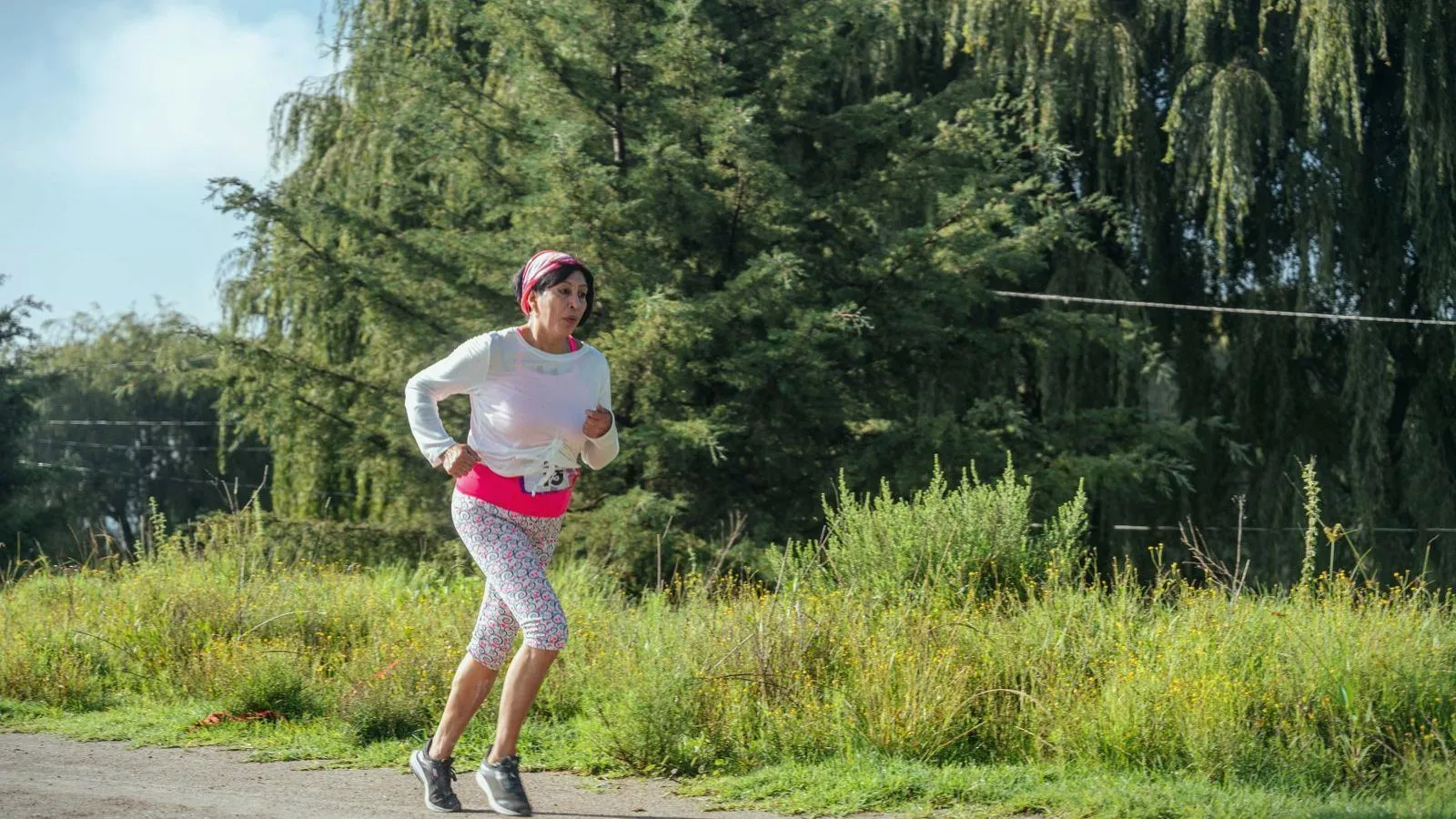
- The human half compared 152,435 UK Biobank participants at one point in time.
- It found postmenopausal people less active than premenopausal people, who are also younger.
- That comparison cannot show which came first, and the paper does not claim a trial.
- The delaying of ovarian aging was shown in mice, along with the adiponectin mechanism.
- A receptor drug, AdipoRon, extended reproductive lifespan in mice. Not in people.
A paper in Nature Aging is titled “Physical activity delays ovarian aging”. It will be reported as evidence that exercise pushes back menopause.
Read the abstract in order and the claim divides in two. The human evidence involves 164,853 people and cannot show any delaying, because everyone was measured once. The delaying was demonstrated in mice, where the paper does something genuinely new: it names a mechanism that had previously been unclear.
Both halves are real science. Only one of them is about women, and it is not the half with the finding.
Why ovarian aging is worth studying
Menopause is the time in your life when you stop having your period and can no longer get pregnant, and the most common age for reaching menopause is between 45 and 55 years old.
It is not only about fertility. During the menopausal transition, your ovaries start to make less of the estrogen and progesterone hormones, and the loss of estrogen can cause you to lose bone density. It can also raise your cholesterol levels and increase your risk of heart disease and stroke.
The researchers make the stakes explicit: ovarian aging leads to infertility, endocrine dysregulation and increased chronic disease risk, yet there are currently no approved therapies to delay ovarian aging.
That last clause is why this field attracts attention, and why the difference between a demonstrated effect and a plausible one matters here more than usual.
What the 164,853 people were asked about exercise
The human component is two datasets of physical activity (PA), analyzed the same way.
The researchers took 152,435 participants in the UK Biobank and report that lower PA levels were observed among postmenopausal persons when compared to premenopausal persons. The same pattern turned up in 12,418 participants in the National Health and Nutrition Examination Survey.
Every measurement in both was taken once. That compares groups; it does not follow anybody.
Now consider what separates those two groups. Postmenopausal people are, on average, more than a decade older than premenopausal people. Activity declines with age for reasons ranging from joints to jobs to caring responsibilities.
So a finding that postmenopausal people move less is close to a finding that older people move less. It is consistent with exercise protecting the ovaries. It is equally consistent with age reducing both, or with menopausal symptoms reducing activity rather than the reverse.
Where the delaying was demonstrated
The causal claim rests on the animal work, and the animal work is good.
Animal studies in mice show that higher levels of PA can delay ovarian aging. In addition, PA significantly increased adiponectin levels in the ovary, and the protective effects of PA on ovarian aging were attenuated in adiponectin-deficient mice.
That second sentence is the strong part. Remove the proposed mechanism and the benefit weakens, which is how a pathway gets established rather than guessed.
They then went further. The adiponectin receptor agonist AdipoRon delayed ovarian aging and extended reproductive lifespan in mice, meaning a drug reproduced part of what the exercise did.
This is a coherent piece of biology. It is also entirely in mice, whose reproductive lifespan is measured in months and whose ovaries are not human ovaries.
What the ovarian aging paper claims
The authors’ own summary is careful: our findings elucidate the role and mechanisms of PA in delaying ovarian aging, highlighting potential therapeutic targets for extending the reproductive lifespan.
Potential therapeutic targets. That is a statement about where to look next, not about what to do now.
The gap between that sentence and a headline reading “exercise delays menopause” is the whole distance between a mouse and a woman, plus the distance between a snapshot and a study that follows people through the transition.
Nobody has run the study that would settle it: measuring activity in premenopausal women and following them until their periods stop, which would take a decade and is entirely doable.
What this cannot tell you about your own menopause
The human analyses cannot establish a sequence, so they cannot support advice.
The mouse work cannot be assumed to transfer. Reproductive aging differs across species, and interventions that extend fertility in rodents have a long history of not doing so in people.
The paper is paywalled, so the authors’ own limitations section was not available for this piece.
One thing worth saying plainly: none of this is a criticism of the research. A mechanism paper doing mechanism work is exactly right. The problem arrives at the point where a title written for a journal becomes a claim about your life.
What to do about exercise anyway
Keep exercising, for the reasons that are established. Physical activity contributes to the prevention and management of noncommunicable diseases such as cardiovascular diseases, cancer and diabetes, and the WHO target of at least 150 minutes of moderate-intensity physical activity per week has decades of human outcome data behind it.
Menopause timing is not currently on that list, and this paper does not put it there.
Reproductive conditions keep turning up in registries attached to outcomes elsewhere in the body, which is also the pattern emerging around endometriosis.
If a headline tells you exercise delays menopause, the question to ask is which species.
People also ask
What did the human part of the study show?
Through a cross-sectional analysis of 152,435 participants in the UK Biobank, lower physical activity levels were observed among postmenopausal persons when compared to premenopausal persons, and this finding was supported by another cross-sectional study of 12,418 participants in NHANES. Cross-sectional means everyone was measured once, so it shows a difference between two groups rather than a change over time.
Why is that comparison weak?
Because postmenopausal people are older than premenopausal people, by definition. Activity falls with age for many reasons that have nothing to do with ovaries. The design cannot separate the menopause from the years, and it cannot say whether lower activity came before or after.
What did the mouse experiments show?
This is where the causal claim lives. Animal studies in mice show that higher levels of physical activity can delay ovarian aging. Physical activity significantly increased adiponectin levels in the ovary, and the protective effects on ovarian aging were attenuated in adiponectin-deficient mice, which is the standard way of showing a pathway is doing the work.
What is adiponectin?
A hormone released by fat tissue that acts on metabolism and inflammation, and which rises with exercise. In this study it was measured in the ovary itself. Removing it from mice weakened the exercise benefit, and a drug that activates its receptor reproduced part of the benefit.
What is AdipoRon?
An experimental compound that switches on the adiponectin receptor. The adiponectin receptor agonist AdipoRon delayed ovarian aging and extended reproductive lifespan in mice. It is not an approved medicine and it has not been tested for this in people.
So is exercise bad for ovarian aging?
Nothing here suggests that. The point is narrower: this paper does not establish that exercise delays menopause in women, because the human data cannot and the animal data are not women. Exercise has a long list of established benefits and this is not one of them yet.
Why does the framing matter?
Because the difference between plausible and demonstrated is the whole job when reading health news. There are currently no approved therapies to delay ovarian aging, which makes any claim in this space commercially attractive. This is general information rather than medical advice, and anyone concerned about early menopause should discuss it with a doctor rather than a headline.