News · Longevity & Aging
A second AI-guided look at the right colon found precancerous growths in 8.5% more patients
The right side of the colon is where colonoscopy misses the most, and where cancers are hardest to catch. A randomized trial of 606 patients added one AI-assisted second pass and lifted the detection rate from 27.9% to 36.4%.
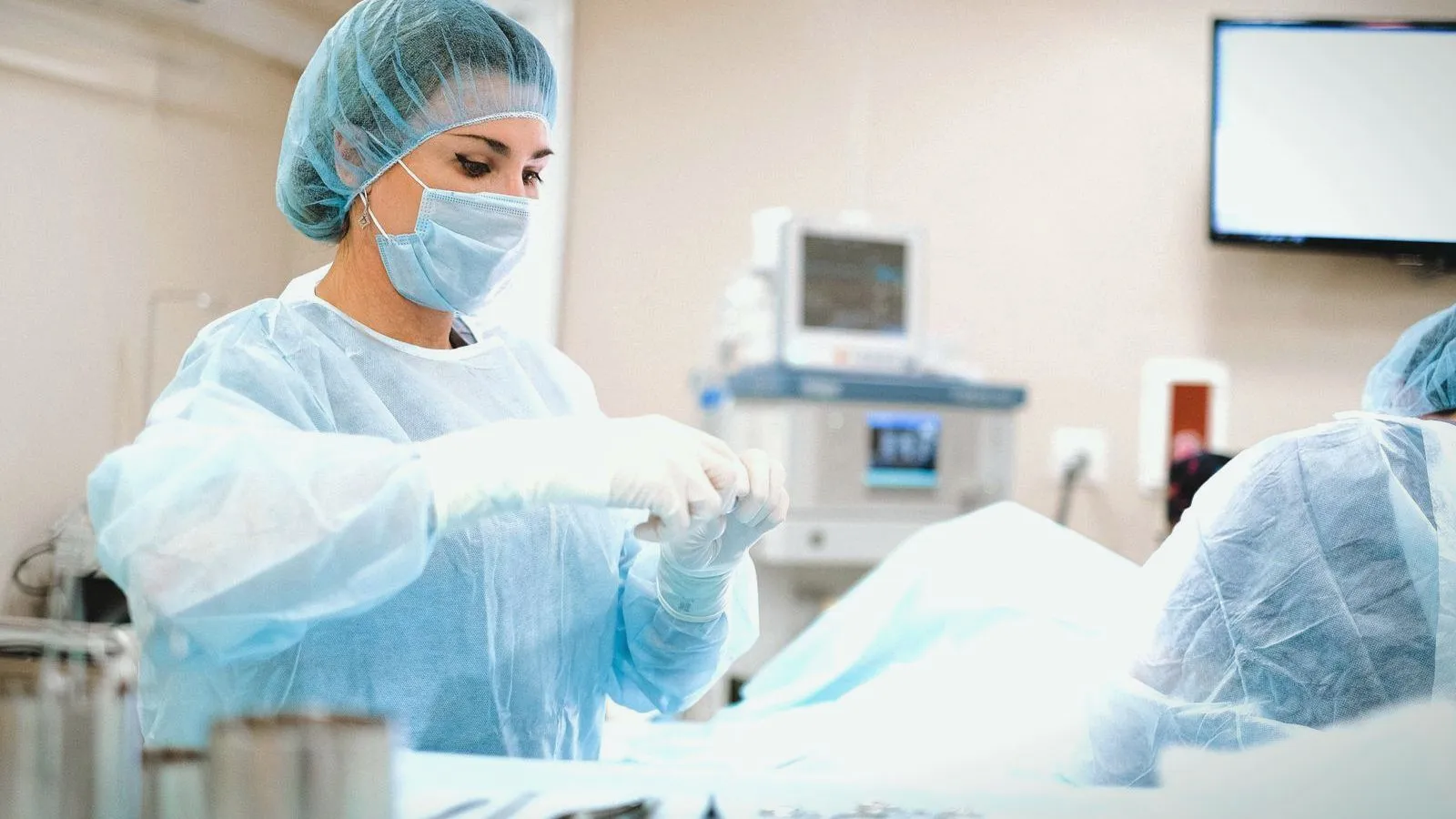
- Adding an AI-guided second look at the right colon found growths in 8.5% more patients.
- Detection rose from 28% to 36% of patients, in a randomized trial.
- The right side is where colonoscopy misses most, and where cancers are hardest to catch.
- The extra finds were small, flat lesions in awkward corners, which are the easiest to miss.
- It helped experienced and inexperienced endoscopists alike, across 606 patients.
Colonoscopy is the rare screening test that also treats what it finds. The camera goes in, a polyp comes out, and a cancer that would have arrived in ten years does not.
It only works on what the operator sees. Adenomas in the right colon are likely to be missed during colonoscopy because of anatomical complexity and lesion characteristics, which is a polite way of saying that the far end of the bowel has deep folds and grows flat lesions that do not announce themselves.
Writing in the American Journal of Gastroenterology, researchers randomized 606 patients to a standard examination or to one extra step: a second forward-view pass of the right colon with real-time software watching. The right colon adenoma detection rate in the AI group was significantly higher than that in the non-AI group, 36.4% against 27.9%.
Why detection rate is the number that matters
Colonoscopy and flexible sigmoidoscopy are procedures that let your doctor look inside your rectum and colon, using scopes with a light and a tiny camera, and they let a doctor see problems such as inflamed tissue, ulcers, polyps, and cancer.
An adenoma is the polyp that matters: a growth that can turn into cancer if it stays. The proportion of patients in whom an endoscopist finds at least one is the field’s headline quality metric, and it is not an arbitrary one. Doctors with higher detection rates have patients who develop fewer cancers in the years between colonoscopies.
So an 8.5 percentage point difference is not a difference in paperwork. It is roughly one extra patient in twelve leaving with a growth removed that would otherwise have stayed in.
What the extra step actually is
The intervention has two components arriving at once, and the honest reading has to hold both.
In the AI group, a second forward-view examination of the right colon was performed using real-time AI assistance. Standard practice is to inspect on the way out, once. This adds a return trip up the right side with software flagging suspicious areas on screen as the operator goes.
The authors are explicit that they cannot separate the two ingredients: the independent contribution of AI assistance warrants further investigation. A second look with no software at all might have found some of those lesions. This trial did not include that arm.
Where the extra lesions came from
The pattern of the gain is what makes it believable.
The improvement was driven by increased detection of small, flat lesions and those in anatomically challenging regions, such as the ascending colon. Those are precisely the lesions a human eye loses on a single pass: no stalk, low profile, tucked behind a fold, seen for a fraction of a second while the scope moves.
If the AI arm had simply found more of everything, including the large obvious polyps, that would suggest a difference in how carefully the two groups were examined rather than a real detection effect. Finding more of the specific category known to be missed is the signature of the mechanism working as described.
The finding that cuts against the usual framing
Subgroup analyses showed consistent improvement in the right colon detection rate with AI assistance regardless of endoscopist experience.
The common story about medical AI is that it lifts the floor: it rescues the inexperienced and adds nothing for the expert. That is not what happened here. Experienced endoscopists improved too, which suggests the limitation being addressed is attentional rather than one of skill.
Nobody, however good, sustains perfect vigilance across a fold-by-fold inspection at the end of a long list. Software does not get bored.
What a health service has to weigh
The cost of this is minutes, and minutes are the scarcest thing in an endoscopy unit.
A second pass of the right colon lengthens every procedure in a system already rationing slots, and the trial reports the benefit without pricing the throughput. Colorectal cancer is cancer that develops in the tissues of the colon or rectum, it is common, and screening capacity is the binding constraint in most countries. Adding time per patient means fewer patients.
That calculation may still come out in favor. One extra adenoma found per twelve patients is a substantial return for a few minutes, particularly on the side of the colon where missed lesions do the most damage. But it is a calculation, not a foregone conclusion, and 606 patients at a handful of centers is where the evidence currently stops.
People also ask
What did the trial find?
The right colon adenoma detection rate in the AI group was significantly higher than in the non-AI group (36.4% vs 27.9%; p=0.03; absolute increase 8.5%). The improvement was driven by increased detection of small, flat lesions and those in anatomically challenging regions, such as the ascending colon.
What is an adenoma?
A polyp with the potential to become cancer if left. Removing adenomas at colonoscopy is the main reason the procedure reduces colorectal cancer deaths, so how many get found is the quality measure the whole field is judged on.
Why the right colon specifically?
Because adenomas in the right colon are likely to be missed during colonoscopy because of anatomical complexity and lesion characteristics. The right side has deeper folds, and its lesions are more often flat rather than raised, which makes them easy to slide past.
Was the benefit from the AI or from looking twice?
The trial cannot separate them, and the authors say so. The comparison was a standard examination against an AI-assisted second pass, so the second pass and the AI arrive together. The independent contribution of AI assistance warrants further investigation.
Did it help less experienced endoscopists more?
No, and that is mildly surprising. Subgroup analyses showed consistent improvement in the right colon detection rate with AI assistance regardless of endoscopist experience, so this is not simply a crutch for trainees.
What does a second pass cost?
Time. Every extra minute of withdrawal is a minute of scope occupancy, sedation and staffing, multiplied across a national screening program. That is the trade-off a health service has to price, and this trial does not.
Does finding more adenomas prevent more cancer?
Detection rate is a validated surrogate: doctors who find more adenomas have patients who develop fewer interval cancers. It is a strong surrogate rather than a direct measurement, and no single trial of this size can show cancers prevented. This is general information rather than medical advice.
References
- AI-assisted second forward-view examination of the right colon significantly improves the adenoma detection rate: a multicenter randomized controlled trial. American Journal of Gastroenterology, 2026.
- MedlinePlus. Colonoscopy. US National Library of Medicine.
- MedlinePlus. Colorectal Cancer. US National Library of Medicine.